
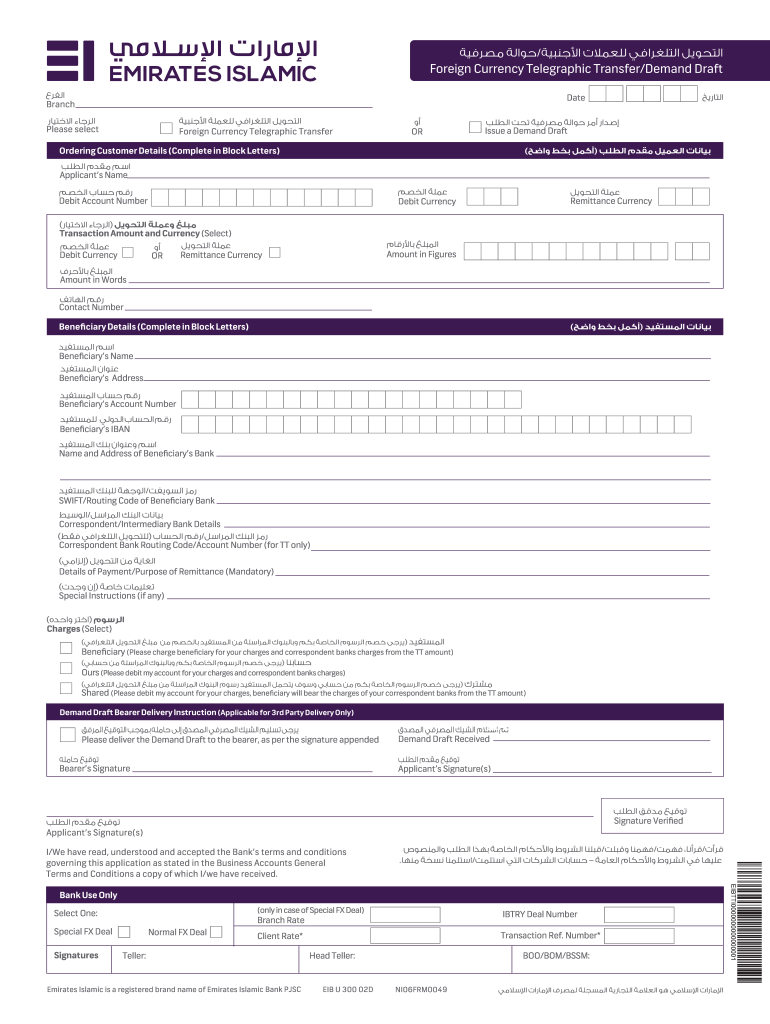







Understanding the Emirates Islamic Bank Telegraphic Transfer Form
The Emirates Islamic Bank telegraphic transfer form is essential for initiating international money transfers. This form allows customers to send funds quickly and securely across borders using electronic transfer methods. It requires specific details from both the sender and the beneficiary, ensuring an efficient transaction process.
Key Information Required
When completing the Emirates Islamic Bank telegraphic transfer form, several critical details must be provided:
- Sender Information: This includes the sender's name, account number, and contact details. Accurate information is vital for the successful processing of the transfer.
- Beneficiary Details: Provide the full name, account number, and bank information of the recipient. This section may also require the recipient bank's SWIFT code.
- Transaction Amount: Specify the total amount being transferred, including the currency type.
- Purpose of Transfer: Clearly state the reason for the transaction, as some institutions may require this information for compliance and reporting.
Ensuring accuracy in this section minimizes the risk of delays or errors in the transfer process.
Options for Charge Responsibilities
The Emirates Islamic Bank telegraphic transfer form includes options for determining who will bear the transfer charges. Understanding these options is crucial for both the sender and the beneficiary:
- Shared Charges: Both the sender and beneficiary share the transfer fees.
- Sender Pays: All associated charges are the responsibility of the sender.
- Beneficiary Pays: The beneficiary bears all costs; however, this may reduce the amount received.
Selecting the appropriate option helps in managing costs effectively during the transaction.
Special Instructions and Security Measures
The telegraphic transfer form accommodates special instructions that may be pertinent to the transaction. For instance, the sender may wish to include:
- Urgent Processing: Requesting expedited service can be outlined in this section.
- Additional Notes: Any specific conditions or requests regarding the transfer should be clearly stated.
Security is paramount when dealing with financial transactions. The form typically incorporates authentication measures such as signature verification to confirm the sender's identity. This step is critical in preventing fraud and ensuring that only authorized individuals can make transfers.
Completing the Form
To efficiently complete the Emirates Islamic Bank telegraphic transfer form, follow these steps:
- Gather Required Information: Collect all necessary details about the sender and beneficiary.
- Fill Out the Form: Carefully input the information in the designated sections. Ensure there are no errors or omissions.
- Review Compliance Requirements: Confirm that the purpose of the transfer adheres to current regulations and compliance mandates.
- Submit the Form: After confirming all information for accuracy, submit the completed form through the appropriate channels, such as online banking or in-person at a bank branch.
Following these steps ensures a smooth process for transferring funds.
Collaboration in Filling the Form
The design of the Emirates Islamic Bank telegraphic transfer form allows for collaborative entries, particularly in instances where multiple parties are involved. For example:
- Joint Account Holders: In cases where multiple individuals share an account, all relevant parties may need to provide consent or signatures.
- Third-Party Transfers: When funds are being sent from one person to another, having clear communication and consensus among involved parties can facilitate a seamless process.
Implementing collaborative efforts enhances the efficiency of completing the required information.
Legal Considerations and Compliance
Transacting through the Emirates Islamic Bank telegraphic transfer form involves certain legal considerations:
- Regulatory Compliance: Adherence to both domestic and international banking regulations is necessary to secure the legality of transactions. Any changes in laws can impact how telegraphic transfers are processed.
- Monitoring for Fraud: Institutions employ measures to monitor transactions for any potentially fraudulent activities. Understanding what constitutes suspicious behavior is essential for all users.
Awareness of these considerations helps ensure smoother and legally compliant transactions.
Understanding Fees and Charges
Users of the Emirates Islamic Bank telegraphic transfer form should be aware of the associated fees, which can vary based on:
- Transaction Amount: Larger transfers may incur higher fees.
- Destination Country: Fees may differ depending on the countries involved in the transfer.
- Transfer Type: Standard versus expedited services can have different pricing.
Clarifying these charges beforehand helps in budgeting for international transfers and prevents unexpected costs.
Handling Errors in the Transfer Process
In the event of errors or discrepancies in the Emirates Islamic Bank telegraphic transfer, there are established protocols to address them:
- Contact Customer Service: Immediately reach out to the bank’s customer service to report issues.
- Documentation Review: Have the original transfer form and transaction details on hand to clarify the error.
- Follow-Up Procedures: Be prepared to follow up as the bank investigates the matter. Keeping records of all communications can be beneficial.
Proactively managing errors can reduce stress and lead to quicker resolutions.
This comprehensive overview of the Emirates Islamic Bank telegraphic transfer form provides critical insights into its usage, compliance, and process, aiding users in navigating international money transfers efficiently.




