
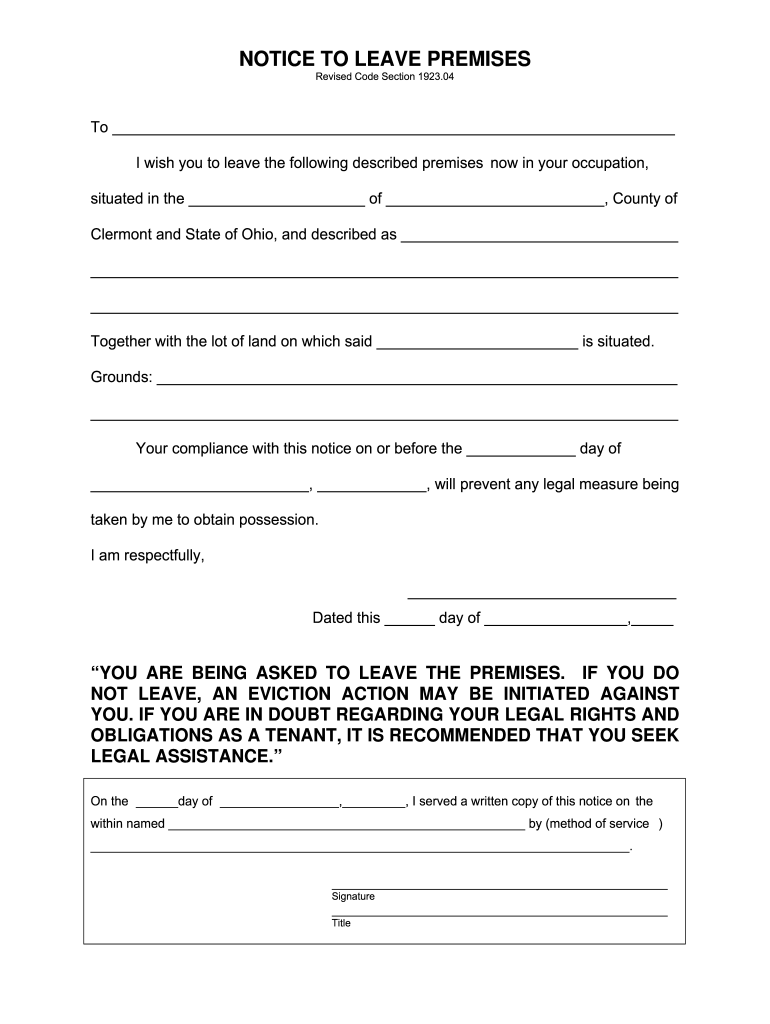







Definition and Purpose of the Notice to Leave Premises
A notice to leave premises is a formal document that a landlord issues to a tenant, requesting them to vacate a rental property. This notice serves as a prerequisite to the legal eviction process, establishing the grounds for ending the lease agreement. Understanding the definition and purpose of this document is crucial for both landlords and tenants, as it outlines the legal obligations involved in the tenancy.
Key Objectives of the Notice
- Clarity in Communication: It informs the tenant about the landlord's intention to terminate the tenancy, highlighting specific reasons for the request, such as lease violations or the expiration of the lease term.
- Legality: The notice ensures that the landlord complies with state and local laws governing eviction processes, protecting their rights and responsibilities.
- Timeline Specification: It typically includes a deadline for the tenant to vacate, allowing a clear timeframe for compliance to prevent further legal action.
Legal Context
In Ohio, the notice to leave premises must adhere to specific regulations set forth by state law, ensuring that all notices provide clear instructions and comply with timelines designated for different types of evictions.
Steps to Complete the Notice to Leave Premises
Creating a notice to leave premises requires careful attention to detail to ensure compliance and effectiveness. Below are the essential steps for landlords:
-
Determine the Cause: Identify the specific reason for the notice, such as non-payment of rent, lease violations, or the need to reclaim the property for personal use.
-
Choose the Appropriate Notice Type: Depending on the situation, select the type of notice, such as a 3-day eviction notice for non-payment or a 30-day notice for lease expiration.
-
Drafting the Notice: Include critical details:
- Tenant’s name and address
- Date of issuance
- Clear statement of the reason for the notice
- Deadline for vacating the premises
- Signature of the landlord or authorized agent
-
Delivery of the Notice: Serve the notice to the tenant via a method that ensures receipt, such as certified mail or personal delivery.
-
Documentation: Maintain a copy of the notice for your records, as it may be needed for future legal proceedings if the tenant fails to comply.
Example Scenarios
- A landlord issues a three-day notice due to the tenant’s failure to pay rent by the due date, notifying them of the specific amount owed and the deadline for payment before eviction proceedings begin.
- Another example is sending a 30-day notice to inform a tenant that the lease will not be renewed, providing them the timeframe to secure alternative housing.
Important Terms Related to the Notice to Leave Premises
Understanding key terms associated with the notice to leave premises can assist both landlords and tenants in navigating the eviction process:
- Eviction: The legal process of removing a tenant from rental property.
- Lease Termination: The official end of a rental agreement.
- Tenancy: The period during which the tenant occupies the property.
- Grounds for Eviction: Valid reasons under the law enabling a landlord to terminate a tenancy and evict a tenant.
Each term carries specific implications that influence the rights and obligations of both parties involved in the rental agreement.
Legal Use of the Notice to Leave Premises
The notice to leave premises serves as a legally recognized document that protects both landlords and tenants. Understanding the legal framework surrounding its use is vital:
- Compliance with State Laws: In Ohio, there are strict laws governing how eviction notices must be written and delivered. Failing to adhere to these laws can lead to delays or dismissal of eviction proceedings.
- Tenant Rights: Tenants have the right to respond to eviction notices, and failure to comply does not automatically result in eviction without due process.
- Court Involvement: If a tenant contests the notice, landlords may need to seek a court order for eviction, reinforcing the need for proper documentation.
Who Typically Uses the Notice to Leave Premises
Several parties may utilize a notice to leave premises, including:
- Landlords: Typically the primary users, they issue the notice when tenants violate lease agreements or other legal conditions.
- Property Management Companies: Often acting on behalf of landlords, they use notices to ensure legal compliance and manage tenant relations effectively.
- Tenants: In some cases, tenants may issue a notice to leave premises to communicate their intent to vacate, adhering to the terms of the lease.
Recognizing the various users can help clarify the necessity and implications of the notice in different scenarios.


State-Specific Rules for the Notice to Leave Premises
State laws dictate the specific requirements for a notice to leave premises. In Ohio, various considerations include:
- Duration of Notice: The length of notice required can vary based on the reason for eviction, ranging from three days for non-payment of rent to thirty days for lease expiration.
- Format and Content: Each notice must contain specific information, including the tenant’s name, property address, grounds for termination, and a clear, concise statement regarding the required action.
- Methods of Service: Differing regulations govern how the notice must be served, ensuring that tenants receive the document in a fair manner.
Landlords must familiarize themselves with these regulations to avoid complications during the eviction process.




