
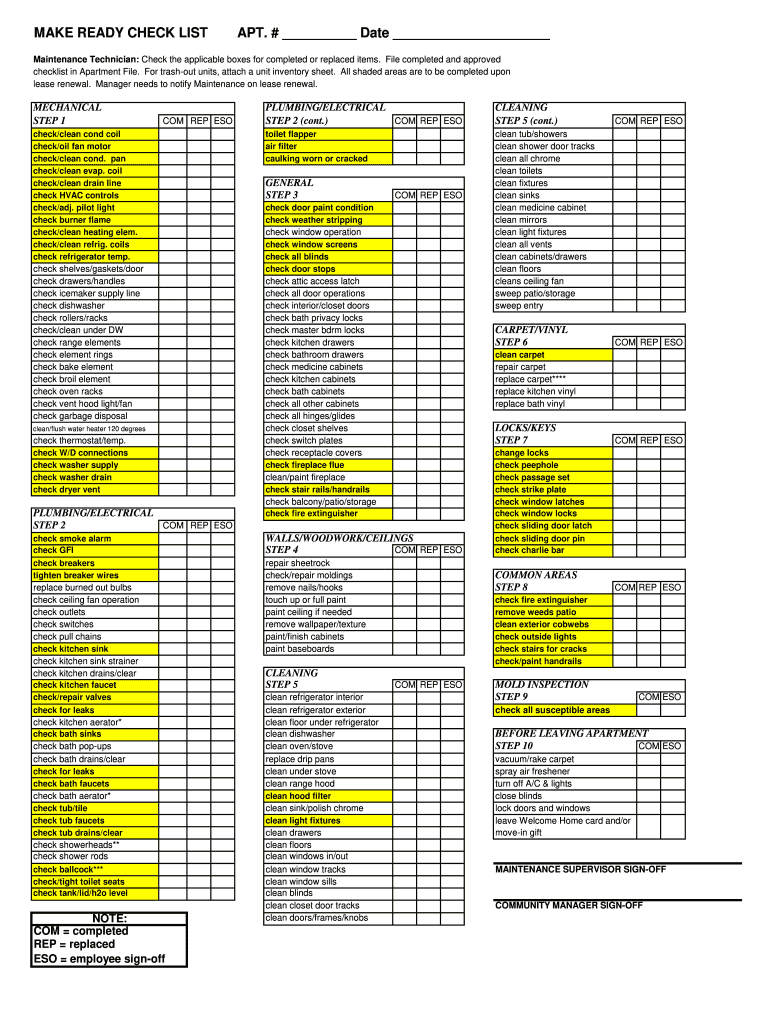







Definition and Purpose of the Make Ready Checklist
A make ready checklist is a detailed guide used primarily by maintenance technicians and property management teams to ensure that residential units, particularly apartments, are thoroughly prepared for new tenants. This checklist emphasizes critical areas that require inspection and maintenance, aiming to provide a smooth transition for tenants moving in and help avoid costly repairs later.
Comprehensive Components of an Apartment Make Ready Checklist
To ensure that a dwelling is ready for occupancy, a variety of tasks must be accomplished. An apartment make ready checklist usually includes:
- Mechanical Systems: Inspect heating, ventilation, and air conditioning (HVAC) systems to ensure proper operation and address any repairs.
- Plumbing: Check for leaks in pipes, inspect sinks, and test toilets for functionality.
- Electrical Components: Ensure lighting fixtures function, outlets are operational, and emergency systems are in working order.
- General Conditions: Assess the overall cleanliness, including floors and surfaces, and note any needed repairs.
- Carpets/Vinyl: Examine flooring for stains or damage; perform cleaning or replacement as necessary.
- Locks and Keys: Verify the status and security of locks on doors and windows, and rekey if needed.
- Walls/Woodwork/Ceilings: Check for damage such as holes or peeling paint; perform touch-ups or repaint as required.
- Common Areas: Ensure shared spaces like lobbies and laundry rooms are clean and maintained.
Steps for Completing the Make Ready Process
To execute an effective make ready process, property management teams should follow a systematic approach:
- Initial Inspection: Conduct a walkthrough of the unit to identify issues or deficiencies.
- Cleaning: Perform a deep clean of all areas, ensuring that the unit is sanitized and visually appealing.
- Repairs and Maintenance: Address any repair needs, including cosmetic fixes and functional adjustments.
- Final Inspection: Complete a thorough check post-cleaning and repairs to ensure everything meets the required standards.
- Documentation: Fill out the checklist to document that all tasks were completed, which serves as a record for future reference.
This structured approach helps in ensuring that any potential issues are addressed promptly, allowing tenants to move in without encountering unresolved problems.
Importance of Using a Make Ready Checklist
Using a make ready checklist is essential for several reasons. First, it offers a systematic approach to preparing an apartment, thereby enhancing tenant satisfaction. A well-prepared unit minimizes the likelihood of maintenance requests after move-in, which can disrupt tenant experiences and create dissatisfaction.
Benefits of Implementing a Make Ready Checklist
Several key benefits arise from implementing a thorough make ready checklist:
- Standardization: A checklist standardizes procedures among staff, ensuring that all units meet the same quality thresholds.
- Efficiency: It streamlines the processes involved in turnover, leading to faster readiness for new tenants, which can reduce vacancy times.
- Accountability: By documenting completed tasks, team members are held accountable for their responsibilities.
- Improved Tenant Relations: Providing a clean and functional living space contributes positively to tenant perceptions, enhancing relationship management and potentially improving renewal rates.
Variations and Adaptations for Different Properties
The make ready checklist can be adapted based on property type, such as luxury apartments versus single-family homes. For example:
- Luxury apartments may include checks on high-end appliances, smart home features, and enhanced finishes.
- Single-family homes might emphasize yard maintenance and exterior inspections.
In every case, the checklist should reflect the specific needs and expectations relevant to the property type.
Creating an Effective Make Ready Checklist Template
An effective make ready checklist template should be universally applicable while allowing for customization specific to an organization's needs. Consider the following components when designing or selecting a template:
- Structured Format: Organize sections logically, categorizing tasks under relevant areas (e.g., mechanical systems, plumbing).
- Clear Instructions: Include detailed descriptions of each task for clarity and consistency.
- Editable Fields: Provide space for notes or comments to tailor the checklist based on individual unit conditions.
- Assessment Criteria: Incorporate a rating system or checklist for pass/fail assessments to gauge readiness levels.
Examples of Available Templates
Property managers can find a variety of apartment make ready checklist templates online. Some sources may offer free printable versions or excel formats that facilitate easy customization and tracking. While selecting a template, ensure that it addresses the key areas highlighted previously and is adaptable to unique property requirements.
Legal and Compliance Considerations in the Make Ready Process
When implementing a make ready checklist, compliance with local and state regulations regarding housing standards is critical. Property management teams should stay updated on legal codes that affect unit readiness, particularly concerning safety equipment, habitability standards, and tenant rights.
Important Compliance Areas
- Health and Safety Codes: Ensure that all systems, including fire alarms and carbon monoxide detectors, comply with legal requirements.
- Accessibility Standards: Address any necessary adaptations that align with the Americans with Disabilities Act (ADA) guidelines for accessibility in common areas and units.
By adhering to these guidelines, property managers can protect themselves from potential liability and create a safe environment for tenants.
Conclusion
The make ready checklist is an indispensable tool for property management that ensures units are properly prepared for new tenants. By systematically following a well-structured checklist, maintenance teams can uphold standards of quality, enhance tenant satisfaction, and streamline the turnover process. Adapting the checklist as necessary while observing legal compliance can further improve operational efficiency and tenant relations.




