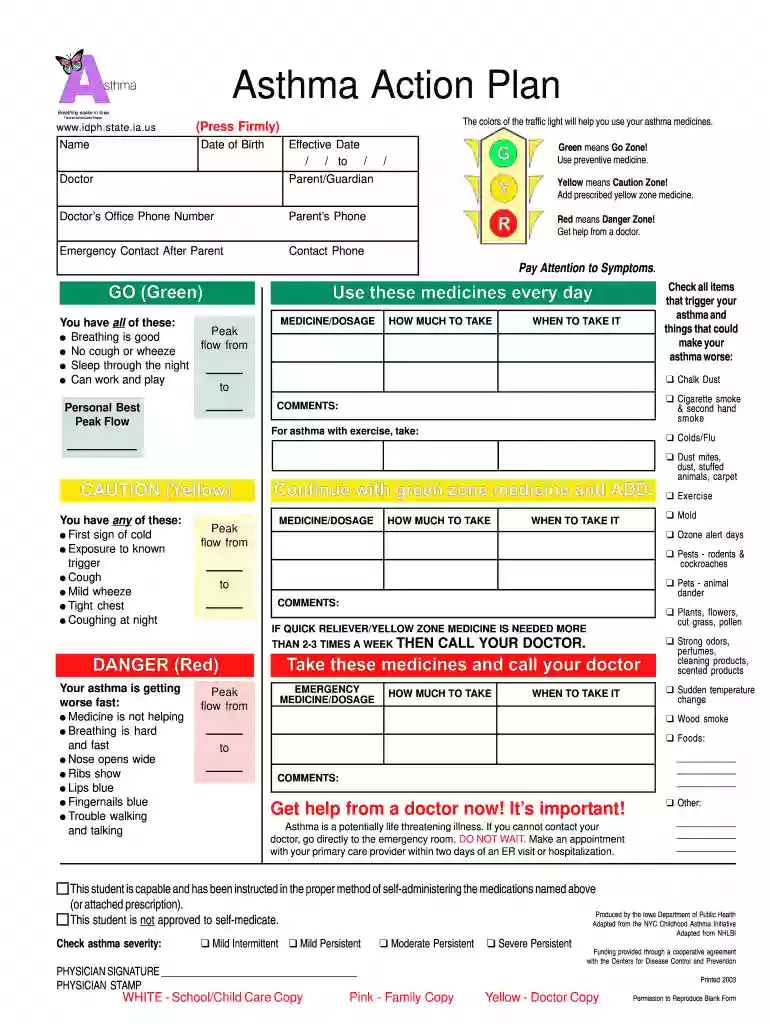
Definition and Purpose of the Asthma Action Plan
An asthma action plan is a personalized document created in partnership with a healthcare provider that outlines specific instructions for managing asthma. The primary purpose of this plan is to guide those living with asthma on how to monitor their condition, identify triggers, and respond effectively to symptoms of varying severity. The plan typically includes various components such as medication dosages, peak flow measurements, and emergency protocols.
Key elements of the asthma action plan include:
- Personal Information: Basic details including the patient's name, contact information, and emergency contacts.
- Medication Protocols: Clear instructions on which medications to take, when, and in what doses. This section often specifies rescue inhaler use.
- Symptom Monitoring: Guidelines for tracking symptoms, including how to recognize early warning signs of an asthma flare-up.
- Peak Flow Recordings: A section for documenting peak flow meter readings that indicate the current state of asthma control.
- Emergency Instructions: Steps to take if symptoms worsen, including when to seek medical assistance.
Overall, the asthma action plan serves as both a preventive and emergency management tool, equipping patients and caregivers with the necessary information to ensure effective asthma management.
How to Use the Asthma Action Plan
Utilizing an asthma action plan entails several key steps that empower individuals to manage their asthma effectively. Adhering to this plan requires understanding the components and executing the outlined protocols.
Regular Monitoring
- Daily Checks: Patients should regularly assess their symptoms and utilize peak flow meters to measure lung function. This helps in identifying any changes in asthma control.
- Recognizing Symptoms: Early recognition of worsening symptoms allows for prompt intervention, which is crucial in controlling asthma severity.
Medication Administration
- Follow Dosage Instructions: Adhere strictly to the medication regimen as detailed in the plan. This includes preventive medications to maintain control and rescue medications for acute symptoms.
- Adjust as Directed: Patients may need to adjust medication based on their symptom zones—green (good), yellow (caution), and red (danger), based on pre-defined thresholds.
Communicating with Healthcare Providers
- Regular Reviews: Schedule routine appointments with healthcare providers to review and update the asthma action plan as necessary.
- Sharing Progress: Provide feedback on the effectiveness of medications and any issues experienced, which may influence adjustments to the treatment plan.
By actively utilizing the asthma action plan, individuals can take control of their asthma management and enhance their overall quality of life.
Key Elements of the Asthma Action Plan
The asthma action plan is comprised of several critical components that provide clear guidance for patients. Each section is designed to address different aspects of asthma management.
Personal Health Information
- Contact Details: Name, phone number, and email address of the patient and family members or caregivers.
- Medical History: Brief notation of relevant medical history, including allergies, coexisting health conditions, and past asthma incidents.
Medication Schedule
- Preventive Medicines: Long-term control medications and how they should be taken daily.
- Rescue Medications: Usage guidelines for quick-relief inhalers, including triggers for their use.
Symptom Zones
- Green Zone: Indicates asthma is well-controlled, with no symptoms.
- Yellow Zone: Warning signs that signal decreased control; patients are advised on how to respond, often by adjusting medication.
- Red Zone: Indicates a medical emergency, requiring immediate action, possibly including calling emergency services.
Peak Flow Monitoring
- Measurements: Guidelines on how to use a peak flow meter, including the best times to measure and goals for peak flow readings.
- Documenting Changes: Space for recording daily or weekly peak flow readings to track trends over time.
This structured approach within the asthma action plan establishes a clear roadmap for effectively managing asthma through well-defined protocols.
Steps to Complete the Asthma Action Plan
Completing the asthma action plan involves systematic steps that ensure all necessary information is incorporated. Engaging in this process often requires collaboration with healthcare professionals to achieve the most effective plan.
Step 1: Gather Personal Information
- Include Essential Details: Ensure the patient’s name, address, contact info, and emergency contacts are provided.
- Know Your Allergies: List any known allergies, especially those that may trigger asthma symptoms.
Step 2: Outline Medication Usage
- Identify Medications: Record all asthma-related prescriptions, including maintenance and rescue inhalers.
- Detail Dosing Instructions: Specify how and when each medication should be administered.
Step 3: Define Symptom Zones
- Establish Trigger Criteria: Set clear thresholds for symptoms that categorize the patient's condition into green, yellow, or red zones.
- Create Action Procedures: Describe what actions to take for each symptom zone.
Step 4: Implement Peak Flow Monitoring
- Choose a Peak Flow Meter: Select and learn proper usage of an appropriate peak flow meter.
- Set Target Measures: Work with a healthcare provider to determine personalized peak flow target values.
Step 5: Review with a Healthcare Provider
- Collaborative Review: Schedule a meeting with a healthcare provider to finalize and confirm the action plan.
- Decide on Sharing Options: Consider how to share the finalized plan with family members or caregivers.
Following these steps ensures a comprehensive and practical asthma action plan that can be effectively utilized to manage the condition.
Why You Should Have an Asthma Action Plan
Possessing an asthma action plan is a fundamental aspect of managing asthma effectively. It fosters proactive self-management and readiness in case of an asthma exacerbation. Here are several reasons highlighting its importance:
Improves Asthma Control
- Clear Guidelines: The plan provides structured, individualized instructions for day-to-day asthma management.
- Proactive Approach: By identifying and responding to symptoms early, patients can avert severe asthma attacks.
Empowers Patients and Caregivers
- Knowledgeable Decisions: Having a documented plan enables patients and caregivers to confidently make informed decisions regarding care.
- Enhanced Communication: Facilitates discussions with healthcare providers about treatment adjustments and symptom management.
Increases Safety
- Emergency Preparedness: Quick access to the plan during emergencies can lead to timely interventions, potentially reducing hospital visits.
- Real-Time Adjustments: Patients can adapt their actions based on their current symptoms, enhancing their immediate safety.
Personalization to Needs
- Tailored Solutions: Each asthma action plan is tailored to fit the unique needs and triggers of the individual patient, making it more effective than generic advice.
Having a well-structured asthma action plan not only supports effective asthma management but also enhances the overall safety and quality of life for those living with asthma.