
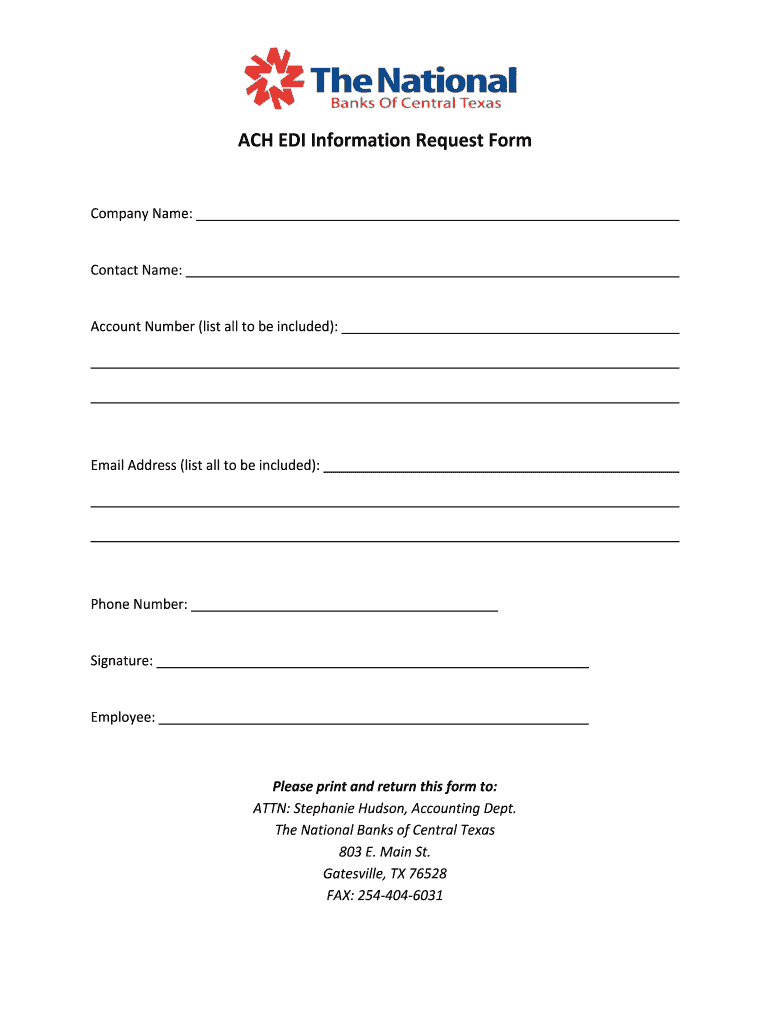







Definition and Meaning of the ACH Information Form
The ACH information form is a crucial document used in electronic banking transactions within the United States. ACH stands for Automated Clearing House, a network that facilitates the electronic transfer of funds. This form typically collects essential details to manage Automated Clearing House transactions effectively. Primarily, it requires the recipient's banking information to process direct deposits or electronic payments.
Understanding the ACH information form involves recognizing its purpose and significance in financial transactions. The form enables businesses and individuals to authorize one-time or recurring payments, streamlining the payment process. It serves as a formal request to allow the sender to debit or credit a designated bank account, ensuring secure and efficient transactions.
Key components captured within the ACH information form include:
- Company Name: Identification of the entity initiating the ACH transaction.
- Contact Information: Essential for communication regarding payment issues or confirmations.
- Bank Account Number: Critical for directing payments to the correct financial institution.
- Routing Number: Identifies the bank associated with the account, ensuring proper routing of transactions.
The ACH information form is foundational for both personal and business transactions, facilitating a wide array of payment activities like payroll direct deposits, vendor payments, and bill payments.
How to Use the ACH Information Form
Using the ACH information form is an organized process that ensures both parties involved in a transaction can manage payments effectively. Here are the steps involved in the form's usage, enhancing clarity and functionality throughout the payment process:
-
Download or Request the Form: Obtain the ACH information form from a reliable source. Often, companies provide their own template, or you can use an ACH request form template from financial institutions.
-
Fill Out the Required Fields: Provide necessary information accurately. This includes:
- Personal or Company Details: Name, address, and contact number.
- Bank Information: Include both the routing number and account number.
- Transaction Type: Specify if it is a debit or credit.
-
Authorization Signature: Sign the form to authorize the transaction. Without this signature, the form may not be valid or accepted.
-
Submit the Form: Send the completed form to the appropriate party, whether it be an employer, vendor, or financial institution. Ensure that you adhere to any submission methods specified, such as email or secure upload.
-
Retention of Copy: Keep a copy of the submitted form for your records. This provides a reference point in case of any disputes or questions regarding payments in the future.
By following these steps, users can effectively manage ACH transactions, minimizing errors and maintaining financial accuracy.
Steps to Complete the ACH Information Form
Completing the ACH information form accurately is vital for ensuring smooth transaction processing. Here’s a step-by-step guide outlining how to fill out the form correctly:
-
Header Information: Begin by entering the date at the top of the form. This serves as a timestamp for your request.
-
Provide Your Information:
- Enter your full name or company name in the designated field.
- Add your contact information, including a phone number and email address, for follow-ups.
-
Banking Details:
- Input your bank's routing number, which is essential and typically found on your bank statements.
- Enter your account number accurately, ensuring that all digits are correct to avoid processing delays.
- Indicate whether the account is checking or savings.
-
Payment Information: Specify the payment type you are authorizing:
- Direct Deposit for incoming funds.
- Withdrawal Authorization for outgoing payments.
-
Signature Line: Sign and date the form to authorize the requested transaction. Your signature confirms that you agree to the terms and authorize the payment or withdrawal.
-
Review and Submit: Double-check all entries for accuracy before submission. This helps prevent delays or errors in processing your ACH transactions.
Following these steps diligently will help ensure that your ACH transactions are conducted smoothly and securely, providing peace of mind in digital banking.
Key Elements of the ACH Information Form
The ACH information form comprises several key elements that ensure comprehensive information collection for processing transactions. Understanding these components is crucial for proper utilization and compliance:
-
Identification: Clear identification of the sender (individual or business) is necessary to verify who is initiating the transaction. This includes:
- Full name
- Company name if applicable
-
Banking Information: Accurate bank details are vital for successful fund transfers. This includes:
- Bank Name: Name of the financial institution.
- Routing Number: A nine-digit number identifying the bank.
- Account Number: The specific number for the account receiving or sending funds.
-
Transaction Details: Clearly define the type of ACH transaction, whether it is a payment, deposit, or withdrawal. This clarity assists the receiving party in processing the request accurately and in a timely manner.
-
Authorization Section: This area provides a space for the sender's signature and date, which is crucial for legal verification and authorization of the transaction.
-
Additional Notes or Instructions: Some forms may include sections for additional notes or instructions, allowing users to specify any special requests related to the transaction.
Incorporating these key elements into the ACH information form not only streamlines data collection but also enhances compliance with banking regulations.
Examples of Using the ACH Information Form
Real-world applications of the ACH information form highlight its versatility and importance in various financial transactions. Here are some examples illustrating its use:
-
Payroll Processing: Many employers use the ACH information form to set up direct deposit for employee salaries. Employees fill out the form to provide their banking information, authorizing their employer to deposit paychecks directly into their accounts. This process is not only efficient but also reduces the risks of paper checks being lost or delayed.
-
Recurring Payments for Services: A utility company may require customers to complete an ACH information form to facilitate automatic payments. Customers can authorize monthly debits for services such as electricity or internet, ensuring timely bill payments without the hassle of manual transactions each month.
-
Vendor Payments: Businesses often leverage the ACH information form when making payments to vendors and suppliers. By collecting and maintaining accurate banking information from vendors, companies can streamline their payment processes, ensuring that payments are processed on time and reducing administrative work associated with checks.
-
Tax Refunds: During tax season, taxpayers may use the ACH information form to provide their banking information to the IRS or state tax agencies for direct deposit of tax refunds. This method is preferred for its speed and reliability compared to paper checks.
These examples demonstrate the practicality of the ACH information form in various sectors, contributing to efficiency in managing electronic funds transfers across personal, consumer, and business frameworks.




