



APPROVED TREATMENT PROVIDER PROGRAM APPLICATION 2025

Get Form
APPROVED TREATMENT PROVIDER PROGRAM APPLICATION Preview on Page 1

Here's how it works

01. Edit your form online
Type text, add images, blackout confidential details, add comments, highlights and more.

02. Sign it in a few clicks
Draw your signature, type it, upload its image, or use your mobile device as a signature pad.

03. Share your form with others
Send it via email, link, or fax. You can also download it, export it or print it out.

How to use or fill out APPROVED TREATMENT PROVIDER PROGRAM APPLICATION

Form edit decoration
9.5
Ease of Setup
DocHub User Ratings on G2
9.0
Ease of Use
DocHub User Ratings on G2
  1. Click ‘Get Form’ to open the APPROVED TREATMENT PROVIDER PROGRAM APPLICATION in our editor.
  2. Begin by filling out the 'AGENCY/NAME' and 'TYPE OF AGENCY' sections. Choose from options like Corporation, Individual, Proprietor, or Other.
  3. Provide your contact information including 'ADDRESS', 'PHONE', and either your FIN or SS#.
  4. List all clinicians involved by completing the required fields for each clinician separately, including their name, SS#, DOB, degree, and license number.
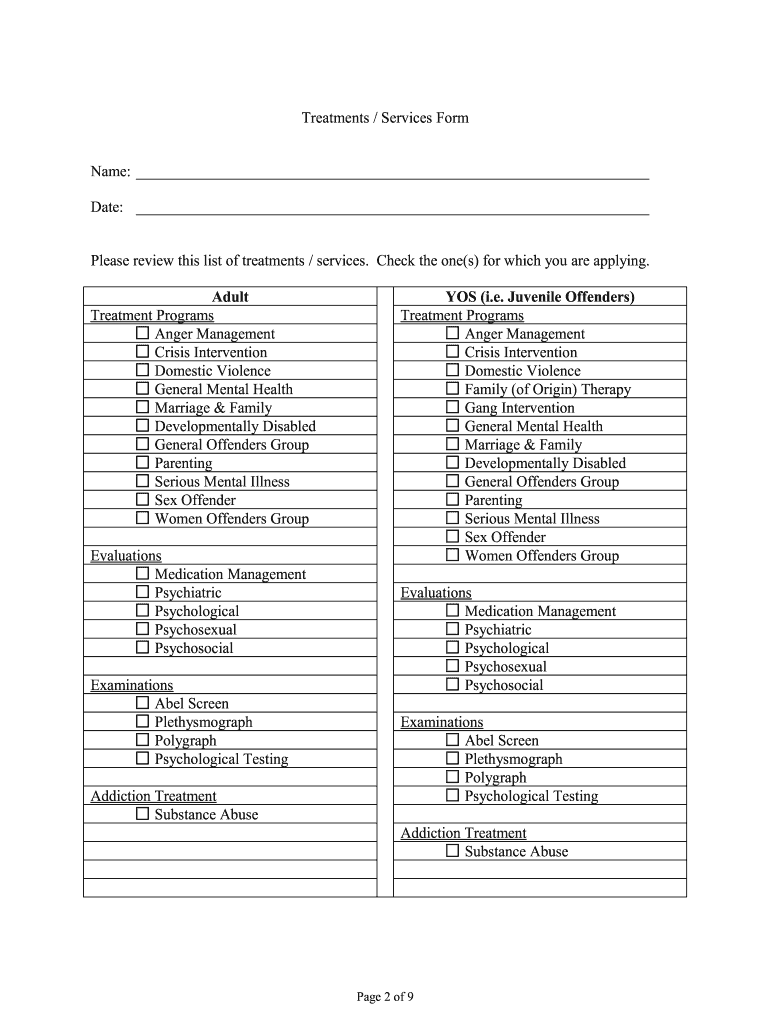
  5. Review the list of treatments/services you wish to apply for. Check all relevant boxes under both Adult and YOS Treatment Programs.
  6. Complete the section requesting three professional references who can vouch for your qualifications. Include their names, phone numbers, agencies, and addresses.
  7. Attach any required documents such as proof of insurance and detailed descriptions of your treatment programs before submitting your application.

Start using our platform today to streamline your application process for free!

See more APPROVED TREATMENT PROVIDER PROGRAM APPLICATION versions

We've got more versions of the APPROVED TREATMENT PROVIDER PROGRAM APPLICATION form. Select the right APPROVED TREATMENT PROVIDER PROGRAM APPLICATION version from the list and start editing it straight away!
Versions Form popularity Fillable & printable
2021 4.3 Satisfied (36 Votes)
2006 4 Satisfied (54 Votes)
be ready to get more

Complete this form in 5 minutes or less

Get form

Got questions?

We have answers to the most popular questions from our customers. If you can't find an answer to your question, please contact us.
Contact us
To receive SAMHSA certification for a medication unit, the OTP program sponsor should use the online application SAMHSA OTP Extranet. For more information see OTP Guidance. FAQs about OTPs are available for additional information.
An opioid treatment program (OTP) is defined as a program or practitioner engaged in opioid treatment of individuals with an opioid agonist medication. Federal regulations define opioid treatment as the dispensing of an opioid agonist treatment medication, along with a comprehensive range of medical and
An OTP shall maintain current procedures designed to ensure that patients are admitted to treatment by qualified personnel who have determined, using accepted medical criteria, that: The person meets diagnostic criteria for a moderate to severe OUD; the individual has an active moderate to severe OUD, or OUD in
OTPs require full certification by the Substance Abuse and Mental Health Services Administration (SAMHSA) and accreditation by a SAMHSA-approved accrediting body. Learn more at SAMHSAs Certification of Opioid Treatment Programs (OTPs) webpage.
You should discharge the child from OTP follow-up if the following criteria are fulfilled: For those who were admitted based on oedema: discharge if there is no oedema for two consecutive visits (14 days) For those who were admitted without oedema: discharge when the child reaches discharge target weight.

People also ask

Outpatient Therapeutic Feeding Program (OTP) ing to the protocol for management of SAM, Mid Upper Arm Circumference (MUAC) of less than 110 mms and/or weight-for-height ratio of less than 70% or presence of bilateral pitting edema are the eligibility admission criteria into the OTP.
Note: The famous eight points that must be considered for takehomes are: (i) Absence of recent abuse of drugs (opioid or nonnarcotic), including alcohol; (ii) Regularity of clinic attendance; (iii) Absence of serious behavioral problems at the clinic; (iv) Absence of known recent criminal activity, e.g., drug dealing

Related links

