






Definition & Meaning of the Machine Shop Inspection Form
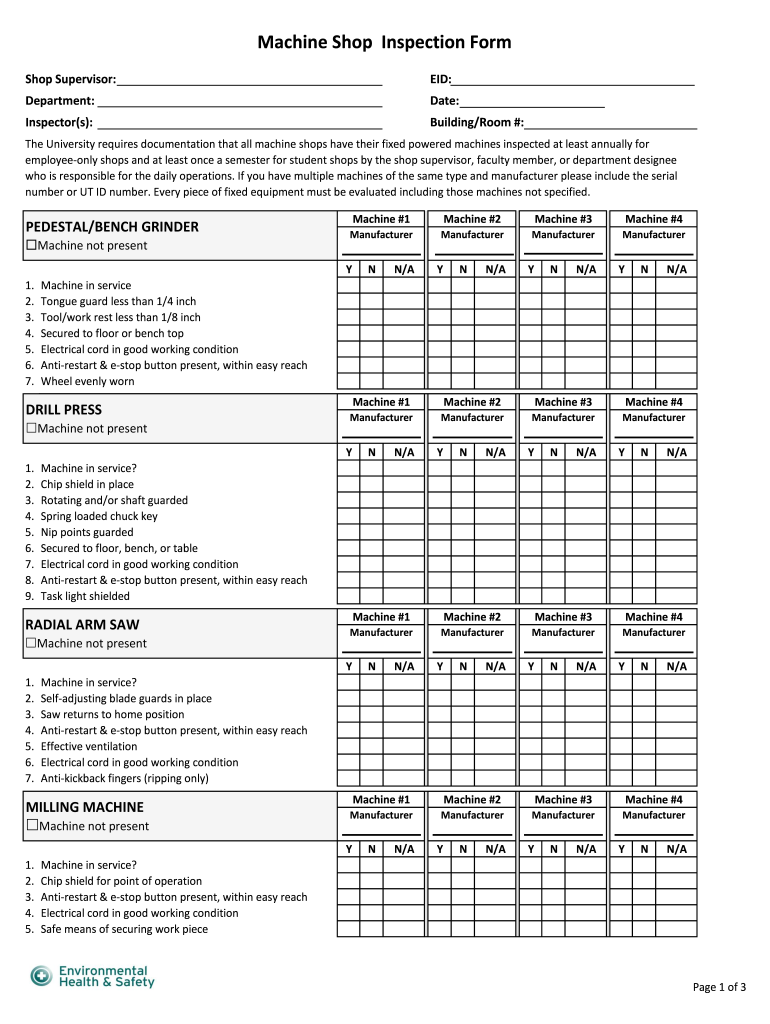
The machine shop inspection form serves as a crucial document used to evaluate the safety and operational status of fixed powered machinery within machine environments. It is designed to ensure compliance with safety standards and regulations, which protect both employees and students who work in these settings. This form meticulously outlines inspections required for specific types of machines, such as grinders, lathes, milling machines, and drill presses, thereby providing a standardized approach to assessing machine safety.
When used effectively, the form helps identify potential hazards, ensuring that all machinery is functioning correctly and adheres to the pertinent safety protocols. It typically includes sections for documenting the machine type, inspection date, inspector name, and specific findings that relate to safety features or operational concerns. This systematic evaluation minimizes risks and contributes to a safer work environment.
Key Elements of the Machine Shop Inspection Form
Essential Components of the Form
-
Machine Identification:
- Name and type of each machine, such as a band saw or lathe, are listed clearly for reference.
-
Inspection Date:
- A record of when the inspection occurred aids in tracking compliance with annual or semester-based requirements.
-
Inspector Information:
- Details about the person conducting the inspection, including their qualifications, help enhance accountability.
-
Safety Features Assessment:
- Each machine should be assessed for essential safety features, such as emergency shut-off buttons, guarding mechanisms, and safety interlocks.
-
Operational Status:
- Inspectors must evaluate whether machines operate as intended, noting any irregularities or failures.
-
Action Items:
- Spaces for documenting required follow-up actions, such as repairs or removal from service, are important for accountability.
Additional Considerations
-
Signatures of Approval:
- Sign-off areas for both the inspector and supervisor reinforce the validity of the inspection results.
-
Comments Section:
- Room for additional notes regarding machine-specific issues or recommendations can guide future inspections and repairs.
How to Complete the Machine Shop Inspection Form
Accurate completion of the machine shop inspection form is vital for clear communication among team members and regulatory compliance.
-
Gather Required Information:
- Collect data on all machinery scheduled for inspection, including previous inspection reports and maintenance logs.
-
Inspect Each Machine:
- Carry out a thorough inspection based on predefined criteria. Check safety features, operational functionality, and overall condition.
-
Record Findings:
- Document observations for each machine in the appropriate sections of the form. Use clear, concise language.
-
Identify Immediate Concerns:
- Note any machines that pose high risks and require urgent attention. This can include machines that fail safety checks or show signs of malfunction.
-
Review and Confirm:
- After filling out the form, review all entries for accuracy and completeness before finalizing it.
-
Obtain Signatures:
- Ensure the form is signed off by the inspector and relevant authority to confirm that the inspection is complete.
Important Terms Related to the Machine Shop Inspection Form
Understanding terminology associated with the machine shop inspection form is essential for proper usage and compliance. Key terms include:
-
Safety Interlock: A device that prevents machinery from operating under unsafe conditions, ensuring safety during operation.
-
Guarding Mechanism: Structures around moving parts of machinery that protect operators from injury during use.
-
Operational Status: The current functional condition of machinery as assessed during an inspection, indicating whether or not it can be safely used.
-
Inspection Frequency: This term refers to how often machines must be inspected, which may vary between employee-only and student-operated shops.
-
Compliance Standards: Regulations set by organizations such as OSHA that dictate safety practices in machine shops.
Examples of Using the Machine Shop Inspection Form
Real-world applications of the machine shop inspection form demonstrate its importance in promoting safety and compliance.
-
University Setting: In a university machine shop, the form might be used each semester to ensure that all lathes and milling machines are assessed before students begin their projects. Inspection results can dictate necessary training and access levels for students.
-
Manufacturing Facilities: A manufacturing plant may use the form to ensure ongoing compliance with safety regulations. Regular inspections documented on the form help prevent accidents and maintain a safe working environment.
-
Industrial Workshops: Shops specializing in custom machining often use the form to manage their equipment's safety, responding to each inspection with timely repairs or adjustments based on noted issues.
By providing detailed documentation and insights, the machine shop inspection form acts as an essential tool for promoting safety and operational integrity in diverse machine shop environments.