




Here's how it works

01. Edit your purchase and sale agreement pdf online
Type text, add images, blackout confidential details, add comments, highlights and more.

02. Sign it in a few clicks
Draw your signature, type it, upload its image, or use your mobile device as a signature pad.

03. Share your form with others
Send purchase agreement form pdf via email, link, or fax. You can also download it, export it or print it out.
How to use or fill out property purchase real with our platform

- Click ‘Get Form’ to open the property purchase real document in the editor.
- Begin by entering the buyer's information in the designated fields, including full name, address, and contact details. Ensure accuracy as this information is crucial for legal purposes.
- Next, fill out the seller's details in a similar manner. This section typically requires the seller's name and contact information.
- Proceed to specify the property details, including the address, type of property, and any relevant identification numbers. This ensures clarity regarding what is being purchased.
- In the financial section, input the purchase price and any deposit amounts. Be sure to review these figures carefully to avoid discrepancies.
- Finally, sign and date the document using our platform’s signature feature. You can also invite other parties to sign electronically for convenience.
Start using our platform today to streamline your property purchase process for free!
Fill out property purchase real online
It's free
It's free
See more property purchase real versions
We've got more versions of the property purchase real form. Select the right property purchase real version from the list and start editing it straight away!
| Versions | Form popularity | Fillable & printable |
|---|---|---|
| 2012 | 4.9 Satisfied (325 Votes) |
Got questions?
We have answers to the most popular questions from our customers. If you can't find an answer to your question, please contact us.
Contact us
What is the 3 3 3 rule in real estate?
The 3-3-3 rule in real estate refers to different guidelines, most commonly the 30/30/3 rule for buyers (max 30% housing costs, 30% down payment/closing, home price under 3x income), a checklist for buyer readiness (3 months savings, 3 months mortgage payments, 3 property evaluations), or a property evaluation method (past trends, future development, 3 comparables). Theres also a 3-3-3 rule for agents focusing on connection marketing (3 calls, 3 notes, 3 resources) and a 3-30-300 rule for corporate real estate (utilities, rent, payroll). For Buyers (Most Common) 30/30/3 Rule: A financial guideline to prevent overspending. 30% Housing Costs: Total monthly housing costs (mortgage, taxes, insurance) should not exceed 30% of your gross monthly income. 30% Down Payment: Save a 30% down payment plus closing costs. 3x Income: The homes purchase price should be no more than three times your gross annual income. Buyer Readiness Checklist: Ensures youre prepared to buy. 3 months: of emergency savings. 3 months: of mortgage payments saved. 3 property evaluations: before making an offer. For Property Evaluation The 3-Year Check: Analyze the propertys area by looking at. 3 Years Past: Past price trends in the neighborhood. 3 Years Future: Upcoming infrastructure projects (metro, malls). 3 Properties Nearby: Compare with at least three similar properties to avoid overpaying. For Real Estate Agents Connection-First Marketing: A habit-building rule. Call 3 people monthly. Send 3 handwritten notes monthly. Share 3 valuable resources monthly. For financial advice, consult a professional. Agents Shifting to Connection-First Marketing | Florida RealtorsSep 4, 2025| Florida RealtorsHow to Evaluate a Property with the 3-3-3 Rule - LinkedInSep 22, 2025 Manmeeth Jain. Deputy Vice President | Branch Business Head, HDFC Bank Ltd Sharing insights on Real Estate, InvestmentLinkedIn Manmeeth Jain
Is buying an reo a good idea?
REO properties can be a good deal due to lower prices and clear titles, attracting investors looking for bargains, but they are not automatically a steal; they often need DocHub repairs, are sold as is with limited disclosure, and require navigating complex bank processes, making them a high-risk, high-reward situation best suited for experienced buyers with capital for unexpected costs. Potential Benefits (The Good Deal Side) Discounted Prices: Banks want to sell quickly, often pricing them below market value. Clear Title: Lenders usually clear outstanding taxes and liens before selling. Straightforward Negotiations: Dealing with a bank can be less emotional than with a homeowner. Habitable Condition (Sometimes): Some REOs are move-in ready, qualifying for traditional loans. Potential Drawbacks (The Risks) As-Is Sales: Properties often have DocHub hidden damage and need major repairs. Limited Disclosure: Banks provide minimal information about the propertys history or issues. Competition: Well-priced REOs attract many offers, leading to bidding wars. Longer Closing Process: Bank bureaucracy can slow down the sale. Occupied Properties: If someone still lives there, eviction adds DocHub time and legal costs. Who Should Buy? Investors looking to flip or rent. Buyers with cash or strong financing for immediate repairs. Those with home repair experience or contractors on hand. Who Should Avoid? First-time buyers seeking a simple, low-hassle purchase. Those on tight budgets who cant afford unexpected repair costs. Verdict: An REO property is a good deal if you do thorough due diligence, get an appraisal and inspection, and are prepared for potential repairs and a lengthy process; otherwise, the discount may not cover the true cost. AI can make mistakes, so double-check responsesAnyone who bought REO before?Oct 17, 2022RReddit r/RealEstateThe REO Guide: 10 Steps to Buying a Bank-Owned Home - PennymacMay 16, 2025 Some REO homes go for a great price, but buying a bank-owned home is not an automatic bargain. An REO property may be Pennymac
What is a real property purchase?
If youve ever bought a home, then youre already familiar with the concept of real estate and buying land, but equally important for home buyers is the term real property. Real property refers to the building and land purchased.Oct 21, 2024
What salary do you need for a $400,000 house?
To afford a $400k house, you generally need an annual household income between $100,000 and $140,000, depending on interest rates, down payment size, credit score, and existing debts, with lenders often looking for a debt-to-income ratio (DTI) under 36% and housing costs under 28% of your gross income, but a strong credit score and larger down payment can lower the income requirement. Key Factors Influencing Income Needs Debt-to-Income Ratio (DTI): Lenders prefer total monthly debt (including the new mortgage payment) to be under 36% of your gross monthly income, with housing costs ideally below 28%. Down Payment: A larger down payment reduces the loan amount, decreasing monthly payments and potentially lowering the required income. Interest Rates: Higher rates mean higher monthly payments, necessitating more income. Credit Score: A higher score gets you better rates, improving affordability. Income Estimates Based on Guidelines Using the 28% Rule: For a $400k home, if your total housing payment (PITI) is around $2,300-$2,600/month, youd need roughly $9,000 - $10,000 in monthly gross income, or $108,000 - $120,000 annually, according to sources like Fortune and SmartAsset. Using Lender Ratios: With a higher DTI (like 43%) and other debts, an income closer to $110,000 - $115,000 might be needed, while being debt-free could qualify you with around $85,000 - $95,000. Example Scenario A $400,000 home with a 20% down payment (80% loan) and a 6.5% interest rate might have a principal interest payment of ~$2,350, requiring roughly $7,800/month in gross income, or ~$93,600 annually, before taxes, insurance, and other debts. In Summary While some lenders might approve you with around $90k-$100k, comfortably affording a $400k home usually requires closer to $110k-$140k, especially after factoring in taxes, insurance, and other debts, as noted by CNBC and Redfin. For financial advice, consult a professional. How much income down payment is needed for a $400k home?Jan 16, 2026 To afford a $400,000 home, assuming a 20% down payment and a 6.5% interest rate on a 30-year mortgage, you would need Guaranteed RateHow Much Income Do You Need to Buy a $400,000 House in 2026?Dec 8, 2025 Income Guidelines for a $400,000 Home * The 34x Income Rule. Many buyers qualify for homes priced three to four timesLoan Pronto
What is an example of a real property?
What are examples of real property? Real property may include land, homes, detached garages, patios, swimming pools, or other permanent structures. Crops and other natural resources that are attached to a piece of land are also considered real property.
Security and compliance
At DocHub, your data security is our priority. We follow HIPAA, SOC2, GDPR, and other standards, so you can work on your documents with confidence.
Learn more


Related forms
Va 5 form pdf
The document outlines the requirements for employers in Virginia to file Form VA-5, which is the Employer’s Return of Vi ...
Ct 636
The document CT-636 outlines the Alcoholic Beverage Production Credit for corporations in New York, detailing eligibilit ...
Tc 38
The document outlines the South Carolina Department of Revenue's tax credit program for solar energy systems, small hydr ...
Nys innocent spouse relief
The document IT-280 is a form from the New York Department of Taxation and Finance used by nonobligated spouses to alloc ...
Sc1040
The document provides the 2020 South Carolina Individual Income Tax Form SC1040 and its instructions, detailing filing g ...
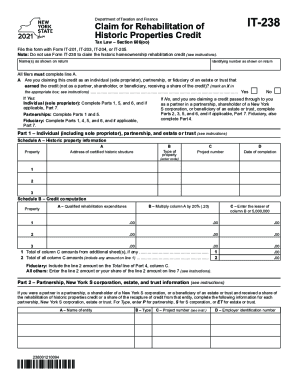
It 238
The document IT-238 is a form from the Department of Taxation and Finance for claiming the Rehabilitation of Historic Pr ...
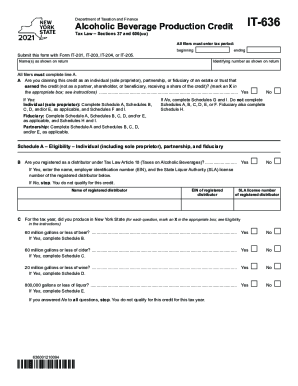
It 636
The document IT-636 outlines the Alcoholic Beverage Production Credit under New York State tax law, detailing eligibilit ...
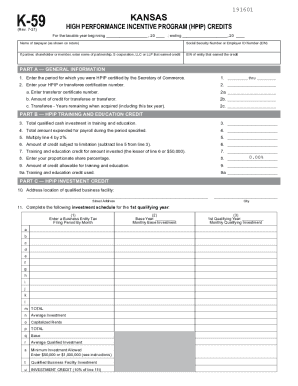
Fillable Online K-59 Kansas High Performance Incentive ...
The document is Schedule K-59 for the Kansas High Performance Incentive Program (HPIP) Credits, which outlines the proce ...
People also ask
Who signs first, seller or buyer?
The buyer
Can I buy a house making $5000 a month?
Yes, you likely can afford a house making $5,000 a month, but the actual price depends on your other debts, down payment, and location, though generally, aim for total housing costs (mortgage, taxes, insurance) around $1,400 (28% of income) to $1,800 (36% of income), with lower being more comfortable. Lenders use debt-to-income (DTI) ratios, so if you have DocHub car loans or student debt, your affordable mortgage will be lower. Key Affordability Benchmarks 28% Rule (Front-End Ratio): Your total monthly housing costs (mortgage principal interest, taxes, insurance, HOA fees) should ideally be no more than $1,400 ($5,000 x 0.28). 36% Rule (Back-End Ratio): Your total monthly debt (housing costs plus car payments, student loans, credit cards) should not exceed $1,800 ($5,000 x 0.36). FHA Loans: Might allow a higher Front-End DTI (around 31%) but still generally keep total debt below 43%. What Determines Your Actual Affordability Your Other Debts: High student loans or car payments reduce what you can borrow. Credit Score: Impacts your interest rate, which DocHubly changes monthly payments. Down Payment: A larger down payment reduces your loan amount and often eliminates Private Mortgage Insurance (PMI). Location: Property taxes and insurance costs vary greatly by area. Next Steps Calculate your DTI: List all your monthly debts (car, student loans, credit cards) and add them to your potential housing payment. Use Online Calculators: Try calculators from Rocket Mortgage, Zillow, or Freddie Mac to get personalized estimates. Get Pre-Approved: A lender can give you a concrete number based on your full financial picture. For financial advice, consult a professional. Affordability Calculator - How Much House Can I Afford? | ZillowWhile you may have heard of using the 28/36 rule to calculate affordability, the correct DTI ratio that lenders will use to assessZillowHow Much House Can I Afford? | LendingTreeJul 1, 2025 Heres how we got those numbers, assuming you make $60,000 per year ($5,000 per month) before taxes. If my front-eLendingTree


