




01. Edit your hgv daily check sheet pdf online
Type text, add images, blackout confidential details, add comments, highlights and more.

Type text, add images, blackout confidential details, add comments, highlights and more.

Draw your signature, type it, upload its image, or use your mobile device as a signature pad.

Send hgv vehicle check sheet template free via email, link, or fax. You can also download it, export it or print it out.
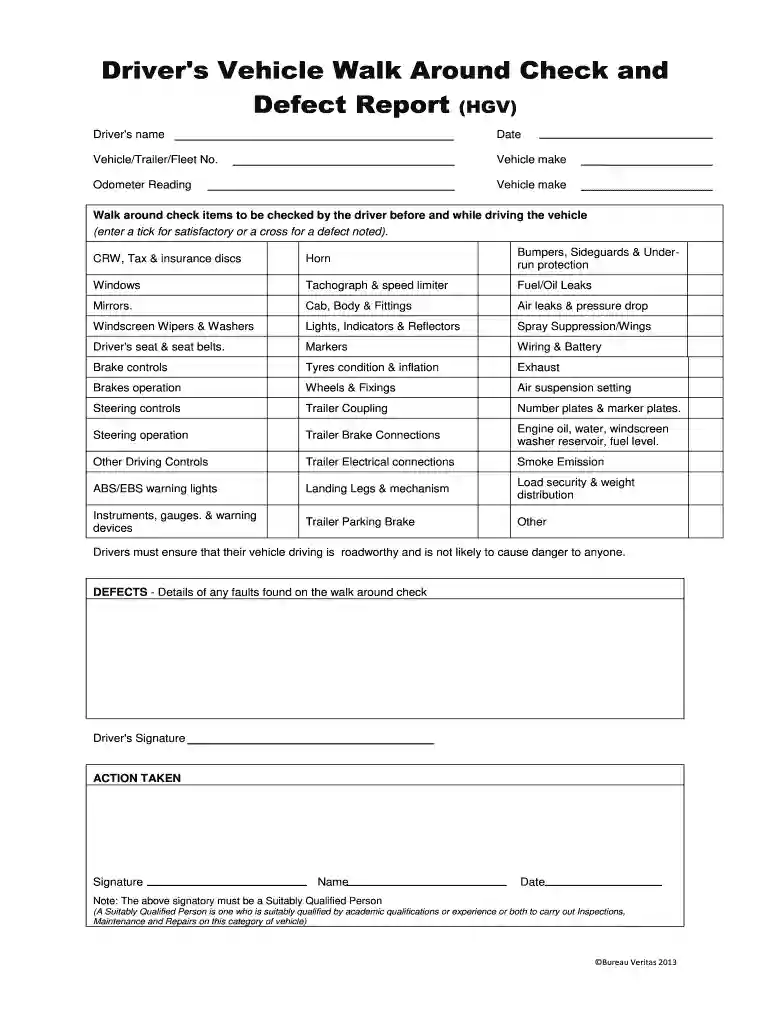
The Driver's Vehicle Walk Around Check is a systematic inspection protocol used by drivers, particularly in commercial vehicle operations, to assess the safety and condition of their vehicles before a journey. This procedure is critical in ensuring that all necessary safety components are operational, thus promoting road safety and compliance with regulatory requirements. It involves a thorough visual inspection of the vehicle's key components, including lights, tires, brakes, and fluid levels, and is essential for identifying any defects that could pose risks during operation.
Purpose: The primary aim is to enhance vehicle safety by ensuring that drivers identify and report any defects before starting their journey. This inspection also aims to minimize the potential for accidents caused by vehicle malfunctions.
Components Checked: Typically, the checklist includes checks for the condition of the tires, including tread depth and pressure; operational status of lights (brake lights, turn signals); fluid levels (oil, coolant, brake fluid); windshield wipers; and overall body integrity for any signs of damage.
To effectively execute the Driver's Vehicle Walk Around Check, drivers should follow a structured approach that enhances thoroughness and productivity.
Prepare the Vehicle: Begin by parking the vehicle on a flat surface and ensuring it is turned off. This step is critical for safety and allows for a clear inspection.
Follow a Detailed Checklist: Utilize a documented checklist, which can be paper-based or a digital format. This checklist should include all critical components that require inspection.
Conduct Visual Inspections: Perform visual inspections methodically:
Document Findings: Record any defects or issues encountered. Use specific forms, such as a defect report or a daily vehicle check sheet, to ensure that all findings are accurately noted.
The effectiveness of the Driver's Vehicle Walk Around Check relies on several key elements that ensure thoroughness and compliance.
Checklists: Comprehensive checklists tailored to specific vehicle types (e.g., heavy goods vehicles or light goods vehicles) help standardize inspections. Checklists should include sections for each main vehicle component.
Defect Reporting: A system for documenting and reporting defects found during the inspection is vital. This can include fields for detailing the nature of the defect, its location, and the urgency for repair.
Signatures: The completion of the check should involve signatures from both the driver and a qualified individual, confirming that necessary actions have been taken to address any recorded defects.
Regular Updates: The inspection process, forms, and checklists should be regularly updated to reflect changes in regulations or vehicle technology.
Conducting the Driver's Vehicle Walk Around Check is critical for various reasons, including safety, compliance, and operational efficiency.
Safety Assurance: Regular checks prevent potential accidents by identifying mechanical failures or safety hazards before they can lead to incidents on the road.
Regulatory Compliance: Ensuring adherence to state and federal regulations is crucial for commercial drivers. Failing to perform these checks can result in fines, penalties, or increased liability in the event of an accident.
Cost Efficiency: Detecting and addressing vehicle issues early can reduce maintenance costs and extend vehicle life. Regular inspections help prevent more significant issues that can result in extensive repairs and downtime.
Real-world applications of the Driver's Vehicle Walk Around Check illustrate its importance in various scenarios.
Heavy Goods Vehicle (HGV) Inspections: A driver before a long-distance haul checks the vehicle’s braking system, ensuring that all parts are functional, which is critical given the vehicle's size and weight.
Daily Operations: A delivery van driver who conducts the checks every morning ensures that the vehicle is ready for service, minimizing delays and potential risks during deliveries.
Emergency Situations: In an instance where a driver notices a low tire pressure reading during their walk-around check, they can address the situation immediately rather than risking a blowout while driving.
Each of these scenarios highlights the functionality and necessity of systematic checks within the operation of vehicles.
Sure, a typed name is accepted as a valid electronic signature when you create it on your document utilizing a compliant solution like DocHub. Simply import your hgv daily check sheet template to our editor, click Sign in the top tool pane → Create your signature → Type your name in the appropriate tab, and select how it will look on your document.
If your go-to electronic mail service is Gmail, it is simple to integrate your DocHub editor into your work. Edit your daily walk around check sheet with DocHub tools and connect it to your drafts in Gmail. See how easy it is to exchange documents and collaborate having a swift PDF editing solution at hand.
At DocHub, your data security is our priority. We follow HIPAA, SOC2, GDPR, and other standards, so you can work on your documents with confidence.
Apr 28, 2026 Your vehicles status can be tracked by watching the gauges on the dashboard, as well as the lights and other devices installed around the cab.Read more
Drivers Vehicle Inspection Report. Check ANY Defective Item and Give Details under Remarks. DATE: TRuCk/TRACTOR NO.Read more
The Circle of Safety procedure is a safe practice any driver can follow to ensure that the area around the vehicle is safe before departing.Read more


