







Definition and Purpose of Form 982
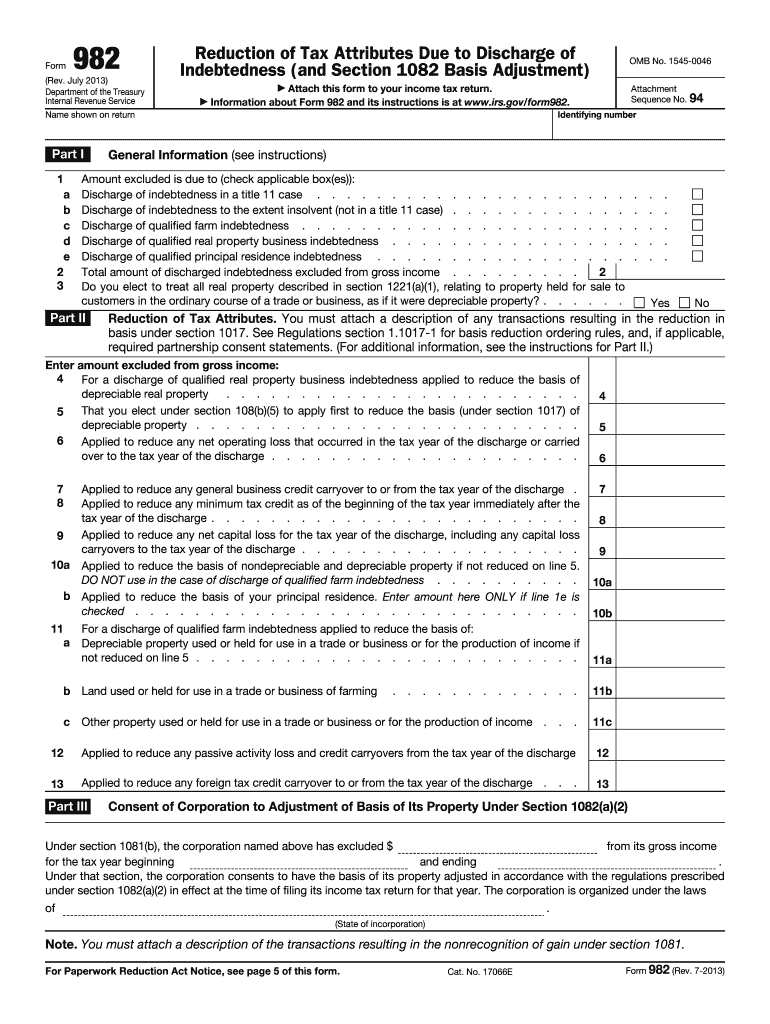
Form 982, officially known as "Reduction of Tax Attributes Due to Discharge of Indebtedness (and Section 1082 Basis Adjustment)," is a crucial document within the U.S. tax system. This form is used to report the exclusion of discharged indebtedness from gross income, aligning with the provisions of Section 108 of the Internal Revenue Code. When individuals or businesses experience a cancellation of debt, such as through bankruptcy or insolvency, Form 982 helps in appropriately adjusting the tax attributes. Tax attributes include net operating losses and capital loss carryovers that, under normal circumstances, would be considered income. However, certain conditions allow these to be excluded, and Form 982 facilitates this process.
How to Use Form 982
Using Form 982 involves understanding the scenarios under which debt discharge may be excluded from taxable income. The form requires taxpayers to specify the type of debt discharge experienced, whether it falls under bankruptcy, insolvency, qualified farm indebtedness, or other categories specified by the IRS. After identifying the type of discharge, taxpayers are to utilize the form to adjust tax attributes accordingly. For instance, if your debt is discharged because of insolvency, you need to demonstrate that your liabilities exceeded your assets just before the debt was forgiven.
Steps for Completion
Completing Form 982 involves a series of steps, including:
- Indicating the reason for debt discharge.
- Calculating the extent of your insolvency, if applicable.
- Reducing tax attributes listed on the form, such as net operating losses.
- Attaching relevant documentation to support your claims, especially in cases of insolvency or bankruptcy.
Important Terms Related to Form 982
Understanding the terminology associated with Form 982 is crucial for accurate completion:
- Discharge of Indebtedness: The amount of debt that has been forgiven.
- Tax Attributes: Financial characteristics like net operating losses that reduce taxable income.
- Insolvency: A state where total liabilities exceed total assets.
- Exclusion: The act of removing certain amounts from taxable income.
Steps to Complete Form 982
When completing Form 982, accuracy is essential to ensure compliance:
- Identify Applicable Exclusions: Determine which exclusions apply to your scenario, such as bankruptcy or insolvency.
- Document Calculation: Provide calculations that demonstrate your eligibility for these exclusions (e.g., insolvency calculations).
- Adjust Attributes: Use the form to adjust attributes like capital loss or carryover losses.
- Review and Attach Supporting Documentation: Ensure all necessary files are attached for validation.
Examples of Using Form 982
Real-world examples help illustrate scenarios for using Form 982:
- Example 1: An individual filing for insolvency where liabilities exceed assets by $20,000. They must use Form 982 to report exclusions from gross income.
- Example 2: A farmer with qualified farm indebtedness being discharged can reduce the basis of property rather than report the discharge as income.
IRS Guidelines
The IRS offers detailed guidance on using Form 982 to facilitate proper and lawful reporting. This includes considerations on the basis reduction in property and coordinate filings with other necessary IRS forms or schedules that might be affected by the discharge of indebtedness. Adhering to IRS guidelines helps avoid penalties and ensures accurate tax reporting.
Filing Deadlines and Important Dates
Form 982 should be filed in conjunction with your federal tax return for the year in which the debt was discharged. Ensure compliance with the IRS deadlines for individual or corporate tax filings to avoid late penalties. Generally, the due date for individual taxes falls on April 15, unless otherwise stated by the IRS.
Eligibility Criteria for Form 982
Eligibility for using Form 982 primarily revolves around experiencing debt discharge due to specific circumstances such as bankruptcy proceedings or insolvency. Understanding these eligibility requirements under the Internal Revenue Code's guidelines ensures that the taxpayer legally qualifies for the exclusions.


Required Documents
Accompanying documentation often includes:
- Proof of debt discharge.
- Calculations of insolvency, if applicable.
- Any court documents (if related to legal proceedings such as bankruptcy).
Each document substantiates the claim and aids in the reduction of gross taxable income accurately.
By understanding and following these comprehensive aspects of Form 982, taxpayers can navigate the complexities of debt discharge tax reporting efficiently.




