




01. Edit your hold harmless agreement template online
Type text, add images, blackout confidential details, add comments, highlights and more.

Type text, add images, blackout confidential details, add comments, highlights and more.

Draw your signature, type it, upload its image, or use your mobile device as a signature pad.

Send hold harmless agreement template free via email, link, or fax. You can also download it, export it or print it out.
A hold harmless agreement is a legal contract that protects one party from legal liability for actions or events that occur during a specified situation. It is commonly utilized in various industries, particularly construction, to mitigate risks associated with injuries or damages that may arise during the course of work. The primary function of this agreement is to ensure that one party agrees not to hold the other liable for any loss, damage, or legal claim that may result from an action specified in the contract.
Understanding which form of hold harmless agreement is appropriate for your situation is crucial, especially in contractual relationships where liability is a concern.
To effectively use a hold harmless agreement, follow these structured steps:
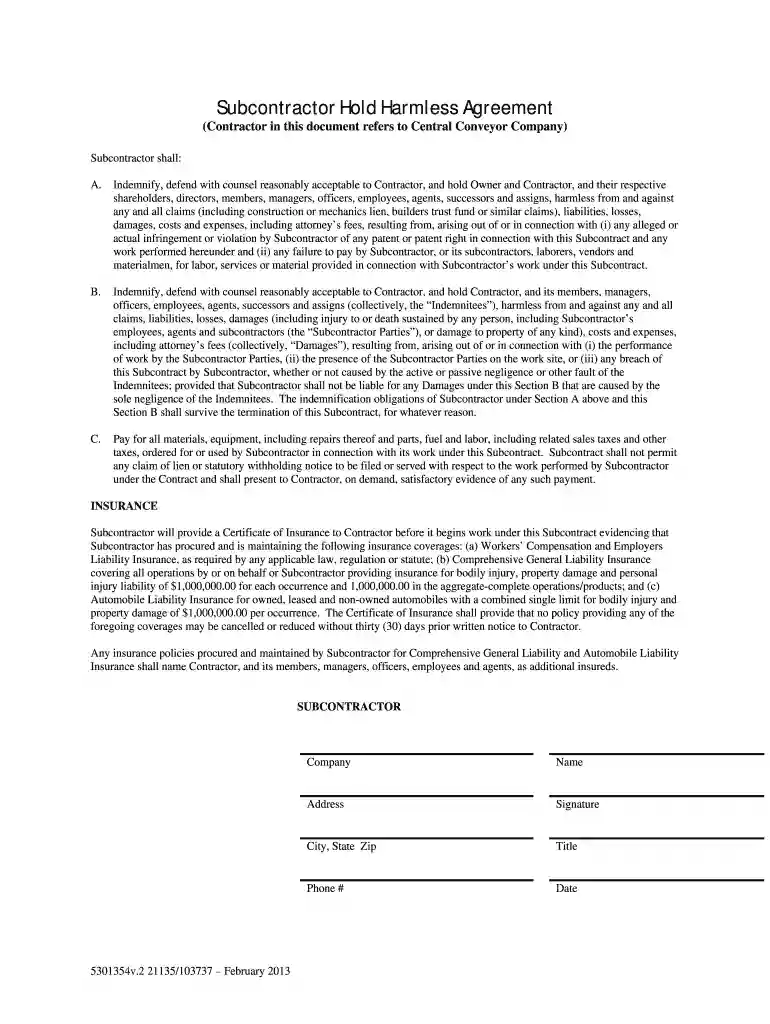
This agreement can be particularly beneficial in construction projects, where subcontractors may sign a subcontractor hold harmless agreement to protect the primary contractor and property owner from claims resulting from the subcontractor's work.
Completing a hold harmless agreement involves a few critical steps to ensure that all necessary information is accurately recorded:
A comprehensive hold harmless agreement typically includes several key components:
Incorporating these elements helps ensure that the hold harmless agreement is effective and enforceable.
Various professionals and entities utilize hold harmless agreements, including:
In practical applications, hold harmless agreements are frequently encountered in various scenarios:
Providing these examples illustrates the versatile applications and effectiveness of hold harmless agreements across multiple industries.
We've got more versions of the hold harmless agreement template form. Select the right hold harmless agreement template version from the list and start editing it straight away!
| Versions | Form popularity | Fillable & printable |
|---|---|---|
| 2013 | 4.8 Satisfied (176 Votes) |
At DocHub, your data security is our priority. We follow HIPAA, SOC2, GDPR, and other standards, so you can work on your documents with confidence.
Defend, indemnify, and hold harmless The Museum of Human Achievement, its agencies, officers and employees, from and against any and all claims of anyRead more
Hold harmless refers to a contractual provision in which one party agrees not to hold another party liable for certain losses, damages, or claims that may ariseRead more
Subject to paragraph 4 below, the Business agrees to hold harmless the. City, its officers, agents and employees from any loss, claim or demand, including.Read more


