





Definition and Meaning of DHCS 1801
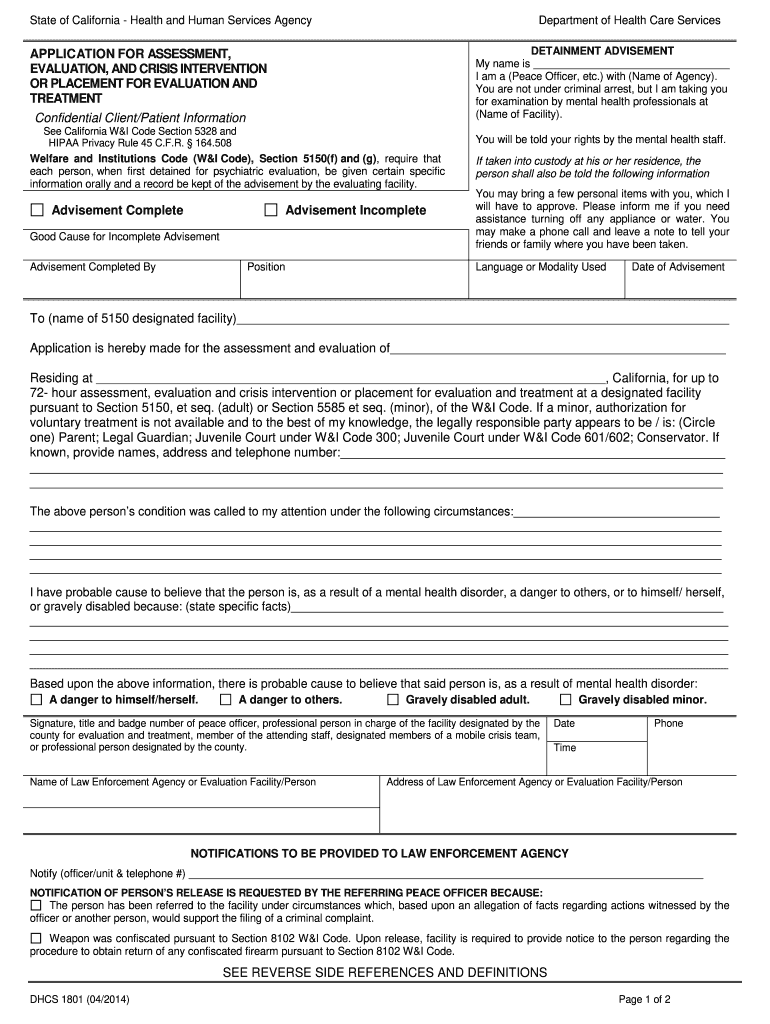
The DHCS 1801 form, commonly known as the 5150 form, is a critical document used in California for the involuntary detention and evaluation of individuals experiencing a mental health crisis. This form is governed by the Welfare and Institutions Code, specifically sections pertaining to mental health evaluations, and is a key component of California's legal framework for addressing mental health crises. The form is designed to assess whether an individual poses a danger to themselves or others due to a mental disorder, thereby facilitating necessary interventions and treatment options.
This form outlines various conditions under which an individual can be detained involuntarily for psychiatric evaluation, following the protocols established to ensure both public safety and the individual's rights. Understanding the implications and legal context of the DHCS 1801 form is essential for law enforcement, healthcare providers, and mental health professionals involved in crisis intervention.
How to Use the DHCS 1801
Using the DHCS 1801 requires adherence to specific protocols established by California law. The form must be filled out accurately to initiate the involuntary detention process for mental health assessment. Here is a structured approach to using the form effectively:
- Determining Criteria for Use: Ensure that the individual meets the criteria for a 5150 hold, which includes danger to self, danger to others, or grave disability.
- Filling Out the Form: Complete each section of the DHCS 1801 form, detailing the reasons for the detention, observations made, and the conditions that led to this decision.
- Securing Signatures: The form must be signed by appropriate mental health professionals or law enforcement personnel to validate the detention.
- Executing the Detention: Once the form is completed and signed, it authorizes law enforcement or mental health officials to transport the individual for evaluation.
Proper utilization of the DHCS 1801 form is essential for ensuring that legal standards are met while also protecting the individual’s rights during a potentially distressing time.
Steps to Complete the DHCS 1801
Completing the DHCS 1801 form involves a structured process. Each step must be followed meticulously to ensure compliance with legal requirements:
- Gather Preliminary Information: Collect all necessary details about the individual, such as their name, age, and identifying information.
- Document Observations: Clearly note the behaviors or conditions that justify the need for an involuntary hold. This might include threats of self-harm, erratic behavior, or signs of severe mental illness.
- Fill in Required Sections: Complete all sections of the form, which may include details about any prior mental health history, current medications, and previous interventions.
- Review for Completeness: Double-check the form to ensure all information is accurate and all relevant sections have been filled out.
- Obtain Necessary Signatures: Ensure that the form is signed by authorized individuals, which might include a psychiatrist or licensed clinician, confirming the assessment of the individual's condition.
Adhering to these steps helps to ensure the integrity of the process and protects both the individual involved and the professionals acting on their behalf.
Legal Use of the DHCS 1801
The legal framework surrounding the DHCS 1801 is grounded in California's Welfare and Institutions Code. This form serves as an affirmation of the legal basis for detaining an individual for mental health evaluation under specific circumstances, which include:
- Safety Concerns: The individual poses an immediate danger to themselves or others due to mental illness.
- Grave Disability: The individual is unable to provide for their basic personal needs for food, shelter, or medical care because of a mental disorder.
- Legal Guidance: Compliance with protocols outlined in the Welfare and Institutions Code ensures that all actions taken are lawful, mitigating the risk of legal repercussions for both healthcare providers and law enforcement officials.
This form underscores the necessity of adhering to established legal criteria and procedures to protect the rights of individuals in the mental health system while allowing for necessary interventions.
Key Elements of the DHCS 1801
The DHCS 1801 form encompasses several critical elements that are necessary for its validity and efficacy in the mental health evaluation process:
- Identification Information: The form requires specific details about the individual being assessed, including demographics and contact information.
- Justification for Detention: A clear rationale must be documented to illustrate why the individual meets the criteria for involuntary detention under the 5150 provisions.
- Professional Signatures: The endorsement of qualified mental health professionals is mandatory for the form’s enforcement, reflecting a thorough assessment of the situation.
- Follow-up Instructions: Guidance on the next steps post-evaluation, including potential treatment options or referrals, should be provided.
These elements are vital to ensure the document serves its purpose while adhering to legal standards surrounding mental health evaluations.
Important Terms Related to DHCS 1801
Understanding the terminology associated with the DHCS 1801 is critical for effective communication and compliance within the mental health field. Key terms include:
- 5150 Hold: Refers to the legal authority to detain an individual for up to seventy-two hours for psychiatric evaluation based on the criteria outlined in the DHCS 1801.
- Gravely Disabled: A legal definition describing individuals who cannot adequately care for themselves due to a mental disorder.
- Involuntary Treatment: Treatment administered without the individual's consent, often requiring legal documentation like the DHCS 1801.
- Mental Disorder: Diagnosed conditions that significantly disrupt an individual's ability to function in daily life, qualifying them for intervention under mental health laws.
Familiarity with these terms enhances the understanding of the DHCS 1801 form’s context and application in various situations involving mental health assessments.