






Understanding the SSS R3 Form
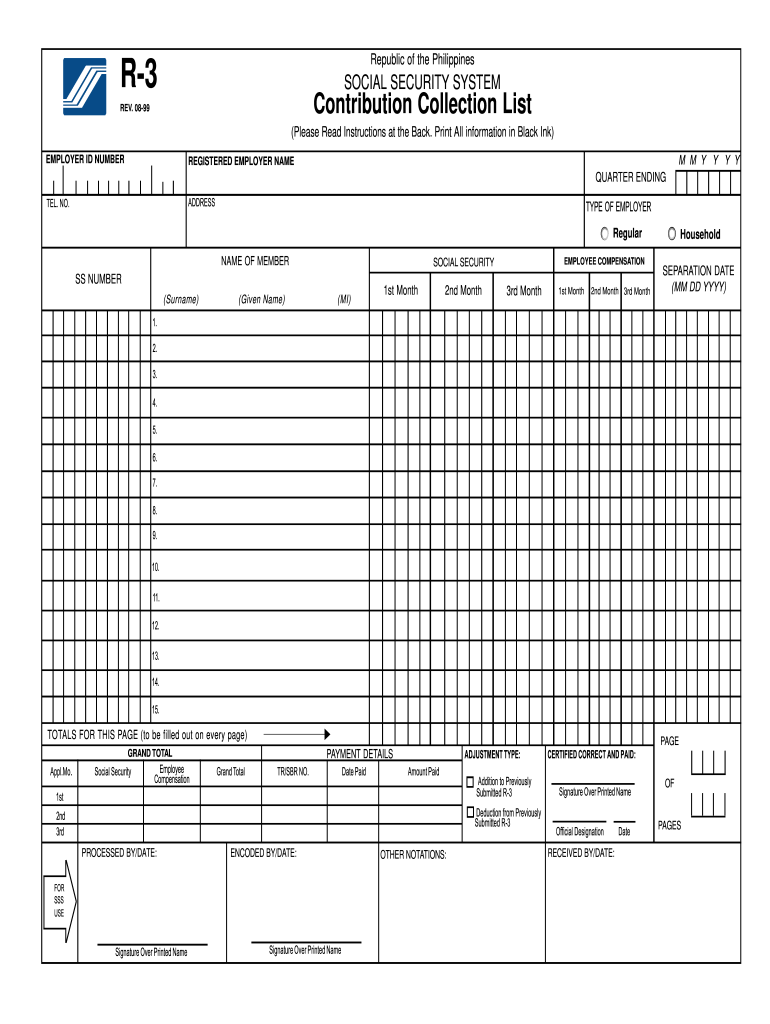
The SSS R3 form, also known as the Contribution Collection List, is essential for employers to report their employees' contributions to the Social Security System (SSS) in the Philippines. This form is crucial for ensuring that contributions are accurately recorded and submitted within set deadlines.
Definition and Importance of the SSS R3 Form
The R3 form serves as a detailed account of the employees' contributions, which includes both employee and employer shares. It is a mandatory document for employers in the Philippines who want to maintain compliance with the SSS regulations. Accurately filling out this form is vital as it directly impacts the benefits that employees receive, such as pensions, sickness, and maternity leaves.
Steps to Complete the SSS R3 Form
-
Gather Necessary Information
Before filling out the SSS R3 form, gather the required information, including employee names, SSS numbers, contribution amounts, and payment details. -
Enter Employer Information
The form begins with the employer's details:- Employer name
- Employer number
- Address
-
Fill in Employee Contributions
Each employee's contribution details must be listed sequentially, encompassing:- Employee name
- SSS number
- Monthly salary base
- Contribution amount due
-
Calculate Total Contributions
At the end of the form, ensure to sum the individual contributions to reflect the total payable amount for the specified period. -
Review and Submit
Review all entries for accuracy, ensuring that no details are omitted. Submit the completed form to the SSS along with the payment before the deadline.
Key Elements of the SSS R3 Form
- Employee Information: Accurate names and SSS numbers for all employees are mandatory to ensure proper credit for contributions.
- Contribution Details: This section outlines both the employee and employer contributions, reflecting the salary base and total contributions for each reporting period.
- Payment Information: It indicates how the contributions will be paid, including any necessary transaction references.
Common Errors and How to Avoid Them
Errors in completing the SSS R3 form can lead to penalties or delays in processing. Some common mistakes include:
- Incorrect Employee SSS Numbers: Double-check these numbers against SSS records.
- Omissions: Ensure all employees are listed. Omitting even one can disrupt the entire filing process.
- Calculating Totals: Ensure that the sum of all contributions matches the total entered on the form.
Who Should Use the SSS R3 Form?
Mainly, employers in the Philippines must utilize the SSS R3 form. Specifically, it applies to:
- Businesses with monthly payrolls
- Government entities
- Educational institutions
- Non-profit organizations
Submission Methods for the SSS R3 Form
Employers can submit the SSS R3 form in two primary ways:
-
Online Submission: Users can access the SSS online portal to upload the form digitally. This method requires employers to have an SSS user account to facilitate submissions.
-
Manual Submission: Employers may submit the form physically at the nearest SSS branch, ensuring they retain copies for their records.
Penalties for Non-Compliance
Failure to submit the SSS R3 form on time or incorrectly completing it can result in penalties, which may include:
- Fines based on unpaid contributions
- Legal repercussions for continuous non-compliance
- Loss of eligibility for employee benefits due to incorrect reporting
Digital Vs. Paper Versions of the SSS R3 Form
Employers can choose between digital or paper versions of the SSS R3 form. The digital version offers convenience and streamlined submission, while the paper version may be preferred by those less familiar with technology. It is critical to ensure that whichever format is used, it is filed completely and accurately.
Conclusion: The Importance of Accurate Staff Reporting
The SSS R3 form is more than just a submission document; it plays a crucial role in the social safety net of the Filipino workforce. Accurate reporting ensures that employees’ contributions are properly recorded, impacting their access to benefits. Familiarity with the requirements and processes surrounding the SSS R3 form is fundamental for employers to maintain compliance and support their employees effectively.