




01. Edit your vaccine administration record for teens and adults pdf online
Type text, add images, blackout confidential details, add comments, highlights and more.

Type text, add images, blackout confidential details, add comments, highlights and more.

Draw your signature, type it, upload its image, or use your mobile device as a signature pad.

Send hepatitis b vaccine form via email, link, or fax. You can also download it, export it or print it out.
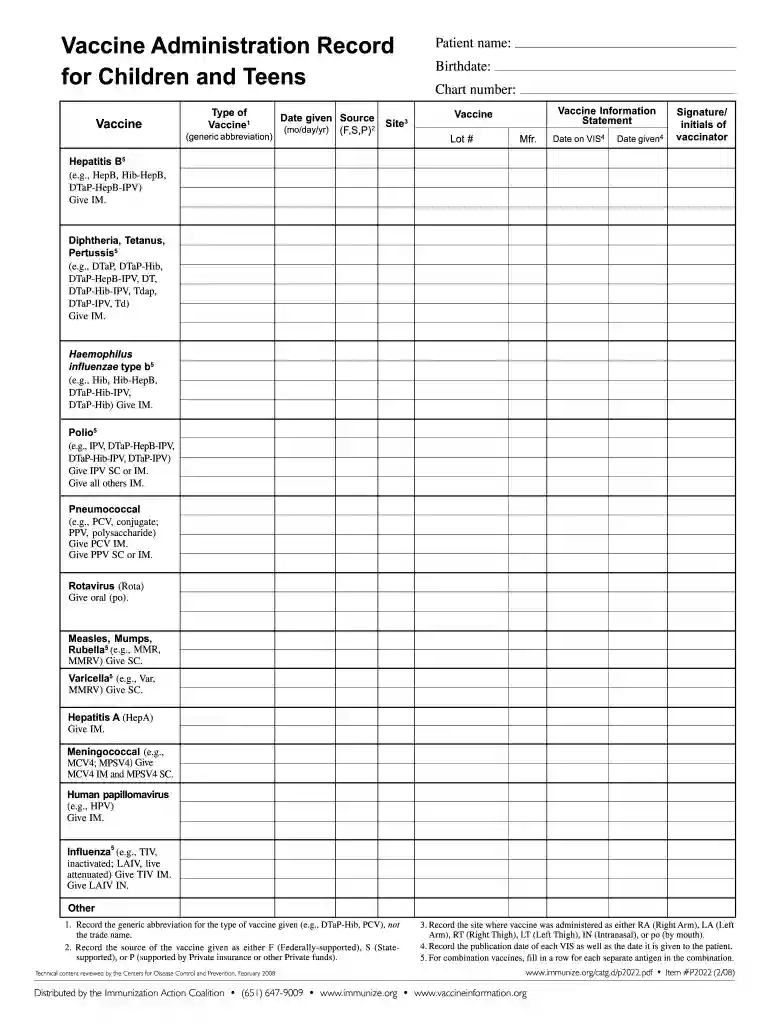
The Vaccine Administration Record for Children and Teens serves as a crucial document that tracks the immunization history of minors. This official record is used to ensure that proper vaccinations are administered according to established health guidelines. Below is an exploration of its key components, usage, and other important details necessary for effective utilization.
The Vaccine Administration Record for Children and Teens includes vital information about the vaccines given to minors. This detailed documentation helps families, healthcare providers, and schools track immunizations effectively.
Components of the Record:
Importance:
Properly filling out the Vaccine Administration Record ensures accuracy and completeness. Follow these steps to document vaccinations accurately:
Gather Required Information:
Fill Out Vaccine Details:
Document Provider Information:
Review and Verify:
To ensure the Vaccine Administration Record remains useful over time, adhere to these best practices:
The Vaccine Administration Record is not only a practical document but also has legal implications, particularly concerning immunization mandates in the United States. For example:
Various forms and templates exist for documenting vaccinations. Familiarizing with different versions can aid users in selecting the appropriate record type.
Real-world scenarios can further clarify how to manage vaccine administration records effectively:
Familiarity with specific terminology related to vaccinations enhances understanding:
The Vaccine Administration Record for Children and Teens is an essential document that plays a crucial role in public health and compliance with immunization policies. By understanding how to manage and utilize this record, families can ensure proper vaccination records are kept for their children, thereby supporting both individual and community health efforts.
We've got more versions of the vaccine administration record for teens and adults pdf form. Select the right vaccine administration record for teens and adults pdf version from the list and start editing it straight away!
At DocHub, your data security is our priority. We follow HIPAA, SOC2, GDPR, and other standards, so you can work on your documents with confidence.
This approach highlights how we customized content, materials, and teaching methods for each age groupstarting with playful and interactive allergy awarenessRead more
To obtain a copy of your shot record for yourself or for your underage child, please visit our OSIIS Public Portal.Read more
Vaccine Administration Record for Children and Teens (PDF); Vaccine Administration Record for Adults (PDF). Additional resources regarding vaccine documentationRead more


