
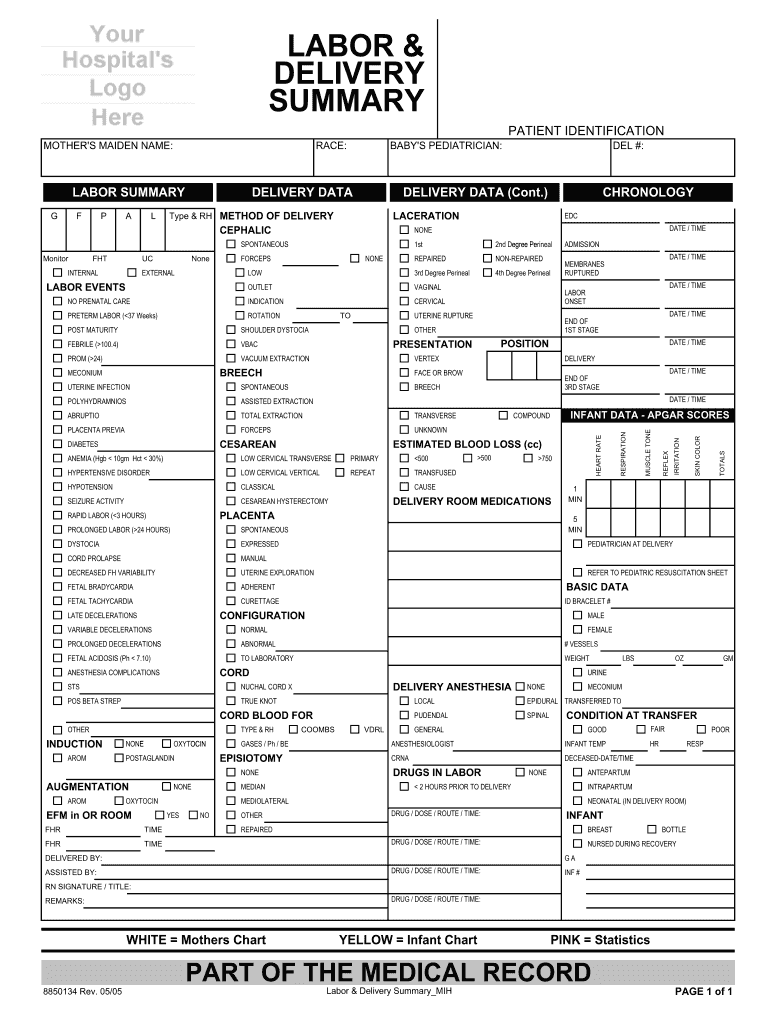







Understanding the Labor and Delivery Nurse Report Sheet
The labor and delivery nurse report sheet is a critical tool used by nurses during the labor and delivery process. It acts as a comprehensive record that captures essential information regarding the patient’s condition, the progress of labor, and details about the newborn. The document allows healthcare professionals to communicate effectively and ensures that vital information is documented accurately for ongoing care and future reference.
Key Elements of the Labor and Delivery Nurse Report Sheet
The report sheet includes several crucial components that contribute to a thorough understanding of the labor and delivery process. These elements can vary based on hospital protocols but typically include:
- Patient Identification: Essential details include the patient's name, medical record number, and date of birth, which are fundamental for any medical documentation.
- Labor Events: This section tracks the chronology of labor events such as the onset of labor, progression of cervical dilation, and any interventions that may have occurred.
- Mode of Delivery: Documentation of whether the delivery was vaginal or via cesarean section (C-section) is crucial for both medical records and patient care.
- Infant Data: Information about the newborn, including birth weight, Apgar scores, and any immediate health concerns, is recorded for further neonatal care.
- Maternal Status: Details about the mother’s health and any complications during labor or delivery, including vital signs and administered medications, are included to monitor overall health.
Steps to Complete the Labor and Delivery Nurse Report Sheet
Filling out the nurse report sheet involves systematic documentation to ensure all pertinent information is captured. The steps include:
- Prepare the Document: Ensure you have the right template, whether digital or printed.
- Enter Patient Information: Accurately fill in patient demographics at the top of the sheet.
- Record Labor Events: Log the timing and nature of contractions, cervical checks, and any interventions.
- Document Delivery Details: Note the time of delivery, the mode of delivery, and any immediate neonatal interventions.
- Update Maternal and Infant Information: Fill in details regarding the health status of both the mother and the newborn.
- Review for Accuracy: Double-check all entries for potential mistakes before submitting to the medical record.
Benefits of Using a Labor and Delivery Nurse Report Sheet
Utilizing a standardized report sheet streamlines the labor and delivery process in the following ways:
- Enhanced Communication: It serves as a comprehensive summary that can be quickly shared among healthcare team members, reducing the risk of miscommunication.
- Improved Patient Safety: Detailed records help ensure that critical details about the patient’s condition and delivery are not overlooked.
- Legal Documentation: The report serves as a legal document that may be referenced in cases of medical review or litigation.
- Quality of Care: Enables better continuity of care by providing nurses and healthcare providers with a clear history of events.
Variants of the Labor and Delivery Nurse Report Sheet
Different healthcare settings may employ versions of this report sheet to cater to specific needs. Variants may include:
- Pre-printed Sheets: Customized for individual hospitals, ensuring all necessary fields are included.
- Digital Formats: Electronic health record systems that provide fillable sections, enabling real-time updates and easier data management.
- Focus-Specific Sheets: Some institutions may create specialized versions for high-risk deliveries or water births, addressing unique documentation needs.
Important Terms Related to the Labor and Delivery Nurse Report Sheet
Understanding specific terminology associated with the labor and delivery report sheet is essential for accurate documentation and communication. Some key terms include:
- Apgar Score: A quick assessment of a newborn's health right after birth based on breathing, heart rate, muscle tone, reflex response, and skin color.
- Cervical Dilation: The process by which the cervix opens during labor, measured in centimeters from zero to ten.
- Intervention: Any medical procedure performed during labor and delivery, such as administering anesthesia or performing an episiotomy.
Legal Use of the Labor and Delivery Nurse Report Sheet
The labor and delivery nurse report sheet should comply with legal and regulatory standards to ensure protection against potential liabilities. This includes:
- Adhering to patient privacy regulations, such as HIPAA in the United States, to safeguard confidential information.
- Ensuring accuracy, as discrepancies in documentation can lead to legal challenges if patient outcomes are questioned.
- Following institutional policies that dictate the retention period for such documents, usually based on state regulations.
Real-life Use Cases of the Labor and Delivery Nurse Report Sheet
Practical scenarios illustrate how the report sheet is utilized in everyday nursing practice. For instance, during a delivery where the patient experiences unexpected complications, a comprehensive report sheet allows the team to quickly reference pertinent patient history, actions taken, and medications administered. This immediate access to accurate information can be pivotal in making timely clinical decisions and enhancing patient outcomes.
A second example involves collaboration among nursing staff during shift changes, where the report sheet becomes a primary tool for assessing patient status. It enables the incoming nurse to efficiently understand labor patterns, any ongoing interventions, and newborn assessments.
The labor and delivery nurse report sheet is an indispensable resource in nursing practice, ensuring that comprehensive and accurate information is available to healthcare providers, ultimately promoting maternal and neonatal safety and care quality.




