




01. Edit your physical therapy evaluation template online
Type text, add images, blackout confidential details, add comments, highlights and more.

Type text, add images, blackout confidential details, add comments, highlights and more.

Draw your signature, type it, upload its image, or use your mobile device as a signature pad.

Send physical therapy evaluation template word doc via email, link, or fax. You can also download it, export it or print it out.
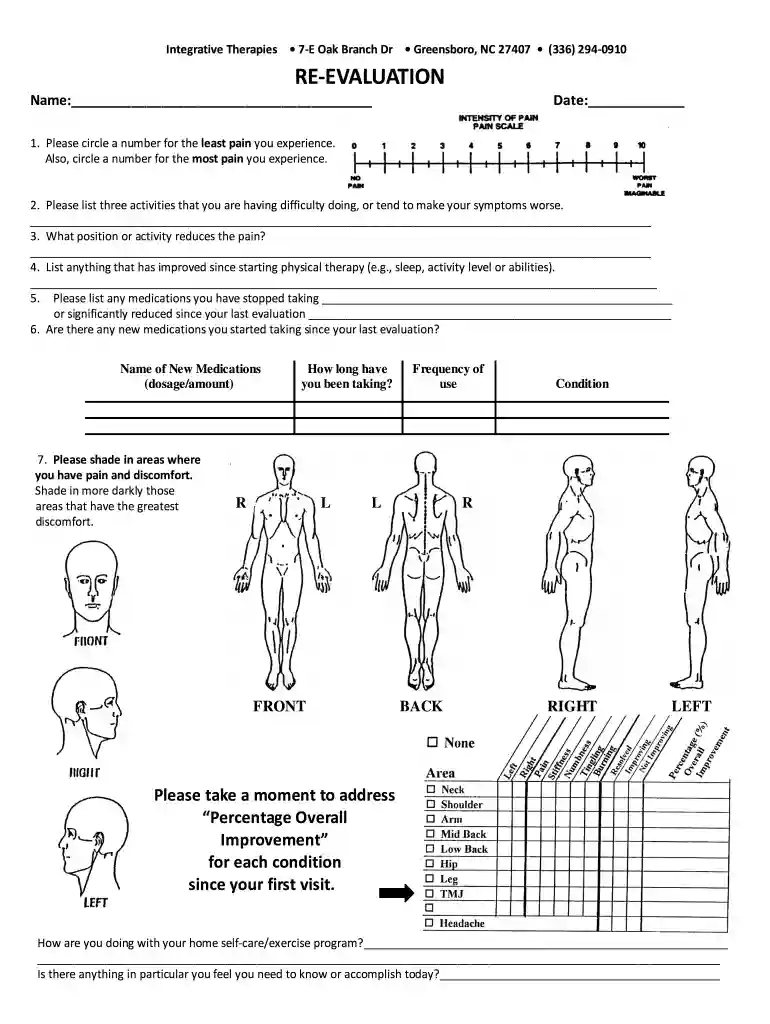
A physical therapy evaluation form is a critical document used by healthcare professionals to assess a patient's condition and determine the appropriate course of treatment. It captures essential information about the patient's medical history, current symptoms, physical abilities, and treatment goals. This form serves as a foundational tool in developing an individualized treatment plan for each patient.
Patient Information: Typically includes name, age, contact information, and emergency contacts. This basic demographic data is vital for creating a comprehensive patient profile.
Medical History: Captures information on previous treatments, surgeries, medications, and underlying conditions. Understanding the patient's medical background is crucial for tailoring care.
Current Symptoms: This section details the specific issues the patient is experiencing, such as pain levels, range of motion limitations, and functional impairments.
Physical Examination Findings: Healthcare providers document various observations from their assessments, including strength tests, flexibility measurements, and balance evaluations.
Treatment Goals: Establishes benchmarks for what the patient hopes to achieve through therapy, such as returning to specific activities or reducing pain levels.
Filling out a physical therapy evaluation form is a collaborative effort between the patient and the therapist. Here are the essential steps involved in this process:
Gather Necessary Information: Both the patient and therapist should prepare by collecting relevant medical records and current medications.
Complete Patient Demographics: The patient needs to fill in their basic information accurately, as this facilitates communication between healthcare providers.
Document Medical History: The patient discusses their past medical treatments, surgeries, and ongoing health issues, allowing the therapist to gain valuable insights.
Describe Current Symptoms: The patient should detail their symptoms, including pain intensity and frequency along with any noticeable functional limitations.
Conduct Physical Examination: The therapist performs various assessments and records their findings on the form, including strength, flexibility, and balance tests.
Set Treatment Goals: Together, the patient and therapist outline realistic and measurable goals for therapy, ensuring that both agree on the expected outcomes.
Utilizing a physical therapy evaluation form is essential for several reasons:
Standardization: It ensures that all relevant information is collected systematically, leading to comprehensive evaluations across different patients.
Informed Decision-Making: The data gathered helps therapists develop tailored treatment plans that are informed by the patient's unique needs and conditions.
Tracking Progress: Re-evaluating patients using the same form allows for objective assessments of their progress over time, facilitating adjustments to the treatment plan as needed.
Documentation for Insurance: Many insurance companies require thorough documentation for reimbursement of physical therapy services, making this form an important legal document.
The physical therapy evaluation form is used by a range of professionals and entities, including:
Licensed Physical Therapists: These healthcare providers utilize the form to assess and guide patient treatment plans.
Healthcare Facilities: Hospitals, outpatient clinics, and rehabilitation centers implement the form to ensure standard evaluations.
Insurance Companies: Insurers may require information documented in these forms to justify the medical necessity of therapy services.
Patients: They benefit directly by receiving tailored care guided by the assessment and ongoing evaluation recorded in these forms.


A thorough physical therapy evaluation form will typically include the following elements:
Personal Information: Basic details such as patient name, address, and insurance information.
Referral Source: Information about who referred the patient for therapy, which may influence treatment considerations.
Subjective Assessment: A section where patients provide their descriptions of pain, limitations, and goals.
Objective Assessment: A detailed report of the therapist's findings from physical examinations using specific measurements.
Assessment Summary: A synthesis of the subjective and objective data that forms the basis for the clinical diagnosis.
Treatment Plan: A clear outline of the proposed interventions, frequency of visits, and anticipated outcomes.
By completing this form accurately, both patients and therapists can establish a clear direction for therapy, facilitating an effective rehabilitation process tailored to the individual needs of each patient.
We've got more versions of the physical therapy evaluation template form. Select the right physical therapy evaluation template version from the list and start editing it straight away!
| Versions | Form popularity | Fillable & printable |
|---|---|---|
| 2012 | 4.7 Satisfied (25 Votes) |
Microsoft Word doesn’t have signing tools to generate valid electronic signatures and enforceable forms. Luckily, DocHub is an online eSignature-compliant editor that works with various document formats, such as .doc files. Sign in to your account and add the Word version of your physical therapy evaluation form from your device and cloud, or URL - our editor will automatically convert it into an editable PDF. Make all necessary alterations in your document and click Sign to generate your own legally-binding eSignature. There are four signing options from which to choose.
If you use Chrome, there are two simple ways to edit your pt evaluation form online. First, visit the DocHub website, add your file, and edit it utilizing our toolbar. You may also install our Chrome extension and edit any document by dragging and dropping it in your browser window.
At DocHub, your data security is our priority. We follow HIPAA, SOC2, GDPR, and other standards, so you can work on your documents with confidence.
/ Would you like to participate in the design or evaluation of these treatment being correct, except for physical therapy, which is incredibly important for.
Account of Current Condition: History of present injury: Current Symptoms: Location: Onset: Character: Intensity: Duration: Aggravating Factors:.Read more


