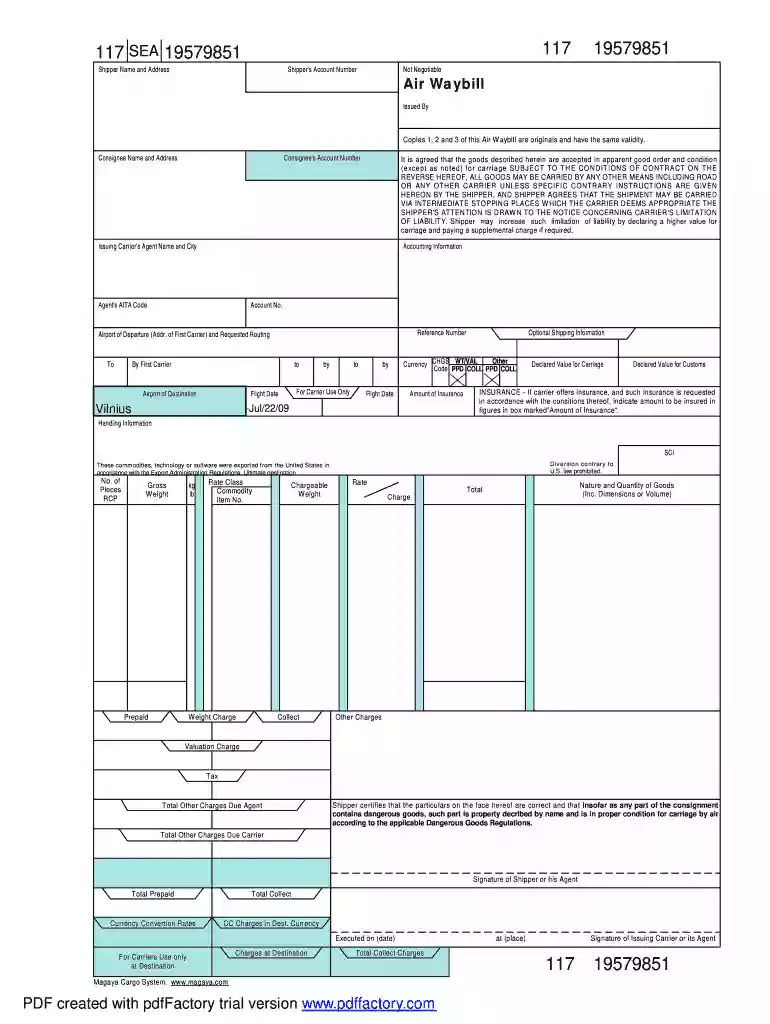
Definition and Meaning of Air Waybill
An Air Waybill (AWB) is a crucial document in the air freight industry, serving as a shipping agreement between the shipper and the carrier. It outlines essential details regarding the shipment, including the shipper and consignee information, terms of carriage, and the conditions under which the cargo is accepted and transported. The AWB also encapsulates liability limitations and options for insurance, ensuring that both parties have a clear understanding of their responsibilities.
The AWB is not simply a receipt; it acts as a contractual agreement and a vital record for tracking shipments. It is typically created by the airline or freight forwarder and can be used to facilitate customs clearance and effective communication between involved parties. Because the document adheres to international shipping standards, it is widely accepted across borders, making it a cornerstone of global trade operations.
Key Elements of the Air Waybill
Several critical components constitute a standard Air Waybill. Understanding these elements is essential for anyone involved in the air freight process.
- Shipper Information: This section contains details about the sender, including name, address, and contact information, ensuring proper identification and correspondence.
- Consignee Information: Contains the recipient's details, similarly structured to the shipper information, to confirm where the goods must be delivered.
- Flight Information: The AWB includes specific details about the flight, including flight number, departure and arrival airports, and scheduled timings, which help in tracking the shipment's journey.
- Nature of Goods: This part describes the contents of the shipment, such as the weight, dimensions, and type of items being transported. This information is crucial for pricing and handling.
- Terms of Carriage: Outlines the responsibilities of both shipper and carrier, including limitations of liability and insurance coverage options.
- Payment Details: This section outlines payment terms, indicating whether the shipping charges are prepaid or collect, essential for billing purposes.
Familiarity with these elements ensures that the air freight process runs smoothly and can help in resolving disputes should they arise.
Steps to Complete the Air Waybill
Completing the Air Waybill accurately is vital to ensure smooth transit. Here’s a comprehensive guide on how to fill it out properly:
- Gather Required Information: Before starting, collect all necessary details about the shipment, including information for both the shipper and consignee, flight details, and the nature of the goods.
- Fill in Shipper and Consignee Sections:
- Ensure you include full names, addresses, and contact numbers.
- double-check for typing errors to avoid delivery issues.
- Detail the Shipment Contents:
- Enter a brief description of the items, along with weight and dimensions.
- Correctly classify the items according to the guidelines provided by the carrier.
- Specify Terms of Carriage:
- Select the appropriate options for liability and insurance, ensuring you understand the implications of each choice.
- Review and Confirm Payment Information:
- Indicate whether shipping charges are prepaid or collect, and confirm payment methods are applicable.
- Sign and Date the Document: Ensure you sign the AWB where required, making the document legally binding.
Completing these steps accurately can help streamline the shipping process and avoid potential delays.
Important Terms Related to Air Waybill
Familiarity with specific terminology related to Air Waybills can enhance understanding and communication in the air freight process. Here are some relevant terms:
- AWB Number: A unique identification number assigned to each Air Waybill, enabling easy tracking of shipments.
- Carrier: The airline or freight forwarder responsible for transporting the cargo.
- Consignee: The person or entity designated to receive the shipment.
- Shipper: The individual or organization sending the goods.
- Freight Charge: The fee charged by the carrier for transporting the shipment.
- Bill of Lading: A document serving a similar purpose as an AWB but is typically used in ocean freight.
Understanding these terms can significantly impact communication during the shipping process and enhance operational efficiency.
Legal Use of the Air Waybill
The Air Waybill is governed by a framework of legal principles that regulate its use. This framework is vital to ensuring that the document holds legal weight and protects both the shipper's and carrier's interests.
- Contractual Agreement: The AWB serves as a binding contract between the shipper and the carrier, laying out the terms that govern the relationship. It obligates both parties to adhere to the stipulated conditions during the shipment process.
- Evidence in Disputes: In case of loss or damage to the shipment, the AWB acts as a critical piece of evidence for legal proceedings, helping to resolve disputes regarding liability and damages.
- Regulatory Compliance: The use of the Air Waybill must comply with various national and international laws governing air transport. Adhering to these regulations is essential for legal shipment processing, especially regarding customs clearance and trade compliance.
Failing to follow legal guidelines associated with the Air Waybill can lead to significant repercussions, including legal claims and fines. Awareness and understanding of these legal frameworks are essential for anyone involved in air transport.
Examples of Using the Air Waybill
Practical examples of how the Air Waybill operates in real-world scenarios can provide insight into its applications and importance.
- International Shipping: A manufacturing company in New York ships parts to a client in Tokyo. The exporter fills out an AWB, detailing the goods and ensuring compliance with international trade regulations. The AWB becomes essential during customs clearance in Japan.
- E-commerce Deliveries: An online retailer based in Los Angeles uses an AWB to ship products to customers across the United States. Each order generates a unique AWB number to facilitate tracking and confirmation of delivery.
- Urgent Shipments: A medical supply company needs to send critical equipment overnight to a hospital. Using an Air Waybill ensures that the contents are documented adequately to expedite processing and delivery.
These examples illustrate the versatility and critical role of the Air Waybill in the air freight industry, demonstrating its necessity in various shipping scenarios.