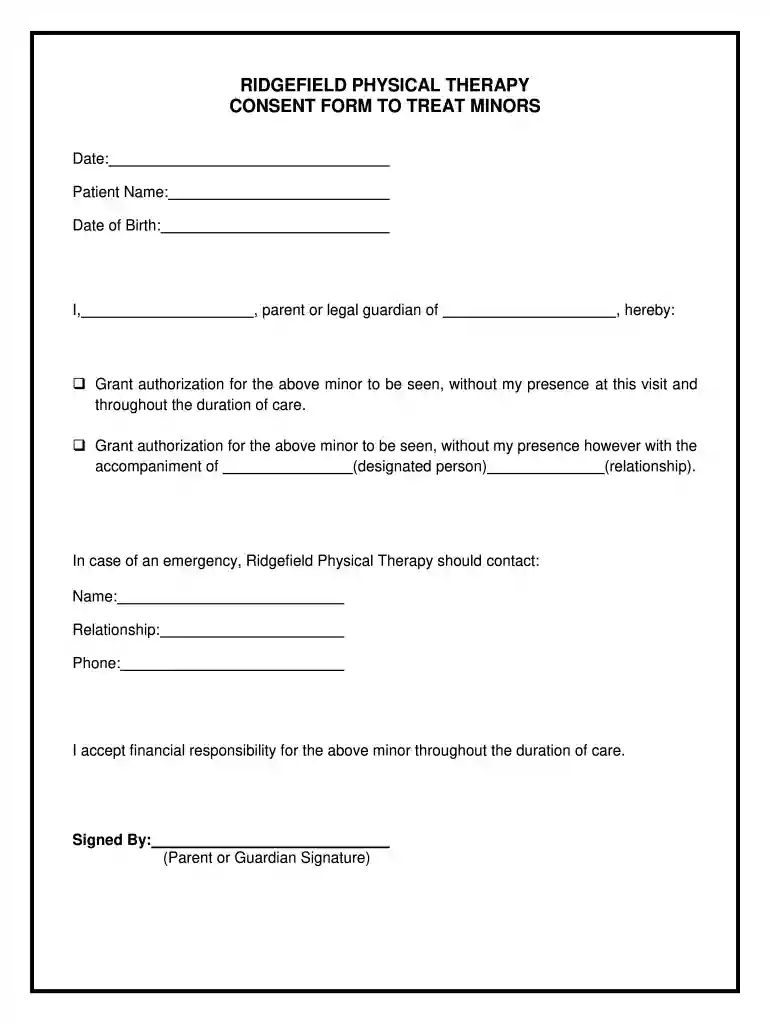
Definition & Meaning of the Consent to Treat Form
The consent to treat form is a legal document that grants healthcare providers permission to administer medical treatment to a patient, often a minor, without requiring the presence of a parent or legal guardian. This form is crucial in scenarios where immediate medical attention is necessary and a guardian is not available. It is designed to ensure that healthcare professionals can act in the best interest of the patient while complying with legal and ethical standards regarding consent.
Key Components of the Consent to Treat Form
- Patient Information: Includes the name, date of birth, and contact details of the patient receiving treatment.
- Guardian Information: Provides details about the parent or legal guardian, including their authorization to grant consent.
- Treatment Description: Specifies the types of medical treatment the healthcare provider is authorized to perform.
- Emergency Contact: A section for listing an emergency contact for the patient.
- Financial Responsibility: Clarifies who is financially responsible for any medical fees incurred during treatment.
This form helps protect the rights of both the patient and healthcare providers while facilitating timely medical care when it is most critical.
How to Use the Consent to Treat Form
Using the consent to treat form involves several straightforward steps designed to ensure clarity and legal compliance. This usage is prevalent in settings like hospitals, clinics, and urgent care facilities.
Steps for Effective Use
- Download or Create a Template: Obtain a consent to treat form template that complies with state laws and is suitable for your specific medical practice.
- Fill Out Patient and Guardian Information: Ensure accurate completion of all personal details, including relationships and contact numbers.
- Clearly Define Treatment Scope: Specify the treatments covered under the consent, detailing what the healthcare provider can do.
- Signature of Guardian: The form must be signed by the parent or legal guardian, confirming their understanding and agreement to the treatments specified.
- Review and Retain Records: Keep a signed copy on file in accordance with healthcare regulations and for future reference.
Following these steps ensures that the consent to treat form serves its purpose without legal complications.
Steps to Complete the Consent to Treat Form
Completing the consent to treat form accurately is essential to ensure its validity and legal enforceability.
Detailed Completion Process
- Title the Document: Clearly state it is a consent to treat form at the top of the page.
- Patient Information Section: Input the minor's name, date of birth, and any other relevant personal details.
- Guardian Information Section: Include the name, relationship to the patient, and contact information of the parent or legal guardian providing consent.
- Treatment Authorization: Describe the permissible treatments in clear, understandable language, avoiding medical jargon.
- Emergency Procedure: Include instructions for emergency contacts, especially in instances where immediate communication is necessary.
- Financial Responsibility Clause: State who is responsible for payment, including any clauses regarding insurance or out-of-pocket costs.
- Signature and Date: Ensure the guardian's signature is collected along with the date of signing.
It is critical to proofread the form before any treatment to ensure that all information is accurate and complete.
Important Terms Related to the Consent to Treat Form
Understanding key terms associated with the consent to treat form can aid in better comprehension and usage of the document.
Glossary of Relevant Terms
- Informed Consent: A process where the patient or guardian is made aware of the risks and benefits of a treatment option before agreeing to proceed.
- Legal Guardian: An individual appointed by a court to take care of another person, particularly in medical or legal decisions.
- Emergency Medical Services (EMS): Services that provide urgent medical care but often require a consent to treat from a guardian during emergencies.
- HIPAA Compliance: Considerations regarding the protection of healthcare information that affect how consent forms should be handled and secured.
Familiarity with these terms enhances understanding and ensures compliance with healthcare regulations.
Legal Use of the Consent to Treat Form
The legal validity of a consent to treat form is paramount and varies based on state laws and regulations.
Legal Considerations
- Age of Consent: Some states permit minors to consent to specific types of treatment, like mental health services or reproductive health, potentially reducing the need for guardian consent.
- State Laws and Requirements: Each state has unique laws regarding the consent to treat form, including the necessary language and provisions that must be included.
- Documentation Requirements: Legal standards may dictate that the consent form be retained for a certain period, ensuring it is accessible for legal review if needed.
- Revocation of Consent: Patients or guardians have the right to revoke consent at any time, requiring healthcare providers to respect this decision.
Understanding these legal aspects aids in the proper use and enforcement of the consent to treat form.
Examples of Using the Consent to Treat Form
Practical examples of the consent to treat form's usage illustrate its importance in various healthcare scenarios.
Practical Scenarios
- Emergency Room Situations: When a child is brought to an emergency room without a parent, a pre-signed consent to treat form from a guardian allows for immediate care without delays.
- School Sports Physicals: Many schools require a consent to treat form before a student may participate in physical activities, ensuring quick medical response if injuries occur.
- Telemedicine Consultations: In some instances, consent forms can also be adapted for virtual visits, where guardians grant permission for electronic evaluations and treatments.
These examples highlight the versatility and necessity of the consent to treat form in ensuring continued and accessible healthcare.