




01. Edit your oregon dmv bill of sale online
Type text, add images, blackout confidential details, add comments, highlights and more.

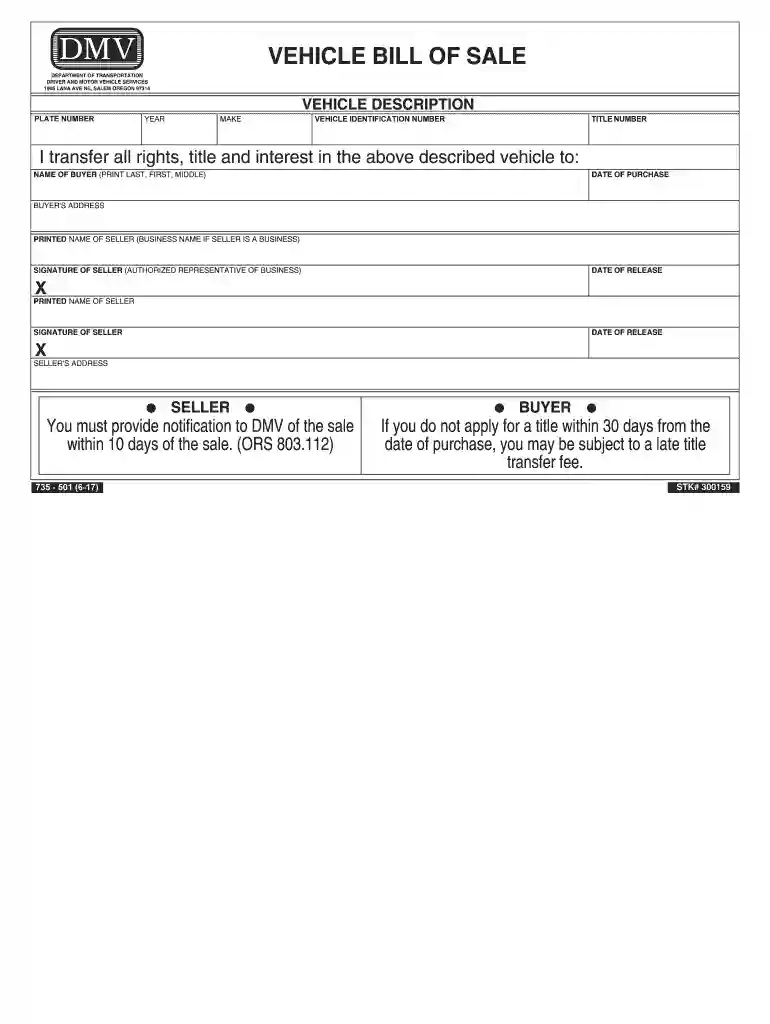
Type text, add images, blackout confidential details, add comments, highlights and more.

Draw your signature, type it, upload its image, or use your mobile device as a signature pad.

Send dmv bill of sale via email, link, or fax. You can also download it, export it or print it out.
The vehicle bill of sale is a legal document that officially records the transfer of ownership of a vehicle from the seller to the buyer. In Oregon, the bill of sale is crucial for various transactions, including the sale of cars, motorcycles, trailers, and other motor vehicles. This document serves multiple purposes, including providing proof of purchase, detailing the terms of the sale, and serving as necessary documentation for title transfer at the Oregon DMV.
Key features of the vehicle bill of sale include:
These elements collectively ensure clarity and legal protection for both parties involved in the vehicle transaction.
Completing the vehicle bill of sale involves a series of straightforward steps that ensure all necessary information is accurately documented. The following outlines the key procedures involved:
Gather Necessary Information: Collect all required information about the vehicle, buyer, and seller.
Obtain the Bill of Sale Form: You can obtain the standard vehicle bill of sale template from the Oregon DMV website or through DocHub, where it can be edited digitally.
Fill Out the Bill of Sale: Accurately fill in all required fields in the template. Ensure that:
Sign the Document: Both the buyer and seller should sign the bill of sale to make it valid. This step is essential for legal recognition of the transaction.
Provide Copies: After signing, both parties should retain a copy of the signed document for their records. This serves as proof of the transaction and may be necessary for future reference when transferring the title.
These steps help to ensure that the vehicle transfer process is as smooth and legally compliant as possible.
Familiarity with key terminology associated with the vehicle bill of sale is beneficial for both buyers and sellers. Here are some essential terms to understand:
Understanding these terms aids in navigating the sale process and ensures compliance with relevant regulations.
Oregon has specific rules and regulations governing the use of vehicle bills of sale, essential for ensuring a valid and enforceable transaction. Some requirements are as follows:
These local rules help facilitate the transfer process while protecting both parties from legal disputes.
The vehicle bill of sale is utilized by a variety of individuals and entities involved in the buying and selling of vehicles. Typical users include:
Understanding the diverse range of users helps highlight the document's importance in various contexts and transactions.


Utilizing a vehicle bill of sale provides multiple benefits for both buyers and sellers. Some of the primary advantages include:
These advantages underscore the importance of having a vehicle bill of sale when engaging in vehicle transactions in Oregon.
We've got more versions of the oregon dmv bill of sale form. Select the right oregon dmv bill of sale version from the list and start editing it straight away!
At DocHub, your data security is our priority. We follow HIPAA, SOC2, GDPR, and other standards, so you can work on your documents with confidence.
Must be original sellers signature (no photocopies). VEHICLE IDENTIFICATION NUMBER. VEHICLE DESCRIPTION. PLATE NUMBER. YEAR. MAKE. TITLE NUMBER.Read more
4 days ago An Oregon DMV bill of sale is a document used to formally record the transfer of ownership of a motor vehicle from one party to another,.Read more
This document proves the purchase happened, showing that the buyer paid for the vehicle and has rights over it, while also confirming the previous owner carriedRead more


