






Definition and Purpose of the Mature Driver Vision Test Form
The mature driver vision test form is a standardized document used in the United States to assess the visual competency of older drivers applying for or renewing their driver's licenses. Aimed primarily at individuals aged 65 and older, the form serves to ensure that these drivers meet the minimum vision standards required by state regulations for safe driving. It is a crucial component in promoting road safety and minimizing accidents attributed to visual impairments among senior drivers.
Visual acuity, peripheral vision, and depth perception are among the key aspects evaluated through the submission of this form. The completion and submission of the mature driver vision test form is often mandated by state departments of motor vehicles (DMVs). The objective is to ensure that mature drivers maintain adequate vision levels to operate vehicles safely, thereby protecting themselves and others on the road.
Obtaining the Mature Driver Vision Test Form
The mature driver vision test form can usually be obtained through multiple channels, making it accessible to all qualified individuals. Here are common ways to acquire the form:
-
State DMV Website: Most state DMVs provide downloadable versions of the mature driver vision test form on their official websites. A simple search for "mature driver vision test form [State Name]" will lead you directly to the appropriate document.
-
Local DMV Office: Individuals can request the form directly at their local DMV office. Staff members can provide printed versions and explain any additional requirements associated with the form.
-
Medical Facilities: Certain medical professionals or eye specialists, who are often responsible for performing the vision tests, may have copies of the form readily available for patients.
Ensuring you have the correct version of the form, specific to your state, is essential, as requirements can vary from one jurisdiction to another.
Steps to Complete the Mature Driver Vision Test Form
Filling out the mature driver vision test form requires careful attention to detail. The following steps outline the process:
-
Personal Information: Fill in your personal details, including your name, address, date of birth, and driver's license number.
-
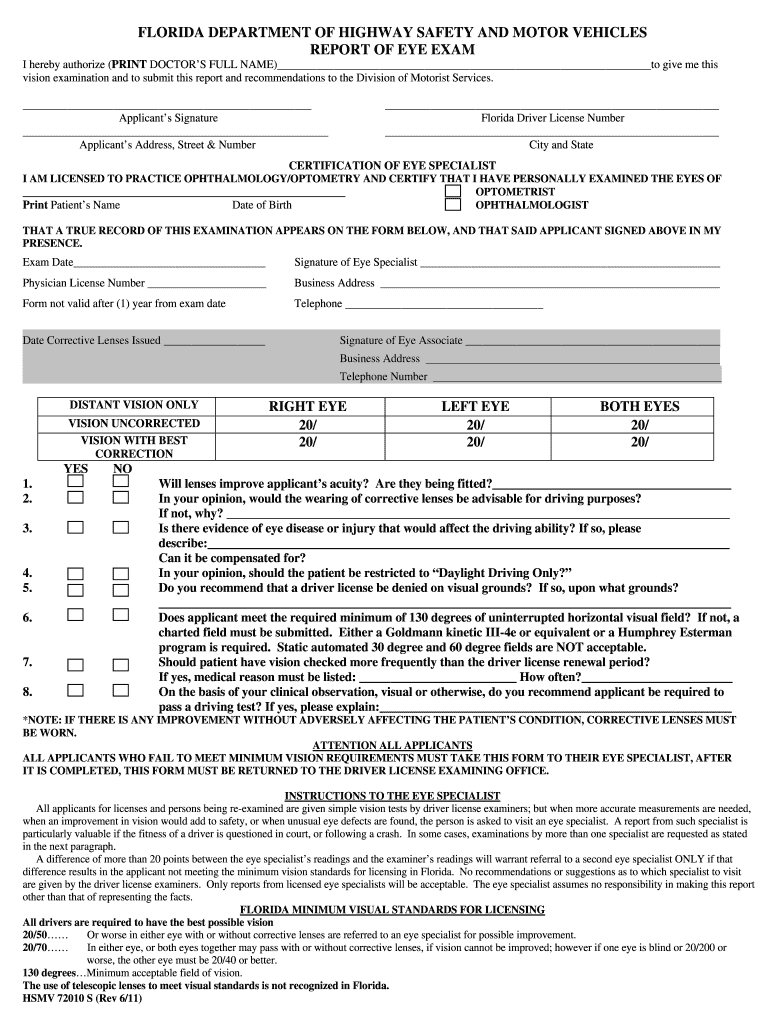
Certification by an Eye Specialist: Schedule an appointment with an eye care professional who is licensed to perform the vision assessment. The specialist will fill out the relevant sections of the form, documenting your visual acuity, peripheral vision, and any recommendations for driving safety.
-
Review for Accuracy: Double-check the information filled in by both you and the eye specialist. Ensuring that all fields are filled accurately prevents delays in processing your application or renewal.
-
Submit the Form: Once completed, submit the form to your local DMV. Depending on state regulations, this may be done in person, by mail, or electronically.
-
Follow Up: If you do not receive a confirmation regarding your application or renewal, follow up with the DMV to ensure the form was processed correctly.
These steps provide a structured approach, making the completion of the mature driver vision test form manageable and straightforward.
Importance of the Mature Driver Vision Test Form
The mature driver vision test form plays a significant role in ensuring road safety, especially for the aging population. Key reasons for its importance include:
-
Enhancing Safety: By evaluating the visual abilities of older drivers, the form helps reduce the number of accidents caused by impaired vision. It ensures that only those who meet the necessary vision standards remain on the road.
-
Promoting Awareness: The process encourages older drivers to be more conscious of their vision health and seek regular eye examinations. This proactive approach can lead to early detection of conditions that may affect their ability to drive safely.
-
Legal Compliance: Certain states require the completion and submission of this form as part of the license renewal process for mature drivers. Complying with state laws is vital for maintaining one's driving privileges.
-
Facilitating Continued Independence: By ensuring that mature drivers meet vision requirements, the form helps support their ability to drive independently, which is essential for mobility and quality of life.
Through these avenues, the mature driver vision test form contributes significantly to wider community safety and individual well-being.
Key Elements of the Mature Driver Vision Test Form
Understanding the key components of the mature driver vision test form is crucial for its proper use. The main elements typically include:
-
Applicant Information: This section collects essential data about the driver, including full name, address, date of birth, phone number, and current driver's license number.
-
Vision Assessment: The eye specialist fills in this section, detailing the results of the visual acuity test. Standards vary by state, but typically include measurements for distance vision, near vision, and peripheral vision checks.
-
Recommendations: As part of the certification process, eye specialists may provide recommendations concerning the driver's fitness to drive, which can range from “fit to drive” to suggestions for corrective measures or restrictions.
-
Signature and Certification: The form requires both the applicant's signature and the eye specialist’s certification statement, validating that the vision test has been performed and the results accurately reported.
-
Submission Instructions: Finally, there are usually clear instructions on how to submit the completed form, including any deadlines or additional documents required for processing.
These elements contribute to a comprehensive overview of the driver's visual health and are essential for the effective evaluation and renewal of driving privileges.
State-Specific Rules for the Mature Driver Vision Test Form
Regulations surrounding the mature driver vision test form can vary widely across states. Key points include:
-
Vision Standards: Each state sets its own minimum vision standards that must be met for safe driving. This may include specific measurements for visual acuity and peripheral vision.
-
Submission Frequency: States may differ in how often mature drivers need to submit the vision test form. Some may require it every renewal cycle (typically every four to five years), while others may mandate it only under certain conditions, such as after reaching a specific age.
-
Eye Specialist Qualifications: Just as vision standards vary, so do the qualifications of eye care professionals who may conduct the testing. Some states accept certification from optometrists, while others require an ophthalmologist.
-
Potential Exemptions: Certain medical conditions or specific drivers may be exempt from undergoing the vision test. Knowledge of these exemptions can assist in the planning of the application process.
Being aware of these state-specific rules is essential for drivers to ensure compliance with local regulations when using the mature driver vision test form.