
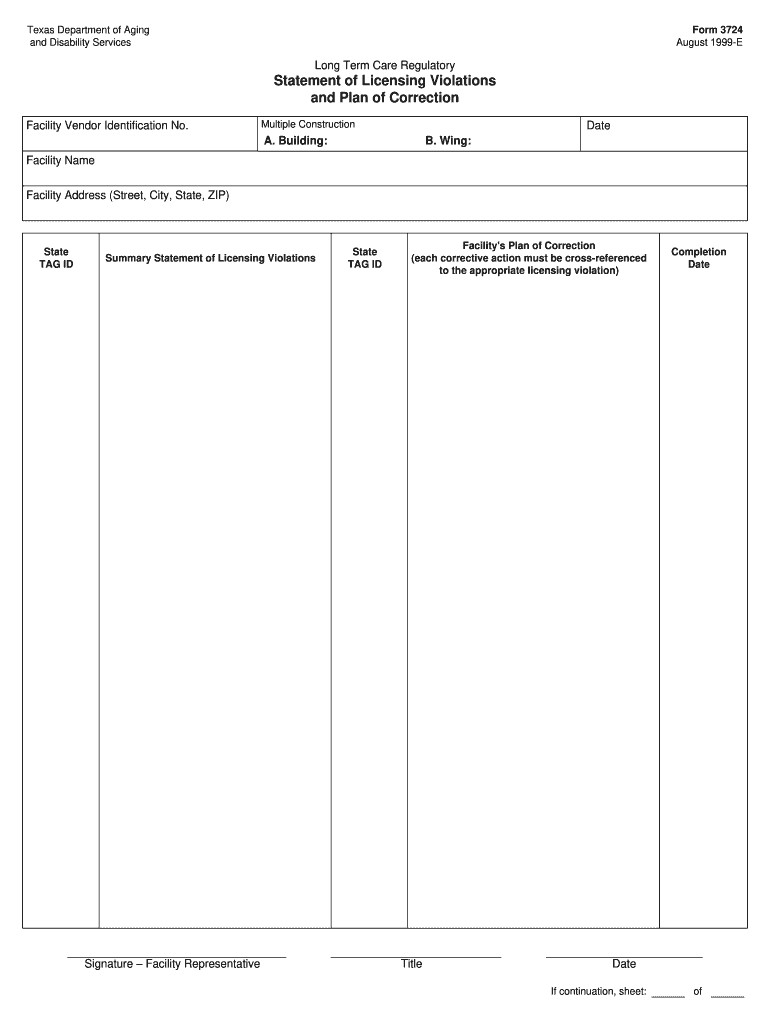







Overview of Form 3724
Form 3724, titled "Statement of Licensing Violations and Plan of Correction," is a critical regulatory document issued by the Texas Department of Aging and Disability Services. This form is essential for long-term care facilities that have experienced licensing violations. It serves to document these violations and outline corrective measures that will be implemented to ensure compliance with state regulations. The structured nature of this form helps maintain accountability and encourages facilities to promptly address any issues.
Key Components of Form 3724
Form 3724 includes several vital sections that guide users through the documentation of violations and the creation of a plan of correction. Each section plays a significant role in ensuring compliance with regulatory requirements.
-
Facility Identification: This section requires specific information about the facility, including its name, address, and licensing number. Accurate input here is essential for tracking compliance within the state.
-
Detailing Violations: Facilities must provide a comprehensive description of each licensing violation. This should include the type of violation, the date it occurred, and references to applicable regulations. The clarity of this section is crucial, as it establishes a baseline from which corrective actions will be evaluated.
-
Plan of Correction: A crucial component, this section outlines the steps the facility will take to rectify each identified violation. It should include specific actions, responsible parties, and realistic completion dates. This not only shows commitment to compliance but also serves as a roadmap for necessary adjustments.
-
Verification and Signature: The form requires a signature from the facility administrator or a designated representative, confirming the accuracy of the documented information and the sincerity of the proposed corrections. This adds a layer of accountability.
Steps for Completing Form 3724
Completing Form 3724 requires careful attention to detail to ensure all required information is included. Facilities should follow these steps for proper completion:
-
Collect Relevant Information: Gather all necessary data on licensing violations and the corrective plans that have been discussed among the management and staff.
-
Fill Out the Facility Information: Clearly input the facility's name, address, and license number at the top of the form.
-
Document Each Violation: For each violation, provide a thorough explanation, including the relevant dates and regulations violated. Ensure that the accounts are accurate and complete to avoid further complications.
-
Outline the Plan of Correction: Develop clear and actionable steps that address each violation. This should include specifics regarding who is responsible for implementing changes and when they will take place.
-
Review and Sign the Document: Before submission, have the form reviewed to ensure that all information is correct and complete. The administrator or designated representative should then sign and date the form.
Legal Implications and Compliance Requirements
The legal significance of Form 3724 cannot be overstated. By submitting this document, facilities demonstrate their commitment to adhering to state regulations.
-
Consequences of Non-Compliance: Failing to accurately report violations or implement the corrective actions outlined can lead to further penalties, including fines or more severe sanctions against the facility's license. Regular follow-up audits by the Texas Department of Aging and Disability Services may occur.
-
Importance of Timeliness: Timely submission of Form 3724 is essential to avoid extended periods of non-compliance. Facilities should establish internal timelines to ensure they meet any deadlines set by regulatory authorities.
Common Pitfalls in Completing Form 3724
Filling out Form 3724 can present challenges. Common mistakes include:
-
Incomplete Information: Failing to provide adequate details about violations or corrective actions can lead to misunderstandings and further regulatory scrutiny.
-
Vague Plans of Correction: A lack of specificity in the action plans can result in insufficient measures being taken, prolonging compliance issues.
-
Missing Signatures: Ensure that the document is signed by the appropriate party, as an unsigned form may not be considered valid.
Best Practices for Using Form 3724
To optimize the use of Form 3724, facilities should adopt the following best practices:
-
Maintain Records: Keep copies of submitted forms and all related correspondence. These can serve as documentation in case of follow-up inspections.
-
Engage Staff: Involve relevant team members in discussions around the violations and the creation of the plan of correction to foster a collaborative environment and ensure accountability.
-
Regular Reviews: Conduct regular internal audits of compliance with licensing regulations to preemptively identify potential violations and address them before they escalate.
By understanding and carefully utilizing Form 3724, long-term care facilities in Texas can foster better compliance practices, thereby improving the quality of care and ensuring the welfare of their residents.




