




01. Edit your form 29 rto goa online
Type text, add images, blackout confidential details, add comments, highlights and more.

Type text, add images, blackout confidential details, add comments, highlights and more.

Draw your signature, type it, upload its image, or use your mobile device as a signature pad.

Send goa rto forms via email, link, or fax. You can also download it, export it or print it out.
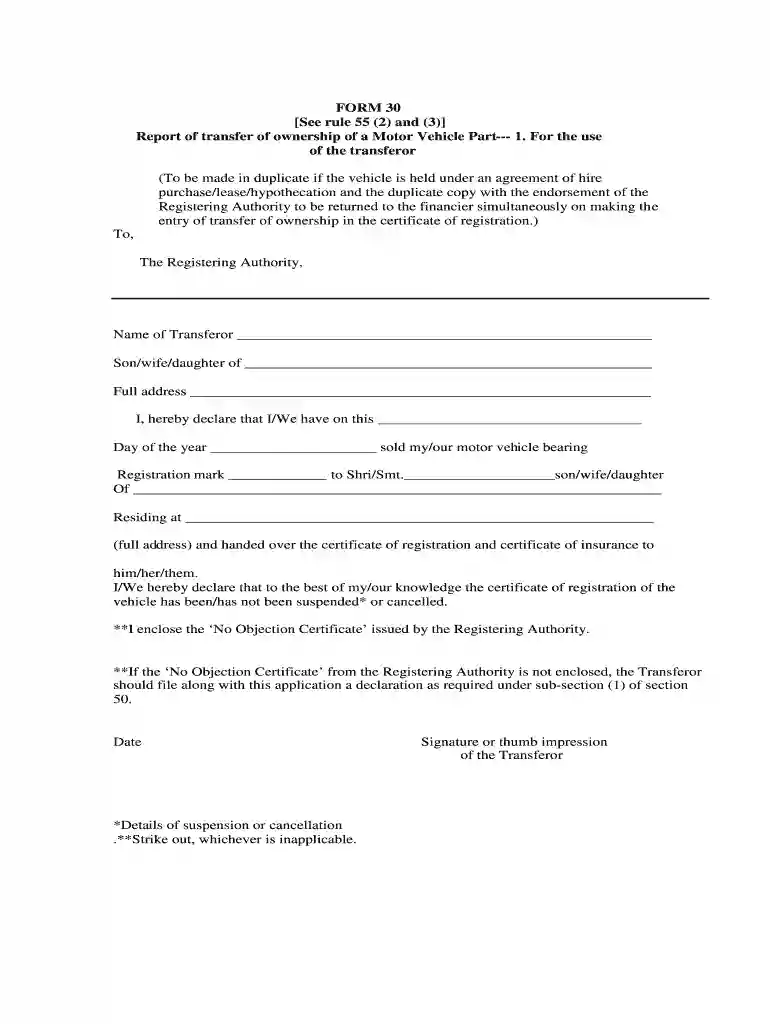
Form 30 is an official document utilized for reporting the transfer of ownership of a motor vehicle in Goa. This form is essential for both the transferor (the current owner) and the transferee (the new owner) to declare the sale and provide necessary details about the vehicle and parties involved. This ensures proper documentation and legal compliance during the transfer process.
Key components included in Form 30 are:
The accurate completion of Form 30 is crucial, as it serves as a legal record of the ownership transfer and is required for updating the Registering Authority's records.
To successfully complete Form 30, several supporting documents must be gathered. These documents are critical for validating the transfer and ensuring that all legal obligations are met. Here are the typical requirements:
Ensuring that these documents are collected ahead of time can streamline the submission process and prevent delays.
Completing Form 30 requires careful attention to detail. Follow the outlined steps to ensure a smooth process:
Following these steps thoroughly can minimize misunderstandings and speed up the processing time for the transfer.
Filling out Form 30 accurately is crucial. Mistakes or omissions can lead to complications, including:
To avoid these potential pitfalls, take the time to review and double-check the completed form and accompanying documents before submission.
Form 30 is governed by specific regulations set by the Regional Transport Office (RTO) Goa. Compliance with these regulations ensures that the transfer of ownership is legally binding and recognized by the authorities. Here are a few important points to consider:
These compliance measures ensure that both the transferor and transferee's interests are protected throughout the ownership transfer process.
We've got more versions of the form 29 rto goa form. Select the right form 29 rto goa version from the list and start editing it straight away!
| Versions | Form popularity | Fillable & printable |
|---|---|---|
| 2007 | 4.1 Satisfied (31 Votes) |
Sure, electronically drawing your signature is acceptable, but only if you utilize a tool that complies with industry laws and regulations. Consider DocHub, which ensures eSignature validity under ESIGN and UETA requirements. All you need to eSign your form 30 rto goa is an account with DocHub and an internet connection. When you open your paperwork in our editor, click Sign and choose the Draw option.
If you want to edit your rto forms goa on the internet swiftly, it does not matter what web browser you employ. DocHub’s straightforward editing tools are available using any internet browser. Simply open the appropriate tab in the editor, add your file, and fill it out without stress.
At DocHub, your data security is our priority. We follow HIPAA, SOC2, GDPR, and other standards, so you can work on your documents with confidence.


