Definition and Purpose of the Marriage Contract Form
The marriage contract form serves as a legal document that outlines the terms and conditions agreed upon by two individuals entering into marriage. This form, often known as a marriage contract or prenuptial agreement, provides a framework for how assets and liabilities will be managed, and it can set expectations for various situations that may arise within the marriage. Such agreements can include provisions regarding property division, spousal support, and responsibilities towards children, all tailored to the specific needs of the couple.
Importance of a Marriage Contract
- Financial Protection: By clearly delineating the rights and responsibilities regarding financial matters, couples can prevent misunderstandings or disputes in the future.
- Clarity in Case of Separation: If the marriage breaks down, a well-drafted contract can simplify the separation process, allowing for quicker and less contentious resolutions.
- Customizable Terms: Couples can craft agreements that reflect their unique situations, accommodating specific financial interests or personal circumstances.
How to Use the Marriage Contract Form
Using the marriage contract form effectively requires understanding its purpose and the necessary steps to complete it. Here are the essential points to consider:
- Assess Your Needs: Couples should discuss their financial situation, expectations for their marriage, and any specific terms they wish to include in the contract.
- Select a Format: The marriage contract form can be obtained in various formats, including PDF or Word. Ensure the form you choose is suitable for your needs and can be easily edited if required.
- Consult Legal Professionals: It is advisable to seek legal counsel to ensure that the contract is enforceable and complies with state-specific laws and regulations regarding marriage contracts.
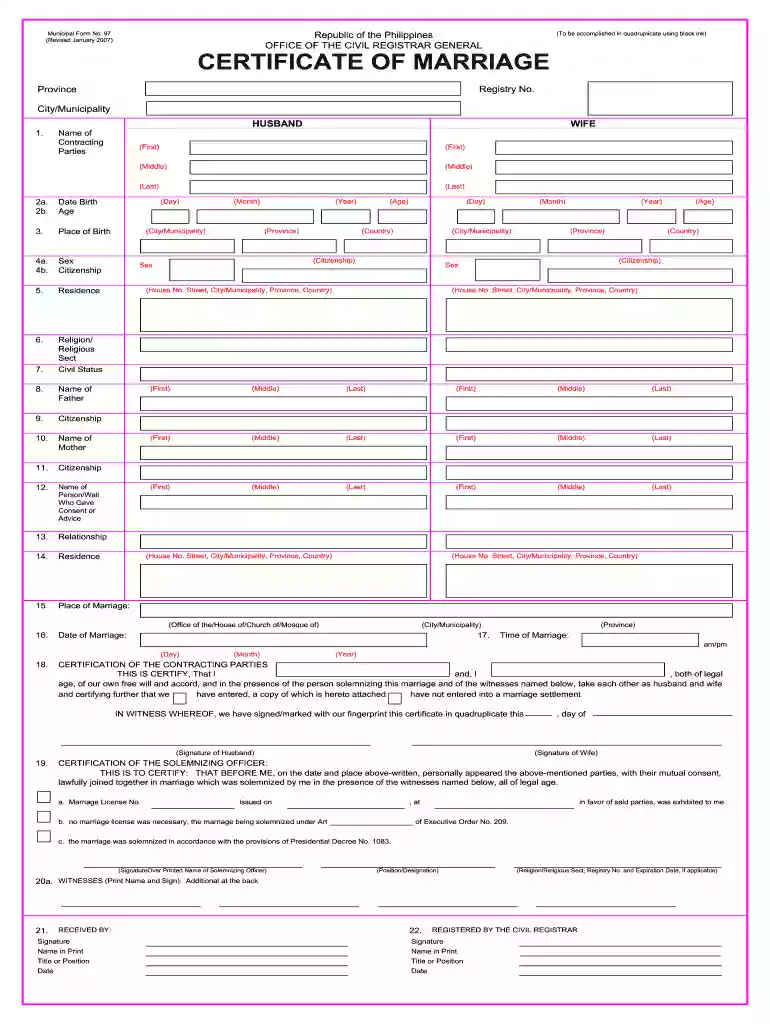
- Fill Out the Form: Accurately complete all sections of the contract form, ensuring both parties agree to the terms outlined.
- Signatures and Notarization: The contract typically requires both parties' signatures, and notarization may be necessary depending on state laws, to validate the agreement.
Steps to Complete the Marriage Contract Form
Completing a marriage contract form involves several detailed steps to ensure that the document is comprehensive and legally binding.
- Gather Essential Information: Collect personal details such as full names, addresses, and birth dates of both parties. Document any prenuptial agreements, property ownership, and debts.
- Outline Terms: Clearly define the terms of the marriage contract, including:
- Asset Division: Specify how assets will be divided upon separation or divorce.
- Debt Responsibility: Clarify how existing debts will be handled.
- Spousal Support: State any plans for alimony or financial support in case of separation.
- Child-Related Decisions: Address custody arrangements and child support obligations if applicable.
- Review and Revise: Both parties should review the contract thoroughly, suggesting changes where necessary to ensure mutual agreement.
- Seek Legal Advice: Have a legal professional review the completed document before signing to confirm all terms are compliant with local laws.
- Finalize the Document: After revisions, print the final version, sign it in front of a notary if required, and ensure that each party retains a copy for their records.
Important Terms Related to the Marriage Contract Form
Understanding the terminology associated with the marriage contract form is crucial for its effective use. Some of the key terms include:
- Prenuptial Agreement: A contract made before marriage determining the ownership of assets in the event of divorce or separation.
- Separation: The state of a couple living apart while remaining legally married, which may involve financial and custodial arrangements.
- Alimony: Financial support one spouse may be required to pay to another after separation or divorce.
- Joint Property: Assets acquired during the marriage, typically owned equally by both spouses.
- Separate Property: Assets owned by one spouse prior to marriage or received as a gift or inheritance during marriage, typically excluded from joint considerations.
Legal Use of the Marriage Contract Form
The legal framework surrounding marriage contracts varies significantly by state, making it essential to understand local laws for proper application.
- Enforceability: For a marriage contract to be enforceable, it must comply with state laws, including fairness and transparency during its creation.
- Disclosure Requirements: Both parties are generally required to fully disclose their financial situations when entering into a marriage contract.
- Court Considerations: Courts may uphold or disregard a marriage contract based on factors like equity, legal compliance, and whether the terms were entered into voluntarily.
- Modification and Revocation: Couples have the option to modify or revoke a marriage contract if both partners agree, but this often requires following the same formalities as the original contract for the changes to be valid.
Understanding these regulations helps ensure that the marriage contract stands up in court, should disputes arise regarding its interpretation or validity.
Examples of Using the Marriage Contract Form
Practical examples can help illustrate when and how a marriage contract form is beneficial.
- Case Study One: Couple A enters a marriage with significant assets, including a business and inherited property. They use a marriage contract to delineate that these assets remain separate in the event of divorce, protecting their interests.
- Case Study Two: Couple B plans to get married and includes provisions in their marriage contract for handling finances, such as joint accounts for household expenses while keeping personal accounts separate.
- Case Study Three: Couple C has children from previous relationships. They use the marriage contract to outline terms related to child support and custody, ensuring that both their wishes and their children's best interests are prioritized.
- Example Variations: Different states may require specific clauses to be present in marriage contracts, or they may enforce different rules regarding spousal support based on the length of marriage or other factors.
By considering these examples, couples can tailor their marriage contracts to address their unique circumstances effectively.