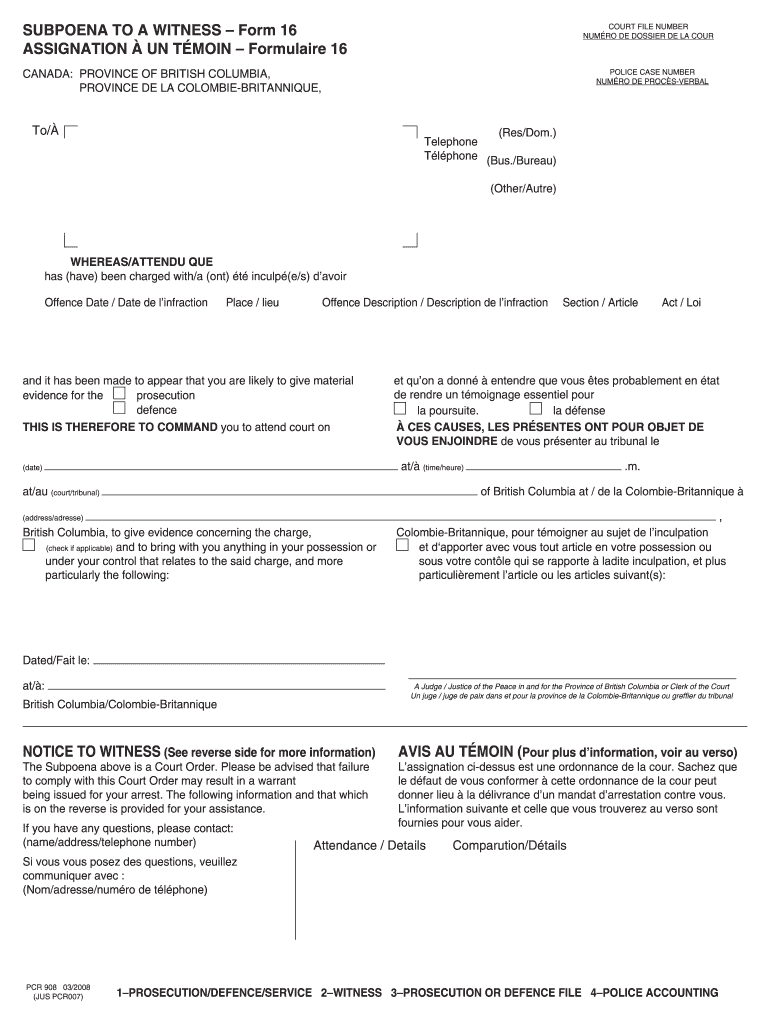







Definition and Meaning of Subpoena to a Witness Ontario Form 16
A subpoena to a witness Ontario Form 16 is a legal document issued by a court commanding an individual to appear and testify as a witness in a legal proceeding. This form specifically outlines the obligations placed on the recipient, detailing the case's background and the evidence the witness is expected to provide. The term "subpoena" is derived from a Latin phrase that means "under penalty," emphasizing the legal obligation of the witness to comply with the request or face potential penalties.
Key components of the subpoena to a witness Ontario Form 16 include:
- Case Details: Information about the legal case, including the title, case number, and court location.
- Witness Information: Name and address of the individual being summoned to testify.
- Date and Time of Appearance: Specifies when the witness is required to appear at the court or deposition.
- Consequences for Non-Compliance: Information regarding penalties for failing to comply, which can include fines or being held in contempt of court.
Understanding the significance of the subpoena to a witness Ontario Form 16 is crucial for individuals involved in legal proceedings. It ensures that witnesses fulfill their roles in the judicial process, contributing to the fair resolution of cases.
How to Use the Subpoena to a Witness Ontario Form 16
Using the subpoena to a witness Ontario Form 16 involves several key steps to ensure that it is legally valid and effectively serves its purpose. Proper utilization of this form is crucial for compelling testimony in legal matters.
- Complete the Form: Fill out the subpoena with all necessary information, including the case title, number, and the witness's details.
- Serve the Subpoena: Deliver the completed subpoena to the witness. This can be done in person or through certified mail, ensuring that the witness receives it prior to the required court appearance date.
- Attach Necessary Documents: If there are specific documents or evidence that the witness needs to bring, list these clearly within the subpoena.
- Retain Proof of Service: Keep a copy of the proof of service to demonstrate that the subpoena was delivered, which is essential if any non-compliance issues arise.
By following these steps, individuals can ensure that their subpoena to a witness Ontario Form 16 is effectively used to secure necessary testimony and evidence for their cases.
Steps to Complete the Subpoena to a Witness Ontario Form 16
Completing the subpoena to a witness Ontario Form 16 correctly is essential for its effectiveness. Here’s a step-by-step guide to ensure accurate completion:
- Obtain the Form: Access the subpoena to a witness Ontario Form 16, which may be available online or through legal offices.
- Fill in Case Information: Enter details about the legal case, including:
- The full name of the plaintiff and defendant.
- The case number assigned by the court.
- The court's name and location.
- Provide Witness Information: Clearly list the witness's name, address, and contact details to ensure they can be reached effectively.
- Specify the Date and Time: Indicate when the witness is required to appear in court, ensuring ample time for them to prepare.
- Detail Documentary Evidence: If applicable, include any specific documents the witness must bring related to the case.
- Review for Accuracy: Carefully review the completed form to confirm all information is correct and complete.
Accurate completion of the subpoena to a witness Ontario Form 16 helps prevent delays in legal proceedings and ensures that witness obligations are clear.
Legal Use of the Subpoena to a Witness Ontario Form 16
The legal use of the subpoena to a witness Ontario Form 16 is governed by specific laws and regulations that dictate how and when it can be utilized. It serves a critical function in legal processes by compelling witness testimony.
- Authority: A subpoena can only be issued by a duly authorized individual, such as a judge or a legal representative involved in a case.
- Purpose: It mandates the appearance of a witness to ensure that individuals with pertinent information contribute to the judicial process.
- Valid Enforcement: Failure to comply with a subpoena may result in legal consequences, including fines or other penalties, emphasizing the necessity of compliance within the judicial framework.
The legal structure surrounding the subpoena to a witness Ontario Form 16 outlines its intended use as a lawful requirement for obtaining necessary testimony, thereby maintaining the integrity of the legal system.
Important Terms Related to Subpoena to a Witness Ontario Form 16
Understanding key terms associated with the subpoena to a witness Ontario Form 16 is vital for those involved in legal proceedings. Familiarity with these terms aids in navigating the legal landscape effectively.
- Subpoena: A legal document that orders a person to appear in court or produce documents.
- Witness: An individual who has relevant information pertaining to a case and is required to provide testimony.
- Compliance: The act of following the directives outlined in the subpoena, particularly appearing at a specified time and date.
- Contempt of Court: A legal finding that can result in penalties for failing to comply with court orders, including subpoenas.
- Service of Process: The procedure used to deliver legal documents to the required parties, ensuring they are informed of legal actions.
By grasping these terms, individuals can better understand their rights and responsibilities concerning subpoenas and the broader legal framework within which they operate.
Who Typically Uses the Subpoena to a Witness Ontario Form 16
Various legal professionals and parties involved in judicial proceedings may utilize the subpoena to a witness Ontario Form 16. Understanding who typically uses this form can provide context for its application.
- Attorneys and Legal Representatives: Lawyers representing clients in civil and criminal cases often use subpoenas to gather evidence and witness testimony.
- Prosecutors: In criminal cases, prosecutors may issue subpoenas to ensure that witnesses provide testimony that may impact the outcome of the trial.
- Defendants: Individuals facing charges may also issue subpoenas to witnesses who can provide supportive evidence or testimony in their defense.
The subpoena to a witness Ontario Form 16 is an essential tool for any party in a legal proceeding, facilitating the collection of crucial evidence that can influence case outcomes.