




01. Edit your smoke alarm compliance certificate qld pdf online
Type text, add images, blackout confidential details, add comments, highlights and more.

Type text, add images, blackout confidential details, add comments, highlights and more.

Draw your signature, type it, upload its image, or use your mobile device as a signature pad.

Send smoke alarm compliance certificate qld pdf free download via email, link, or fax. You can also download it, export it or print it out.
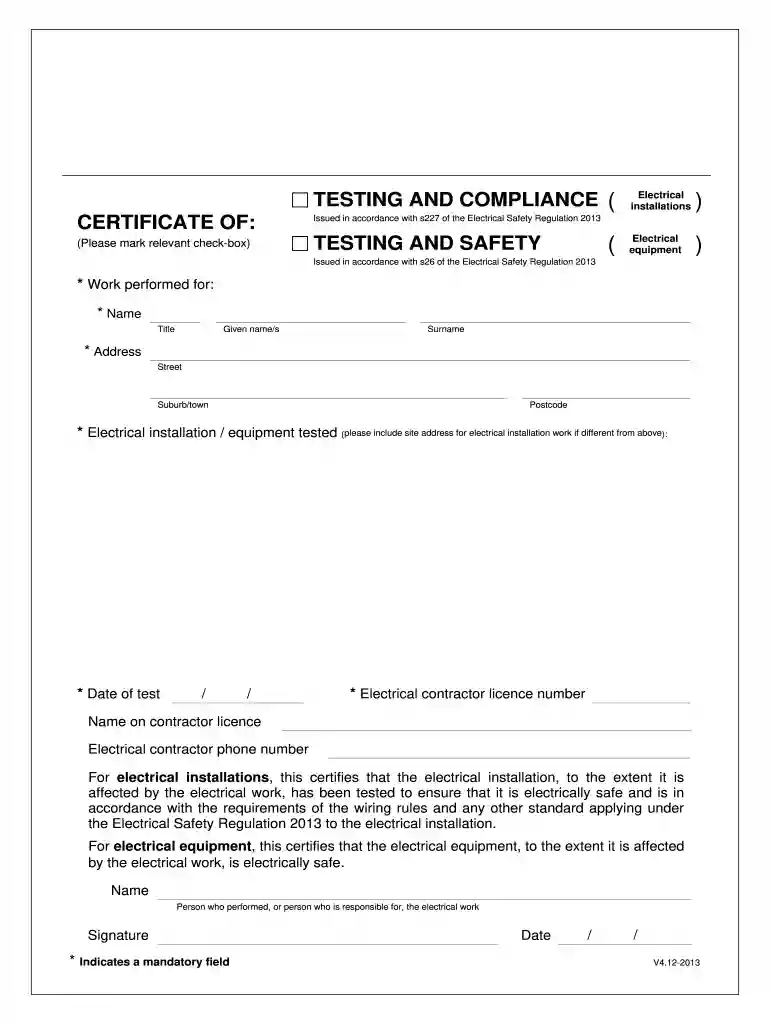
The Certificate of Testing and Safety functions as a regulatory document that verifies compliance with safety standards, particularly related to electrical installations. It is essential for ensuring that all relevant works adhere to legal and safety requirements, thereby protecting consumers and the integrity of the installation.
This certificate typically includes specifics such as:
The document serves not only as proof of compliance but also as a critical tool for facilitating trust among consumers, contractors, and regulatory bodies.
Acquiring a Certificate of Testing and Safety generally involves several steps. Below are the typical procedures required to obtain this certificate:
Documentation requirements usually include prior safety certifications and operational compliance records.
Completing the Certificate of Testing and Safety entails multiple steps that must be followed meticulously to ensure compliance with state regulations:
Step 1: Information Gathering
Step 2: Conduct Required Testing
Step 3: Verification of Compliance
Step 4: Document Preparation
Step 5: Issue the Certificate
All these steps must be meticulously followed to avoid complications related to legal compliance in the future.
Understanding key terminology associated with the Certificate of Testing and Safety is essential for stakeholders involved in the testing and compliance process. Important terms include:
Clarifying these terms can reduce confusion and improve communication among all parties involved, from contractors to consumers.
The legal framework surrounding the Certificate of Testing and Safety is crucial for maintaining compliance and accountability. It delineates the rights and responsibilities of all parties involved:
Contractor Responsibility: Licensed contractors are legally obligated to conduct thorough safety tests and issue the certificate if standards are met. Failure to do so may result in penalties or loss of licensure.
Consumer Rights: Consumers are entitled to request this certificate before concluding any agreements or transactions involving safety inspections.
Regulatory Compliance: The certificate serves as a record that installations meet local, state, and federal safety regulations, which can protect individuals from legal repercussions should an incident occur.
Understanding these legal aspects ensures that all parties can navigate the testing and certification process with confidence.
A complete Certificate of Testing and Safety includes several key elements that validate the document's purpose and compliance. These elements are as follows:
Contractor’s Information: Details of the certified contractor or company that performed the testing.
Test Dates: The precise date(s) when tests were conducted, marking timelines for compliance.
Type of Installation: A detailed description of what was tested, such as smoke alarms, electrical devices, etc.
Standards Reference: A list of applicable regulatory standards that governed the testing process.
Signature and Validation: Signatures from authorized personnel, validating the authenticity of the document and confirming that the installations are compliant.
Each of these elements contributes to the integrity and legal standing of the certificate, making it essential for effective usage.
We've got more versions of the smoke alarm compliance certificate qld pdf form. Select the right smoke alarm compliance certificate qld pdf version from the list and start editing it straight away!
Yes, and it’s really straightforward! DocHub is an online PDF editor with advanced document processing capabilities that allow you quickly edit your documents, complete blank fields and insert new ones for other people to fill out, and create electronic signatures in several ways. Add your smoke alarm compliance certificate qld template, give information as requested, and decide how you want to eSign your document - by typing your name, drawing your signature, uploading its image, or using a QR code.
If you edit your smoke alarm certificate qld with DocHub, you merely need a steady web connection and virtually any browser installed on your device. No need to set up any third-party applications or study tutorials. Simply open a tab with DocHub, drag and drop your file, and edit it on the spot.
At DocHub, your data security is our priority. We follow HIPAA, SOC2, GDPR, and other standards, so you can work on your documents with confidence.
This Certificate program includes 12 programs, with 70 hours of foundational training and 80 hours of specialized content. In this program, you will be able to:.Read more
What does the RCM indicate? The RCM indicates a devices compliance with all applicable ACMA technical standardsthat is, for telecommunications,Read more
Search and apply filters to the program table to narrow the list of hundreds of program. Review search tips for guidance on using the search filters and siteRead more


