Get and manage Medical Order Forms online

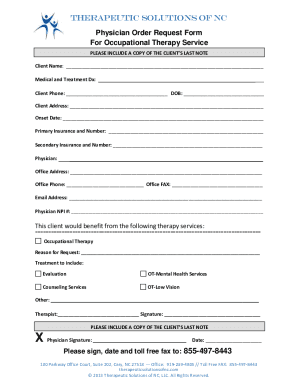
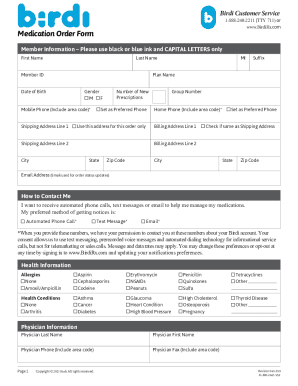
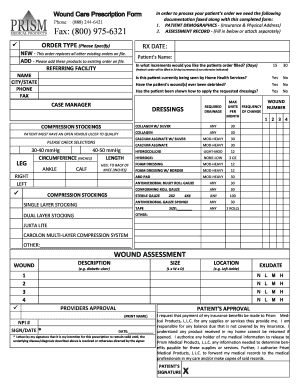
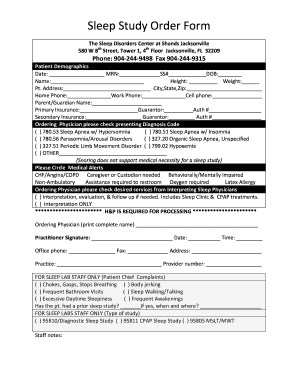
Accelerate your form managing with the Medical Order Forms online library with ready-made templates that suit your requirements. Get your document, change it, complete it, and share it with your contributors without breaking a sweat. Start working more efficiently with the forms.

The best way to manage our Medical Order Forms:

  1. Open our Medical Order Forms and look for the form you want.
  2. Preview your document to ensure it’s what you want, and click on Get Form to begin working on it.
  3. Modify, add new text, or point out important information with DocHub features.
  4. Fill out your form and preserve the changes.
  5. Download or share your form with other people.

Explore all the opportunities for your online file administration with the Medical Order Forms. Get your free free DocHub account today!


Video Guide on Medical Order Forms management

video background

Commonly Asked Questions about Medical Order Forms

The Physician Orders for Life Sustaining Treatment (POLST) form is a written medical order from a physician, nurse practitioner or physician assistant that helps give people with serious illnesses more control over their own care by specifying the types of medical treatment they want to receive during serious illness.
The MOLST is a medical order form (printed on bright pink paper) signed by a New York State licensed physician, nurse practitioner, physician assistant, or a border state physician that tells others the patients medical orders for life-sustaining treatment.
The Physician Orders for Life-Sustaining Treatment (POLST) form is a tool for end-of-life planning. The form ensures that a patients treatment wishes are known and will be followed by health care professionals during a medical crisis, when the patient cannot speak for themselves.
A health care professional, usually a doctor, nurse, or social worker, completes the form after having a conversation with the patient to understand his/her wishes and goals of care. Both a doctor and the patient must sign the POLST form in order for it to be valid.
POLST addresses a range of life-sustaining measures and allows a person to choose treatment, as well as forego treatment. A DNR only addresses resuscitation and only allows for forgoing treatment.
Sure. MOLST and POLST are two acronyms defining medical orders. The MOLST is the Medical Orders for Life-Sustaining Treatment and the POLST is the Physician Orders for Life-Sustaining Treatment. Theyre both the same thing, but in different states they call them by those two different names.
An advance directive is a direction from the patient, not a medical order. In contrast, a POLST form consists of a set of medical orders that applies to a limited population of patients and addresses a limited number of critical medical decisions.
Prescriptions are often referred to as orders in clinical practice. There are several types of orders, such as routine orders, PRN orders, standing orders, one-time orders, STAT orders, and titration orders. A routine order is a prescription that is followed until another order cancels it.