Manage Wisconsin Civil Procedure effortlessly online

Document management can stress you when you can’t locate all the documents you need. Luckily, with DocHub's substantial form library, you can discover everything you need and promptly deal with it without the need of changing among software. Get our Wisconsin Civil Procedure and begin utilizing them.

Using our Wisconsin Civil Procedure using these basic steps:

  1. Browse Wisconsin Civil Procedure and select the form you need.
  2. Preview the template and click Get Form.
  3. Wait for it to open in our online editor.
  4. Alter your document: include new information and images, and fillable fields or blackout some parts if needed.
  5. Fill out your document, preserve adjustments, and prepare it for sending.
  6. When you are ready, download your form or share it with other contributors.

Try out DocHub and browse our Wisconsin Civil Procedure category with ease. Get your free profile right now!


Video Guide on Wisconsin Civil Procedure management

video background

Commonly Asked Questions about Wisconsin Civil Procedure

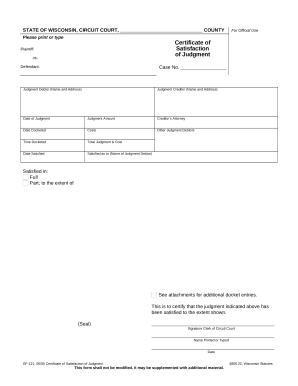
To attempt to confiscate the debtors property, a judgment creditor has 20 years from the judgment date. Wisconsin judgments have 10- and 20-year expiration dates, but they can be extended if the judgment creditor requests permission from the court and re-files an action against the judgment debtor.
A civil lawsuit is different than other lawsuits as it is based on non-criminal terms. Typically, a plaintiff (the person initiating the lawsuit) files a complaint against the defendant (the person being accused) based on contractual incidents or accidents.
Before filing, send one copy under the 10-Day Rule/Ten Day Cover Letter to the other party and the State of Wisconsin, if a party. The five-day rule gives the other party 5 days to object to the accuracy of how you have written the order, not to what happened in court.
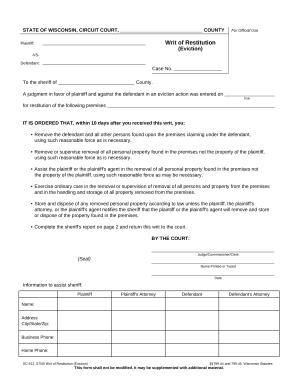
By law, the landlord has to allow tenants at least 5 days to pay overdue rent and late fees (not counting the day it is served ing to Wis. Stats. 704.17(1)(a) (2)(a), 990.001(4).
The most common civil suits involve claims for money or property worth over $10,000. If the claim involves money or property worth $10,000 or less, it must be filed in small claims court. Other types of civil suits are declaratory judgments and appeals from government agency decisions.
PROPERTY DAMAGE OR DEATH Under Wisconsin law, the statute of limitations in an action to recover for property damage is generally six years after the cause of action accrues.
Unless otherwise limited by court order, the scope of discovery is as follows: Parties may obtain discovery regarding any nonprivileged matter that is relevant to any partys claim or defense and proportional to the needs of the case, considering the importance of the issues at stake in the action, the amount in
Civil Statutes of Limitations Generally Wisconsins statutes of limitations range from two to six years depending on the type of case. The statutory clock starts ticking typically on the date of the incident or the discovery of the harm.