Increase your productivity with Wills and Probate

Form administration takes up to half of your business hours. With DocHub, you can reclaim your office time and boost your team's productivity. Get Wills and Probate collection and investigate all templates related to your day-to-day workflows.

Effortlessly use Wills and Probate:

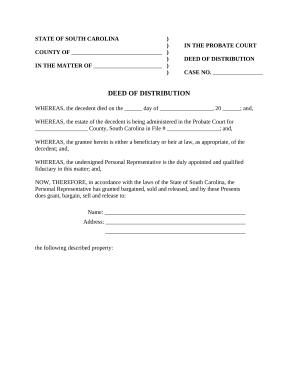
  1. Open Wills and Probate and apply Preview to obtain the appropriate form.
  2. Click on Get Form to begin working on it.
  3. Wait for your form to open in our online editor and begin modifying it.
  4. Add new fillable fields, icons, and pictures, change pages order, etc.
  5. Complete your document or prepare it for other contributors.
  6. Download or deliver the form by link, email attachment, or invite.

Speed up your day-to-day file administration with the Wills and Probate. Get your free DocHub account today to explore all forms.


Video Guide on Wills and Probate management

video background

Commonly Asked Questions about Wills and Probate

A revocable trust allows you to maintain control of your property during your life, and decide how the property is distributed after death, without needing to go through probate court. Your trust can include your home and any other assets you have, making it a comprehensive solution for your entire estate.
These non-probate assets include life insurance policies, IRAs, U.S. savings bonds, and jointly held bank accounts. Discounting exempted items, if the total value of your loved ones personal property is below $50,000, the good news is you can likely bypass full probate in New York.
Only an estate valued over $30,000 must be probated when there is a will. The court has a small estate proceeding when the estate is below $30,000. An estate without a will is administered, not probated.
There are several ways to avoid probate, including: Living Trust. A living trust, also known as an inter vivos trust, is a fiduciary agreement established by a trustmaker, or grantor, while they are still alive. Joint Ownership and Rights of Survivorship. Payable-on-death and transfer-on-death designations.
While the threshold for probate in NY is $50,000, in reality, the probate process is influenced by many things, and the estates total value is just one of them. Whether or not your estate actually goes through probate will also depend on the type of assets held within the estate and how they were owned.
In New York state, a will only has to be submitted to probate if the decedents remaining assets are worth $30,000 or more. Such assets do not include any property or funds that transferred via pay on death accounts, in trust for (ITF) accounts, or joint ownership, as these automatically bypass the probate process.
Assuming that no one is contesting the will or challenging the appointment of the executor, and assuming all of the decedents next of kin (called distributees) can be found and will sign a waiver of process and consent to probate, you can expect to pay $3,000- $3,500 in legal fees to have the will admitted to probate.