Improve your work productivity with US Legal Warranty Deeds

Document management occupies to half of your office hours. With DocHub, you can easily reclaim your time and effort and increase your team's productivity. Access US Legal Warranty Deeds collection and investigate all form templates relevant to your everyday workflows.

The best way to use US Legal Warranty Deeds:

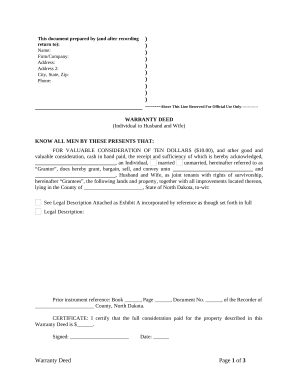
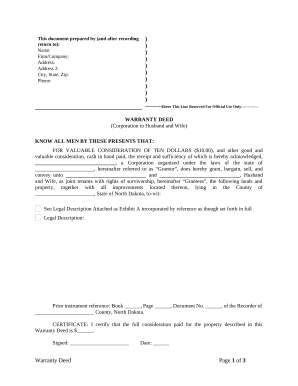
  1. Open US Legal Warranty Deeds and utilize Preview to obtain the relevant form.
  2. Click Get Form to start working on it.
  3. Wait for your form to upload in the online editor and begin modifying it.
  4. Add new fillable fields, symbols, and pictures, adjust pages order, etc.
  5. Fill your document or set it for other contributors.
  6. Download or share the form by link, email attachment, or invite.

Speed up your everyday document management with our US Legal Warranty Deeds. Get your free DocHub profile right now to explore all forms.

Video Guide on US Legal Warranty Deeds management

video background

Commonly Asked Questions about US Legal Warranty Deeds

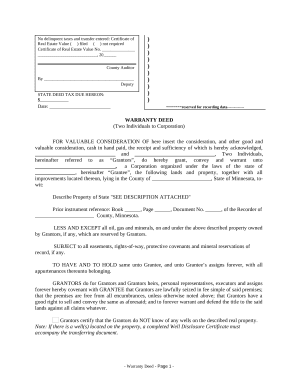
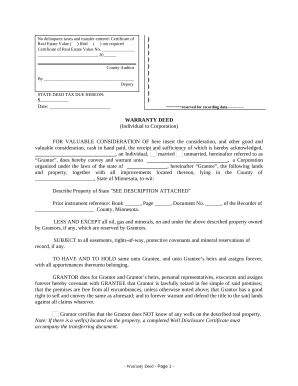
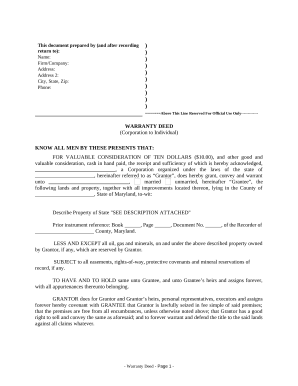
A general warranty deed is the most common type of deed used for transferring real estate. It basically promises that: not only does the seller have good and proper title to sell the property, but all the prior owners also had good title, thus making a complete chain of ownership; and.
Key Takeaways. A warranty deed protects the buyer and ensures that the seller holds a free and clear title to a property without any outstanding liens or mortgages. A warranty deed is a legal real estate document and protects the buyer against future claims to the title of the property.
Warranty deeds protect the buyer by guaranteeing a clear title and give the current owner the legal right to sell the house. For sellers, warranty deeds can delay the home selling process and come at an extra cost.
Cons: Fewer protections for buyers, who are now responsible for addressing any previous liens or claims for the property. Lenders and title companies may refuse to help buyers secure financing or title insurance for a property sold under special warranty.
While a warranty deed and title insurance are similar, they serve different purposes. A warranty deed shows that there are no claims to the property. A title insurance policy, though, offers protection from financial loss associated with ownership issues, and transfers any such risks to the insurance company.
Who Benefits the Most from Recording a Warranty Deed? The buyer, or grantee, of a property benefits the most from obtaining a warranty deed.
The primary risk associated with a Special Warranty Deed lies in its scope of protection. This deed only covers the period the grantor owned the property, meaning the buyer takes on a risk of potential issues arising from before that period, which the grantor is not obliged to address.