Get and handle US Employment Law online

Improve your form operations using our US Employment Law library with ready-made form templates that suit your needs. Get your form, change it, complete it, and share it with your contributors without breaking a sweat. Begin working more effectively with the documents.

How to use our US Employment Law:

  1. Open our US Employment Law and search for the form you want.
  2. Preview your document to ensure it’s what you want, and click Get Form to begin working on it.
  3. Change, add new text, or highlight important information with DocHub tools.
  4. Complete your form and preserve the changes.
  5. Download or share your document with other recipients.

Discover all the opportunities for your online document management with our US Employment Law. Get your free free DocHub profile right now!


Video Guide on US Employment Law management

video background

Commonly Asked Questions about US Employment Law

Not be harassed or discriminated against (treated less favorably) because of race, color, religion, sex (including pregnancy, sexual orientation, or gender identity), national origin, disability, age (40 or older) or genetic information (including family medical history). Receive equal pay for equal work.
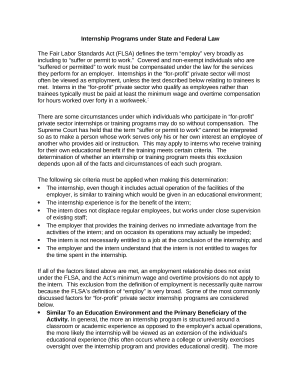
The Fair Labor Standards Act (FLSA) is the federal law commonly known for minimum wage, overtime pay, child labor, recordkeeping, and special minimum wage standards applicable to most private and public employees.
The primary federal employment laws are: Title VII of the Civil Rights Act; the Americans with Disabilities Act; the Equal Pay Act; the Fair Labor Standards Act; the Family and Medical Leave Act (FMLA); the Immigration Reform and Control Act; the National Labor Relations Act (NLRA); the Occupational Safety and
The Fair Labor Standards Act (FLSA) establishes minimum wage, overtime pay, recordkeeping, and youth employment standards affecting employees in the private sector and in Federal, State, and local governments.
In 1935, Congress passed the National Labor Relations Act (NLRA), making clear that it is the policy of the United States to encourage collective bargaining by protecting workers full freedom of association.
While federal minimum wage laws and provisions apply to all employees working in the U.S., its territories, and its possessions, state and local jurisdictions have a right to establish their own wage laws separate from the FLSA, making the location where work is performed a key element of wage law.