Enhance your document managing with US District Court Forms

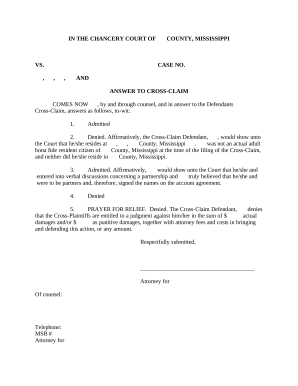
Your workflows always benefit when you can find all the forms and files you need on hand. DocHub supplies a a huge library of documents to alleviate your day-to-day pains. Get a hold of US District Court Forms category and easily discover your form.

Begin working with US District Court Forms in several clicks:

  1. Open US District Court Forms and find the document you require.
  2. Click Get Form to open it in the editor.
  3. Start changing your form: add more fillable fields, highlight sentences, or blackout sensitive facts.
  4. The application saves your modifications automatically, and after you are ready, you can download or share your form with other contributors.

Enjoy seamless form administration with DocHub. Explore our US District Court Forms category and get your form today!


Commonly Asked Questions about US District Court Forms

The United States Court of Federal Claims has jurisdiction over a wide range of claims against the government including, but not limited to, contract disputes, bid protests, takings claims, tax refund suits, patent and copyright matters, Indian claims, civilian and military pay cases, and vaccine cases.
United States District Courts The district courts can hear most federal cases, including civil and criminal cases. There are 94 federal judicial districts in the United States and its territories. Each district includes a U.S. bankruptcy court.
The State Court System Most contract cases, tort cases (personal injuries), family law (marriages, divorces, adoptions), etc.
Decisions of the United States Supreme Court bind all other federal courts; decisions of the various Circuit Courts of Appeals bind the federal district courts located within each circuit; and the decisions of district courts generally have no bind- ing precedential effect.
The federal court system has three main levels: district courts (the trial court), circuit courts which are the first level of appeal, and the Supreme Court of the United States, the final level of appeal in the federal system.
Municipal courts typically handle cases like traffic violations, small claims, and municipal ordinance violations.
How Appellate Courts are Different from Trial Courts. At a trial in a U.S. District Court, witnesses give testimony and a judge or jury decides who is guilty or not guilty or who is liable or not liable. The appellate courts do not retry cases or hear new evidence. They do not hear witnesses testify.
State courts have general jurisdiction, meaning they have authority over all kinds of cases. Federal courts have limited jurisdiction and only hear matters involving federal questions and constitutional matters. State courts have jurisdiction over state laws.