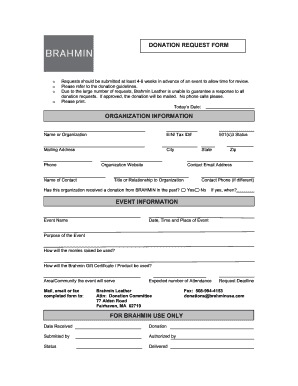
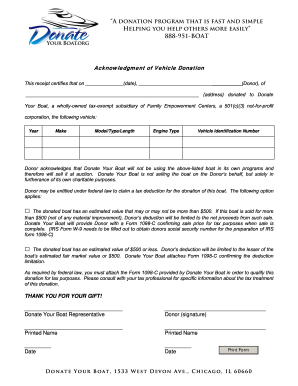
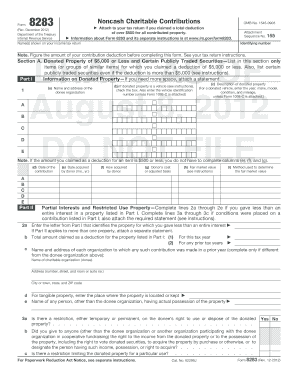
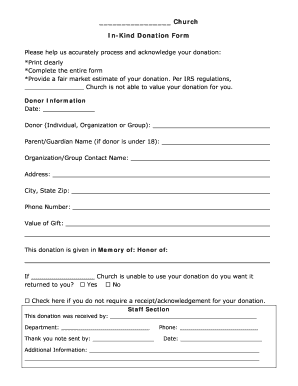
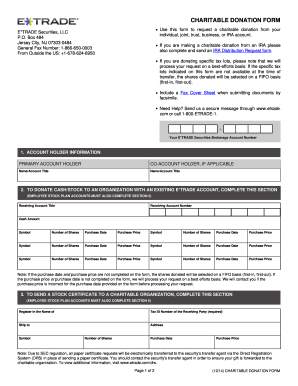
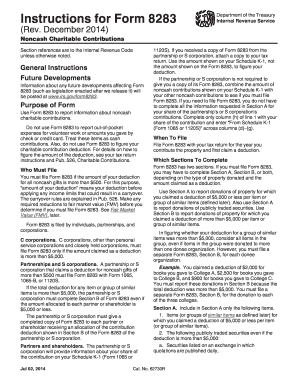
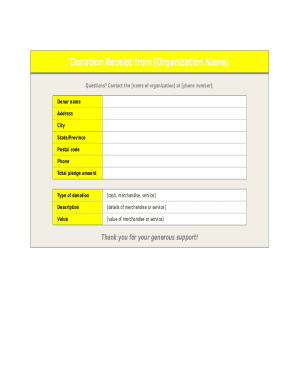
Tax write off with receipt Donation Forms

Improve your fundraising efforts with DocHub's modifiable Tax write off with receipt Donation Forms templates. Create a lasting impression on contributors with professional and customized donor templates.

Get and handle Tax write off with receipt Donation Forms online

Improve your form managing with our Tax write off with receipt Donation Forms online library with ready-made templates that meet your needs. Get your document, change it, complete it, and share it with your contributors without breaking a sweat. Begin working more effectively together with your documents.

How to use our Tax write off with receipt Donation Forms:

  1. Open our Tax write off with receipt Donation Forms and look for the form you require.
  2. Preview your document to ensure it’s what you want, and click Get Form to start working on it.
  3. Alter, include new text, or point out important information with DocHub tools.
  4. Prepare your form and preserve the changes.
  5. Download or share your document template with other people.

Examine all the opportunities for your online file management with the Tax write off with receipt Donation Forms. Get a free free DocHub profile today!

Video Guide on Tax write off with receipt Donation Forms management

video background

Commonly Asked Questions about Tax write off with receipt Donation Forms

To deduct charitable contributions, you must file Form 1040 and itemize deductions on Schedule A. If you receive any benefit from your donation, you must deduct only the excess of your gift subtracting the value of the benefit you received.
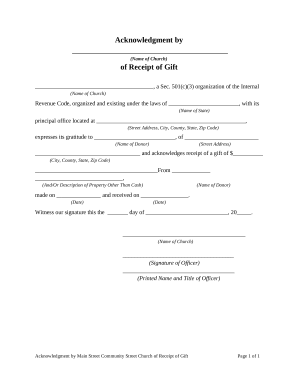
The written acknowledgment required to substantiate a charitable contribution of $250 or more must contain the following information: name of the organization; amount of cash contribution; description (but not value) of non-cash contribution;
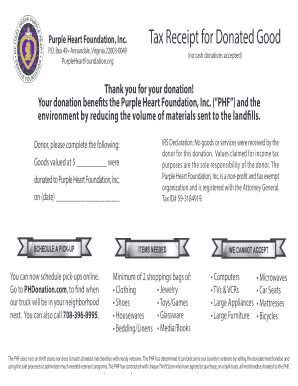
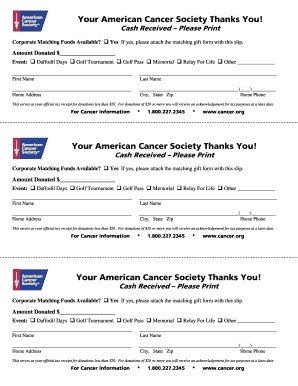
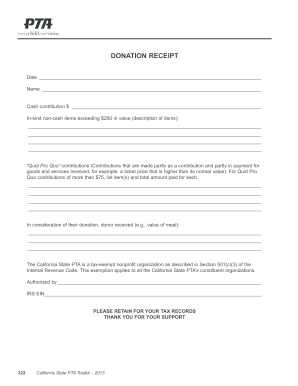
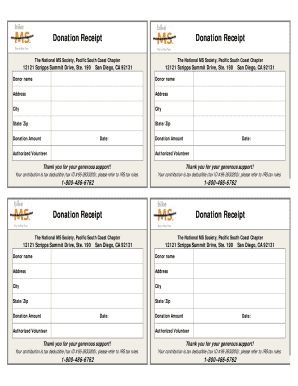
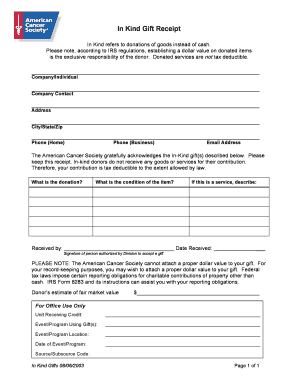
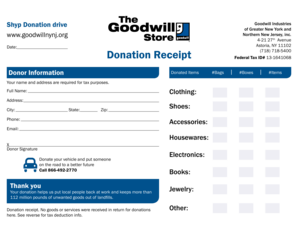
What is a Donation Receipt? A donation receipt is a written acknowledgment from a nonprofit organization for any monetary or non-monetary contributions made by a donor. This donation receipt will act as official proof of the contribution, and help donors claim a tax deduction.
You may deduct charitable contributions of money or property made to qualified organizations if you itemize your deductions. Generally, you may deduct up to 50 percent of your adjusted gross income, but 20 percent and 30 percent limitations apply in some cases.
You should always have the following information on your donation receipts: Name of the organization. Donors name. Recorded date of the donation. Amount of cash contribution or fair market value of in-kind goods and services. Organizations 501(c)(3) status.
Because charitable contributions are often tax deductible, taxpayers must furnish proof in the form of an official dated receipt from the receiving organization or some other official transaction record.
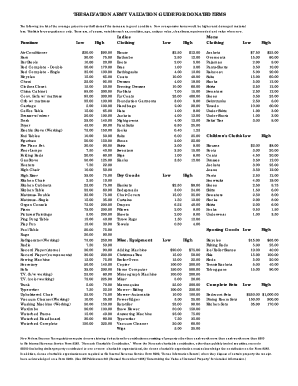
Non-cash charitable donations: Under $250: Youll need a receipt for non-cash donations under $250 in value unless the items were dropped off at an unmanned location, such as a drop-off bin. $250 to $500: Non-cash donations of $250 to $500 in value require a contemporaneous written acknowledgment of your donation.
Charitable contributions must be claimed as itemized deductions on Schedule A of IRS Form 1040. The limit on charitable cash contributions is 60% of the taxpayers adjusted gross income for tax years 2023 and 2024. The IRS allows deductions for cash and noncash donations based on annual rules and guidelines.