



Increase your production with Transfer Deeds

Form managing takes up to half of your office hours. With DocHub, it is easy to reclaim your office time and increase your team's productivity. Get Transfer Deeds online library and explore all document templates related to your day-to-day workflows.

Effortlessly use Transfer Deeds:

  1. Open Transfer Deeds and use Preview to get the appropriate form.
  2. Click Get Form to begin working on it.
  3. Wait for your form to upload in the online editor and start editing it.
  4. Add new fillable fields, symbols, and pictures, modify pages order, etc.
  5. Fill out your template or set it for other contributors.
  6. Download or share the form by link, email attachment, or invite.

Speed up your day-to-day document managing with the Transfer Deeds. Get your free DocHub profile right now to discover all templates.


Video Guide on Transfer Deeds management

video background

Commonly Asked Questions about Transfer Deeds

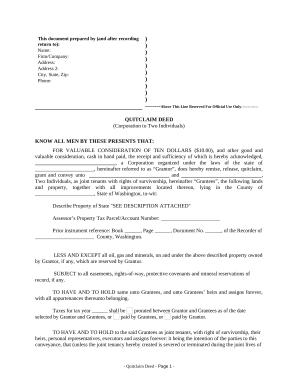
Typically, most real estate transfers require: A written document specifying the transfer. The legal description of the property such as an address. The name of the party transferring the property (owner/grantor) and the name of the party receiving the property (recipient/grantee).
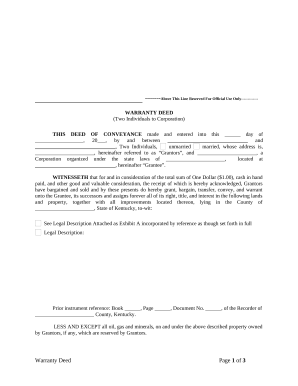
The most common way to transfer property is through a general warranty deed (sometimes called a grant deed). A general warranty deed guarantees good title from the beginning of time.
New Owners Fill out a Transfer of Ownership form. This form must include the previous owners signature as well as a notary signature. Send to the Division immediately.
Transfers of real property must be in writing and docHubd. Deeds should be recorded in the county where the property is located. To ensure a legal change to the property title, youll want the services of an attorney. A qualified attorney will prepare and file the real estate transfer deed.
The Transfer on Death Deed must: Be in writing, signed by the owner, and docHubd, Have a legal description of the property (The description is found on the deed to the property or in the deed records. Have the name and address of one or more beneficiaries, State that the transfer will happen at the owners death,
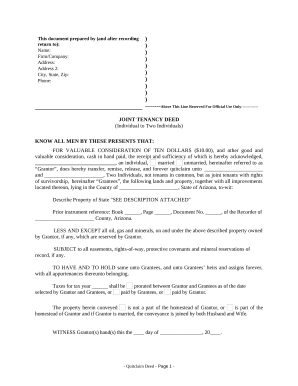
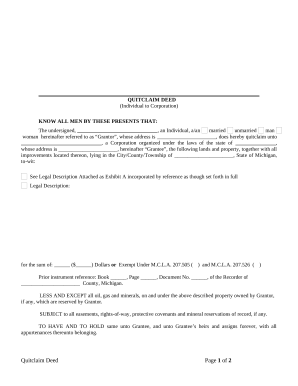
A transfer deed is a formal utilized to convey real estate titles from one party to another. The grantor is the person that transfers the property by deed, while the grantee is the person that receives it. The grantor must always sign a deed.
A Texas licensed attorney, Board Certified in Residential Real Estate Law, will prepare your legal document.
The county clerk will charge a recording fee of about $30 to $40, depending on the county. The fee should be paid by a cashiers check or money order. Once a Deed has been recorded by the county clerk, the clerks office will return the Deed to the new owner.