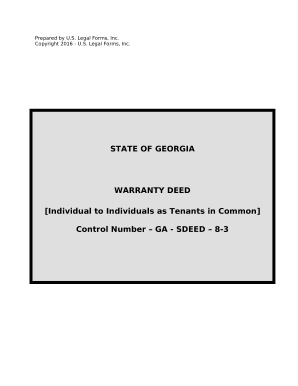
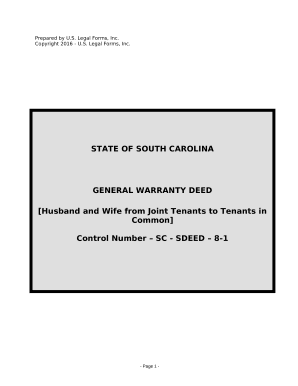
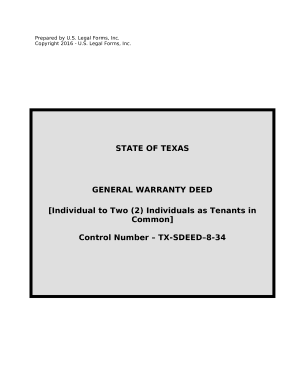
Supercharge your productivity with Tenants in Common Legal Forms

Form management takes up to half of your office hours. With DocHub, you can easily reclaim your time and effort and increase your team's productivity. Access Tenants in Common Legal Forms category and check out all document templates related to your day-to-day workflows.

The best way to use Tenants in Common Legal Forms:

  1. Open Tenants in Common Legal Forms and employ Preview to get the suitable form.
  2. Click Get Form to start working on it.
  3. Wait for your form to upload in the online editor and begin editing it.
  4. Add new fillable fields, symbols, and pictures, modify pages order, etc.
  5. Complete your template or set it for other contributors.
  6. Download or deliver the form by link, email attachment, or invite.

Improve your day-to-day file management with our Tenants in Common Legal Forms. Get your free DocHub account right now to discover all forms.


Video Guide on Tenants in Common Legal Forms management

video background

Commonly Asked Questions about Tenants in Common Legal Forms

A deceased tenants or co-owners share of the property passes to their estate when they die rather than to the other tenants or owners because this type of ownership doesnt include rights of survivorship.
Tenancy in common in real estate is an arrangement in which two or more people share ownership rights of a property. When one of them dies, the property passes to that tenants beneficiaries or heirs. Furthermore, each co-owner may control an equal or different percentage, or share, of the total property.
One of the most commonly asked questions in marital property transactions is how title should be held between husband and wife. Traditionally, joint tenancy form was favored because of the ease of title transfer at death. However, as discussed below, title transfer at death can be as easy in community property form.
Change from joint tenants to tenants in common Serve a written notice of the change (a notice of severance) on the other owners - a conveyancer can help you do this. Download and fill in form SEV to register a restriction without the other owners agreement. Prepare any supporting documents you need to include. Change from joint tenants to tenants in common - GOV.UK .gov.uk joint-property-ownership change .gov.uk joint-property-ownership change
If you are tenants in common, your Title Register Document will contain the following, or similar, phrase: No disposition by a sole proprietor of the registered estate (except a trust corporation) under which capital money arises is to be registered unless authorised by an order of the court.
Tenancy in common (TIC) is a legal arrangement in which two or more parties share ownership rights to real property. It comes with what might be a docHub drawback, however: A TIC carries no rights of survivorship.
The advantages are the arrangements affordability and offer flexibility in updating owners. The disadvantages are that any owner can sell their shares without obtaining consent from other owners, and determining owners tax liability is a complex process.
This arrangement creates a risk for tenants in common since, if one owner fails to pay, the other co-owners could face foreclosure. To navigate this risk, TIC groups establish reserve funds to pay expenses in the event that one of the tenants in common is sold out of the TIC group.
A docHub disadvantage of tenants in common is that any owner can sell their fractional interest in the property to anyone, including someone who is a total stranger to the other tenants in common.