

Get and handle Stock Transactions online

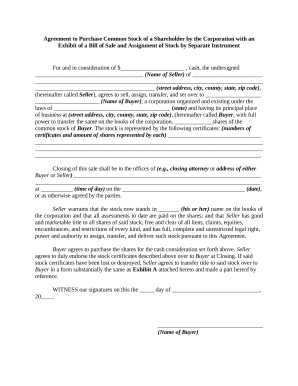
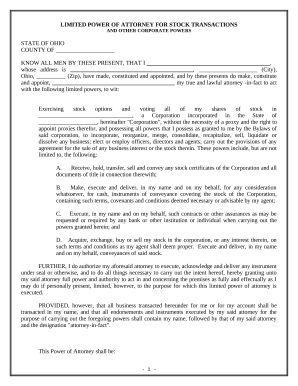
Accelerate your document operations with the Stock Transactions library with ready-made document templates that meet your needs. Access your document template, edit it, complete it, and share it with your contributors without breaking a sweat. Start working more effectively together with your forms.

The best way to manage our Stock Transactions:

  1. Open our Stock Transactions and search for the form you require.
  2. Preview your form to ensure it’s what you want, and click on Get Form to begin working on it.
  3. Modify, include new text, or point out important information with DocHub tools.
  4. Fill out your form and preserve the modifications.
  5. Download or share your form template with other people.

Discover all the possibilities for your online file management with our Stock Transactions. Get your free free DocHub profile right now!


Video Guide on Stock Transactions management

video background

Commonly Asked Questions about Stock Transactions

The main distinction between cash and stock transactions is this: In cash transactions, acquiring shareholders take on the entire risk that the expected synergy value embedded in the acquisition premium will not materialize. In stock transactions, that risk is shared with selling shareholders.
When a company such as Big City Dwellers issues 5,000 shares of its $1 par value common stock at par for cash, that means the company will receive $5,000 (5,000 shares $1 per share). The sale of the stock is recorded by increasing (debiting) cash and increasing (crediting) common stock by $5,000.
Financial Stability vs. Potential Upside: Cash compensation provides financial stability, ensuring employees can cover expenses and plan for the future with certainty. Stock options, however, offer the potential for docHub upside if the companys stock price increases.
This article will introduce stock market transactions, including IPOs, secondary market offerings, private placement, and stock repurchase.
The main difference lies in the purpose and accounting treatment. Trade discount is offered to increase bulk sales and is not recorded in accounting books. Cash discount is offered to ensure prompt payment and is properly recorded in the books of both buyer and seller.
Profits from a stock are taxed as either short-term or long-term capital gains. Tax rates on long-term capital gains are usually lower than those on short-term capital gains. That can mean paying lower taxes and sometimes even no tax on profits.
While tax issues can get tricky, the big-picture difference between cash and stock deals is that when a seller receives cash, this is immediately taxable (i.e. the seller must pay at least one level of tax on the gain). Meanwhile, if a portion of the deal is with acquirer stock, the seller can often defer paying tax.
