Get and handle Statutory Warranty Deed Forms online

Boost your document administration with our Statutory Warranty Deed Forms library with ready-made templates that suit your requirements. Access your document template, change it, complete it, and share it with your contributors without breaking a sweat. Start working more efficiently with your documents.

The best way to use our Statutory Warranty Deed Forms:

  1. Open our Statutory Warranty Deed Forms and look for the form you want.
  2. Preview your document to ensure it’s what you want, and click on Get Form to begin working on it.
  3. Modify, include new text, or point out important information with DocHub tools.
  4. Complete your form and preserve the modifications.
  5. Download or share your document template with other recipients.

Discover all the opportunities for your online document management with our Statutory Warranty Deed Forms. Get your totally free DocHub account today!


Video Guide on Statutory Warranty Deed Forms management

video background

Commonly Asked Questions about Statutory Warranty Deed Forms

A deed transferring title to commercial or residential real property from the grantor to the grantee. In New York, a full covenant and warranty deed provides the grantee with general covenants made by the grantor and the covenant under Section 13 of the New York Lien Law.
While the seller in a Warranty Deed must defend the title against all other claims and compensate the buyer for any unsettled debts or damages, the seller in a Special Warranty Deed is only responsible for debts and problems accrued or caused during his ownership of the property.
Key Takeaways. A warranty deed protects the buyer and ensures that the seller holds a free and clear title to a property without any outstanding liens or mortgages. A warranty deed is a legal real estate document and protects the buyer against future claims to the title of the property.
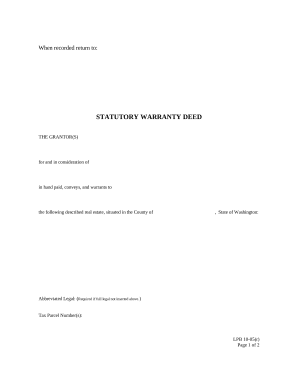
A statutory warranty deed is a short-form deed that includes the promises of a long-form general warranty deed. It guarantees the grantor holds and is transferring full and legal title to the property. Using either a statutory or general warranty deed provides the most protection to the buyer of the property.
A traditional deed simply transfers the ownership of a property from one party to another (in other words, the seller to the buyer.) Whoever legally holds the deed is the rightful owner of the property. A warranty deed, on the other hand, contains special assurances that the seller makes to the buyer.
Warranty deeds protect the buyer by guaranteeing a clear title and give the current owner the legal right to sell the house. For sellers, warranty deeds can delay the home selling process and come at an extra cost.
A warranty deed or quit claim deed TRANSFERS TITLE or OWNERSHIP of real property. When you purchase property, you usually receive a warranty deed from the seller to you to show that you now own the property.
A general warranty deed is a legal agreement that protects a property buyer from any debts held against the property theyre purchasing. If such a debt emerges after the sale, the seller, not the buyer, is financially responsible for that debt.