Boost your efficiency with State-specific Court Forms

Record management occupies to half of your business hours. With DocHub, you can reclaim your time and enhance your team's productivity. Access State-specific Court Forms collection and investigate all document templates related to your everyday workflows.

Effortlessly use State-specific Court Forms:

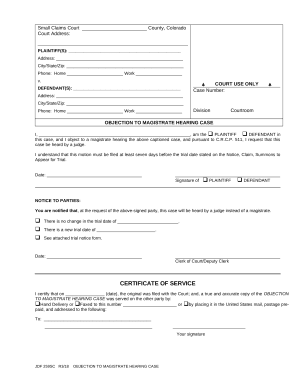
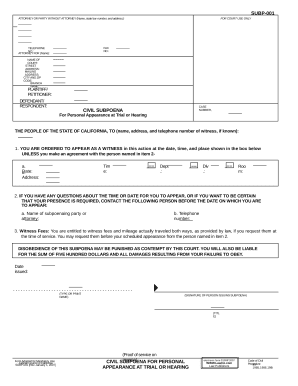
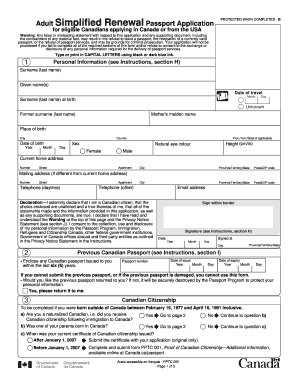
  1. Open State-specific Court Forms and use Preview to find the appropriate form.
  2. Click Get Form to begin working on it.
  3. Wait for your form to upload in our online editor and start editing it.
  4. Add new fillable fields, symbols, and images, change pages order, and many more.
  5. Complete your file or prepare it for other contributors.
  6. Download or share the form by link, email attachment, or invite.

Speed up your everyday file management with the State-specific Court Forms. Get your free DocHub account today to explore all templates.


Video Guide on State-specific Court Forms management

video background

Commonly Asked Questions about State-specific Court Forms

Within the federal system, there are three primary types of federal courts: 94 District Courts (trial courts), 13 Courts of Appeals (intermediate appellate courts), and the United States Supreme Court (the court of final review).
The California Court system has three levels: the California Supreme Court, the Courts of Appeal and the Superior Courts. These courts are governed by three distinct judicial bodies: the Judicial Council, the Commission on Judicial Performance, and the Commission on Judicial Appointments.
The state court system largely mirrors the structure of the federal court system in that it is generally composed of three main levels: trial courts, state appellate courts and a state Supreme Court.
A case in which the state is a party, such as state tax violations. Most real estate cases, malpractice, personal injury cases, and contract disputes. All family, divorce, custody, inheritance and probate cases. Most traffic and juvenile cases.
Uniform Domestic Relations Form 8 (Counterclaim for Divorce Without Children)
Pleadings: Written statements filed with the court that describe a partys legal or factual assertions about the case. Pleadings may include a complaint, an answer, a motion, or a brief.