
Handle Seller's Annual Accounting Statements effortlessly online

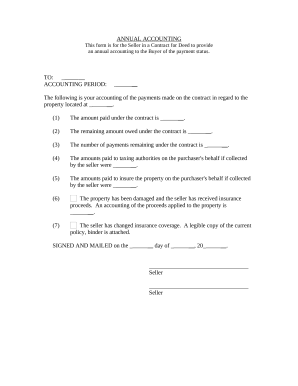
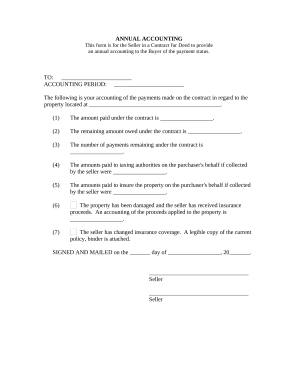
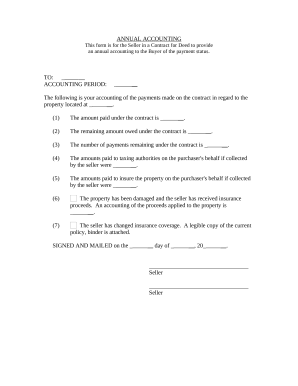
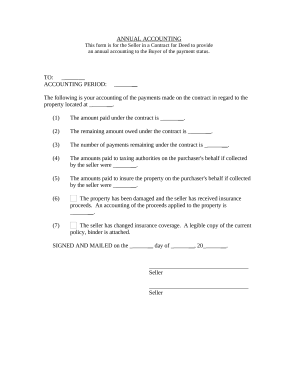
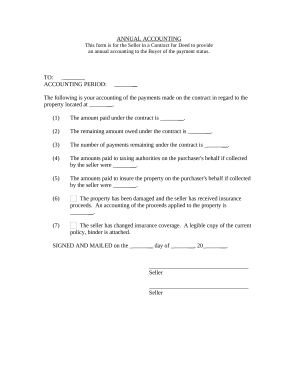
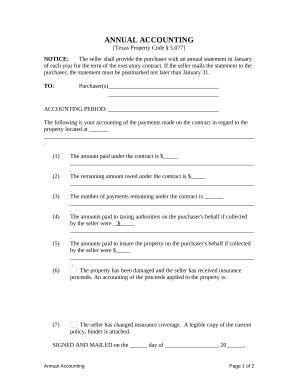
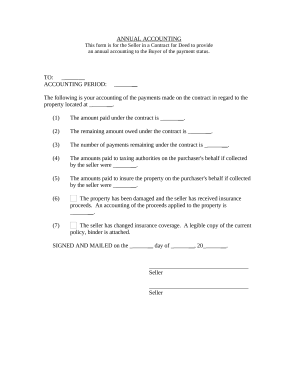
Document administration can stress you when you can’t locate all of the documents you require. Fortunately, with DocHub's considerable form library, you can discover all you need and promptly deal with it without switching among software. Get our Seller's Annual Accounting Statements and begin working with them.

The best way to manage our Seller's Annual Accounting Statements using these simple steps:

  1. Examine Seller's Annual Accounting Statements and select the form you require.
  2. Review the template and then click Get Form.
  3. Wait for it to upload in our online editor.
  4. Edit your form: add new information and images, and fillable fields or blackout some parts if needed.
  5. Complete your form, save adjustments, and prepare it for sending.
  6. When ready, download your form or share it with your contributors.

Try out DocHub and browse our Seller's Annual Accounting Statements category without trouble. Get your free profile today!


Video Guide on Seller's Annual Accounting Statements management

video background

Commonly Asked Questions about Seller's Annual Accounting Statements

For each item or service you sell, multiply the price by the total number sold. Add the different totals together. The result gives you total annual gross sales.
Youll find sales as part of the equity on a balance sheet, which will net against expenses. Most balance sheets dont show net income and loss separately, but some exceptions exist. The exception is when the net losses or income are on a separate equity schedule, which may be an addition to the balance sheet.
Revenue (also known as sales) refers to the value of what a company sold to its customers during a given period. On the income statement it is the top line.
You can prepare your financial statements in house, but if youre like many small business owners, you may prefer to have an outside professional to prepare your financial statements in ance with an accounting framework that is appropriate for your business.
The major elements of the financial statements (i.e., assets, liabilities, fund balance/net assets, revenues, expenditures, and expenses) are discussed below, including the proper accounting treatments and disclosure requirements.
An annual financial statement contains a list of the companys assets and liabilities. That section is called the balance sheet. Assets can be anything ranging from cash and cash equivalents to property and intellectual properties, such as patents.
Apart from the balance sheet, you can also find credit sales in the total sales revenue section on a profit and loss statement. In addition, credit sales also affect cash flow statements and equity reports.
An income statement starts with the details of sales and then works down to compute net income and eventually earnings per share (EPS).1 In each line, the income statement does not differentiate between cash and non-cash receipts (sales in cash vs. sales on credit) or cash vs. non-cash payments/disbursements (purchases
