Raise your output with Residential Building Contracts

Document managing occupies to half of your business hours. With DocHub, you can reclaim your time and effort and improve your team's productivity. Access Residential Building Contracts online library and investigate all document templates related to your everyday workflows.

The best way to use Residential Building Contracts:

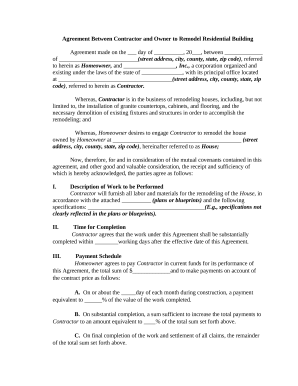
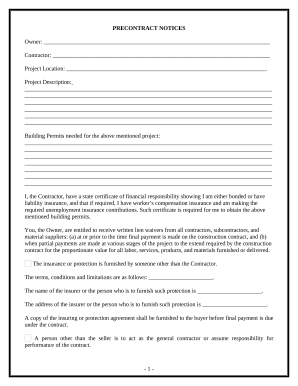
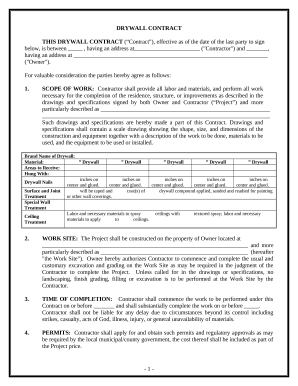
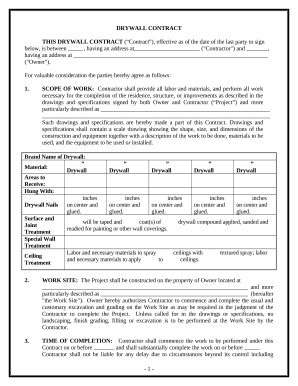
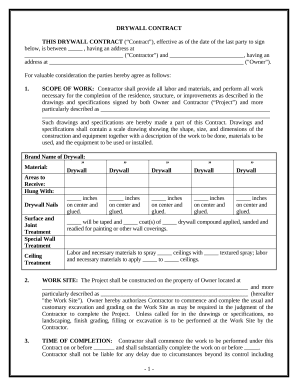
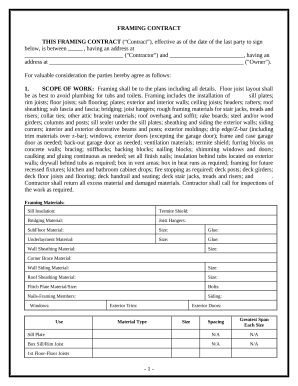
  1. Open Residential Building Contracts and utilize Preview to obtain the suitable form.
  2. Click on Get Form to start working on it.
  3. Wait for your form to open in the online editor and begin modifying it.
  4. Add new fillable fields, symbols, and pictures, modify pages order, and many more.
  5. Fill out your file or set it for other contributors.
  6. Download or share the form by link, email attachment, or invite.

Speed up your everyday document managing using our Residential Building Contracts. Get your free DocHub account right now to discover all forms.


Video Guide on Residential Building Contracts management

video background

Commonly Asked Questions about Residential Building Contracts

Basic types of construction The four main types of construction are: residential construction, commercial construction, industrial construction, and infrastructure construction.
Here are four main construction contracts to choose from, plus their pros and cons: Lump-Sum Contracts. Cost-Plus-Fee Contracts. Guaranteed Maximum Price Contracts. Unit-Price Contracts.
Contract Types Comparison Party 1 offers Bilateral Services or goods that are of value to the other party Unilateral Services or goods that the other party requested, usually in an open request Implied Services or goods Express Anything9 more rows Jan 26, 2022
Here are what the Smith + Malek team has seen as the most common errors in construction contracts: Its not written down. Both parties havent signed the contract. Not all of the terms of the agreement are in writing and in the contract. The timeline is unclear. Particular terms arent defined.
There are five common types of construction contracts: lump sum (or fixed price), time and materials (TM), unit price, guaranteed maximum price (GMP), and cost-plus.
A turnkey contract ensures that all the responsibilities during the construction lies with the contractor, which saves a lot of time for the homeowner.
The basic elements required for the agreement to be a legally enforceable contract are: mutual assent, expressed by a valid offer and acceptance; adequate consideration; capacity; and legality.
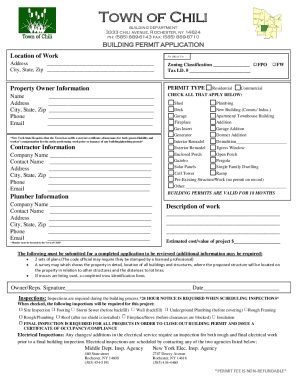
Elements of a construction contract Name of contractor and contact information. Name of homeowner and contact information. Describe property in legal terms. List attachments to the contract. The cost. Failure of homeowner to obtain financing. Description of the work and the completion date. Right to stop the project.