Enhance your form administration with Real Estate Leasing

Your workflows always benefit when you can easily locate all the forms and files you need at your fingertips. DocHub provides a vast array of forms to alleviate your day-to-day pains. Get a hold of Real Estate Leasing category and quickly find your document.

Begin working with Real Estate Leasing in several clicks:

  1. Access Real Estate Leasing and get the document you require.
  2. Click Get Form to open it in our editor.
  3. Start changing your document: add more fillable fields, highlight paragraphs, or blackout sensitive details.
  4. The app saves your modifications automatically, and once you are all set, you are able to download or distribute your form with other contributors.

Enjoy easy form administration with DocHub. Check out our Real Estate Leasing category and locate your form right now!


Video Guide on Real Estate Leasing management

video background

Commonly Asked Questions about Real Estate Leasing

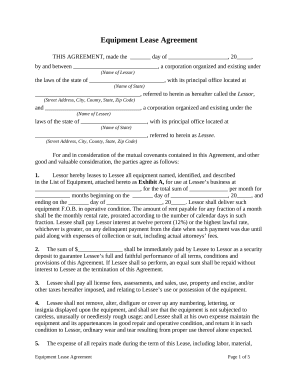
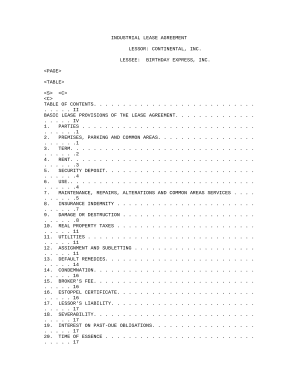
Introduction. A lease refers to a contract where one party grants a right to use a property or land to another party in return for consideration and for a specific period of time. Both the parties enter into a lease agreement specifying the terms and conditions of the agreement.
A lessee is a person who rents land or property from a lessor. The lessee is also known as the tenant and must uphold specific obligations as defined in the lease agreement and by law.
The main difference is the length of tenancy. A rental agreement is usually short term or month-to-month, while a lease is typically for a longer period of time, usually six months or more. Find out more about what it means to rent or lease and the pros and cons of each.
Leasing helps protect you against unanticipated depreciation. If the market value of your car unexpectedly drops, your decision to lease will prove to be a wise financial move. If the leased car holds its value well, you can typically buy it at a good price at the end of the lease and keep it or decide to resell it.
A lease involves a client (the lessee) obtaining the use of an asset from a leasing company (the lessor) in return for the pay- ment of a series of rentals to the lessor. Legal title to ownership of the asset remains with the lessor.
While leasing and renting share many similarities, there are some subtle distinctions between the two. The main difference is the length of tenancy. A rental agreement is usually short term or month-to-month, while a lease is typically for a longer period of time, usually six months or more.
A car lease allows you to drive a vehicle from a dealership for an agreed upon amount of time and miles, and pay for its usage rather than for the full purchase price of the vehicle. You make monthly payments to be able to drive the car.
Pros of leasing: No big down payment. No closing costs. No hassle or major expense for maintenance, replacements, and repairs.