Increase your efficiency with Real Estate Disclaimer Documents

Document management takes up to half of your office hours. With DocHub, you can easily reclaim your time and effort and boost your team's productivity. Get Real Estate Disclaimer Documents collection and investigate all form templates relevant to your everyday workflows.

The best way to use Real Estate Disclaimer Documents:

  1. Open Real Estate Disclaimer Documents and utilize Preview to find the suitable form.
  2. Click on Get Form to begin working on it.
  3. Wait for your form to upload in the online editor and begin editing it.
  4. Add new fillable fields, icons, and images, modify pages, and many more.
  5. Complete your template or set it for other contributors.
  6. Download or deliver the form by link, email attachment, or invite.

Speed up your everyday file management with the Real Estate Disclaimer Documents. Get your free DocHub account today to explore all templates.


Video Guide on Real Estate Disclaimer Documents management

video background

Commonly Asked Questions about Real Estate Disclaimer Documents

We will require a disclaimer when your trademark includes a certain type of wording or design that would otherwise be unregistrable, such as wording or a design that doesnt indicate the source of your goods or services or is otherwise merely descriptive of them. How to satisfy a disclaimer requirement - USPTO uspto.gov trademarks laws how-satisfy uspto.gov trademarks laws how-satisfy
(TDS) The TDS is the most general disclosure form related to the sale of a home.
3 tips for writing your disclaimers Be simple and concise: you want your users to understand what youre saying, so dont write an excessively long paragraph and avoid using terms difficult to understand. Address the main liabilities: when can you be held liable? And, on the other hand, whats outside of your control? Disclaimers: examples for your website - Iubenda iubenda.com help 44006-disclaimers-ex iubenda.com help 44006-disclaimers-ex
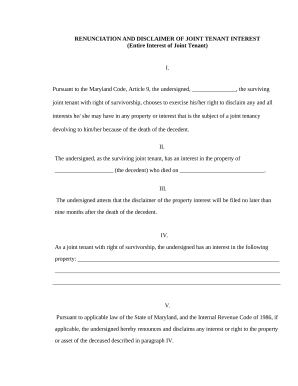
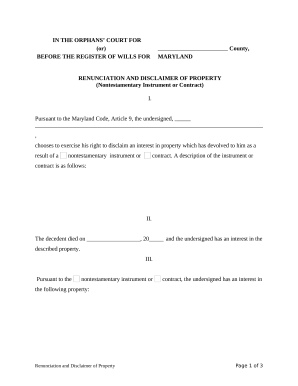
A disclaimer of interest is, essentially, a written statement to the probate court where someone who stands to inherit property or assets states that they do not wish to exercise that inheritance.
Most Common Disclosures in Real Estate Natural Hazards Disclosure. First on the list is the natural hazards disclosure. Market Conditions Advisory (MCA) Market Conditions Advisory, also known as MCA, covers items more financial in nature. State Transfer Disclosure. Local Transfer Disclosure. Megans Law Disclosures.
As-Is Sale Disclaimer Example: Property is sold as-is without any guarantee or warranty by the seller. All inspections are the responsibility of the purchaser.
Expert-Verified Answer. The most commonly required disclosure in a residential real estate sale is the sellers property disclosure. This is a document that is provided by the seller that discloses any known defects or issues with the property, such as leaky roofs, plumbing problems, or electrical issues.
Final answer: The most commonly used type of disclosure in real estate transactions is the seller disclosure. It provides potential buyers with detailed information about the propertys condition and any known defects, offering transparency and protecting both the seller and buyer.
Effective March 20, 2024, the amended New York Real Property Law Chapter 50, Article 14 (the Property Condition Disclosure Act) will compel all sellers of residential property to complete and deliver a Property Condition Disclosure Statement (PCDS) to a buyer prior to signing a contract of sale.
As set out above, standard disclosure is the most common type of disclosure and will require each party to disclose the following pursuant to CPR Rule 31.6: Documents on which they intend to rely; as well as.