Transform your file administration with No Children Living Trust Forms

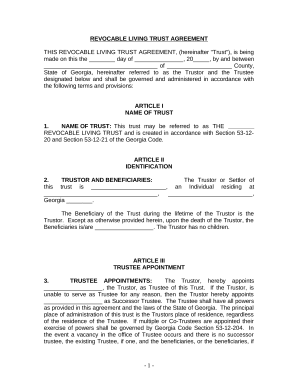
Your workflows always benefit when you are able to discover all of the forms and documents you may need at your fingertips. DocHub provides a a huge collection of documents to alleviate your everyday pains. Get hold of No Children Living Trust Forms category and quickly find your form.

Begin working with No Children Living Trust Forms in a few clicks:

  1. Open No Children Living Trust Forms and discover the form you need.
  2. Click Get Form to open it in the editor.
  3. Start changing your document: add more fillable fields, highlight paragraphs, or blackout sensitive facts.
  4. The application saves your changes automatically, and once you are all set, you can download or distribute your form with other contributors.

Enjoy effortless document management with DocHub. Discover our No Children Living Trust Forms online library and get your form right now!


Video Guide on No Children Living Trust Forms management

video background

Commonly Asked Questions about No Children Living Trust Forms

The 4 Biggest Mistakes Parents Make When Setting Up a Trust Fund Not choosing the right Trustee. Choosing the wrong Trustee is a common mistake parents make. Not being clear about the goals of the Trust. Not including asset protection provisions. Not reviewing the Trust annually.
A living trust is a form of estate planning that allows you to control your assets (your money and property) while you are still alive, but have it distributed to people or organizations you select when you die. Depending on your own financial situation they might be appropriate, but they are not for everyone. Living Trust Mills | State of California - Department of Justice - CA.gov ca.gov consumers general livingtrust ca.gov consumers general livingtrust
For a revocable living trust to take effect, it should be funded by transferring certain assets into the trust. Often people fund a living trust with real estate, financial accounts, life insurance, annuity certificates, personal property, business interests, and other assets.
The transfer document should list assets youre transferring to the Trust. Its good to be specific, but you can use broad categories (like furniture, clothing, jewelry, etc.) without listing every item in each of those categories.
Most beneficiary designations will require you to provide a persons full legal name and their relationship to you (spouse, child, mother, etc.). Some beneficiary designations also include information like mailing address, email, phone number, date of birth and Social Security number.
Solution Revocable Trust A Revocable Living Trust allows you to title the assets in the name of the Trust rather than individuals. An adult child may still be a beneficiary of the Trust, yet there is zero risk that the assets will be exposed to any of the beneficiarys creditors. Why you should avoid joint titling of assets with adult children stonelegalgroup.com blog why-you-should-av stonelegalgroup.com blog why-you-should-av
You can pay a New York attorney as little as $1,000 to create a simple living trust for you, or do the job yourself for free using downloadable templates and online tools. Creating an irrevocable trust for a large estate as part of a complex estate plan will cost you $3,000 to $10,000 or more if you use an attorney.
Contents List your assets and decide which youll include in the trust. Gather the paperwork. Decide whether you will be the sole grantor. Choose beneficiaries. Choose a successor trustee. Choose someone to manage property for minor children. Prepare the trust document. Sign and docHub. Make a living trust: A quick checklist | .com articles make-a-living-tr .com articles make-a-living-tr
A Simple Trust is a trust which makes no distributions other than current income. The trust terms require all its income to be distributed currently and do not provide for charitable contributions.