Living trust no 2026

Get Form
living trust no Preview on Page 1

Here's how it works

01. Edit your form online
Type text, add images, blackout confidential details, add comments, highlights and more.
02. Sign it in a few clicks
Draw your signature, type it, upload its image, or use your mobile device as a signature pad.
03. Share your form with others
Send it via email, link, or fax. You can also download it, export it or print it out.

How to Use or Fill Out Living Trust No

Form edit decoration
9.5
Ease of Setup
DocHub User Ratings on G2
9.0
Ease of Use
DocHub User Ratings on G2
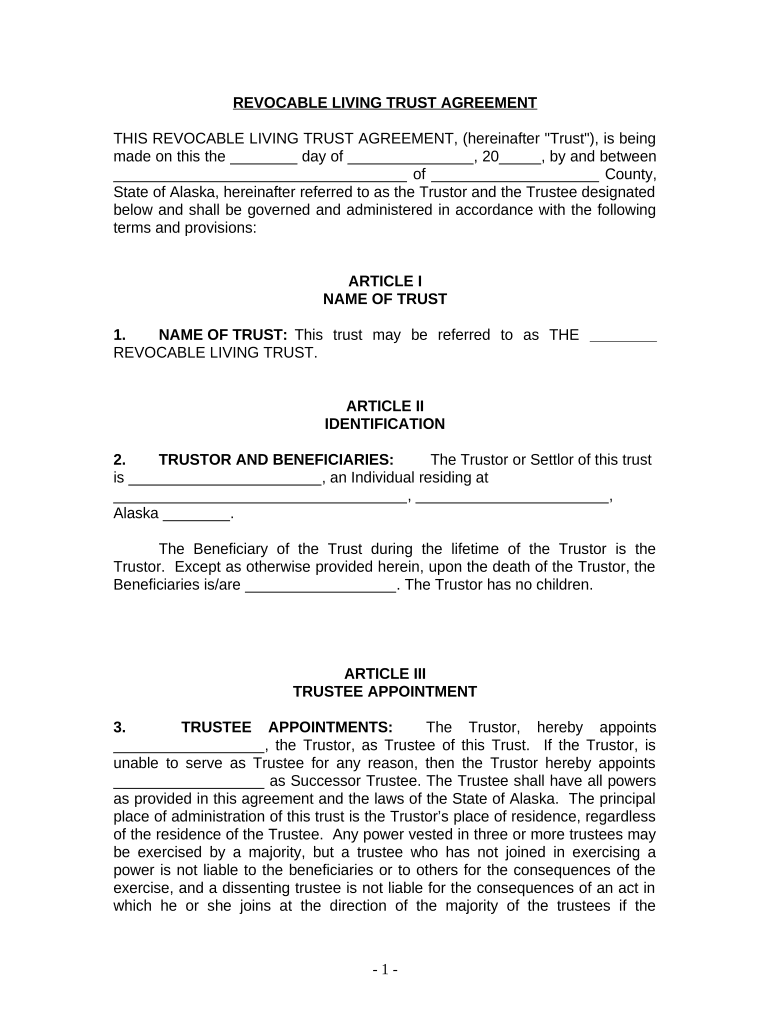
  1. Begin by clicking ‘Get Form’ to open the living trust document in our editor.
  2. In the first section, fill in the date of creation and the name of the Trustor. This identifies who is establishing the trust.
  3. Next, complete the identification section by entering your full name and address as the Trustor, along with any beneficiaries' names if applicable.
  4. Proceed to appoint a Trustee by filling in their name. If you have a Successor Trustee, include their details as well.
  5. In the Assets of Trust section, list all properties and assets being transferred into the trust. Ensure accuracy for legal purposes.
  6. Review all sections carefully for completeness and accuracy before saving your document.

Start using our platform today to easily create and manage your living trust for free!

be ready to get more

Complete this form in 5 minutes or less

Get form

Got questions?

We have answers to the most popular questions from our customers. If you can't find an answer to your question, please contact us.
Contact us
Drafting a will is simpler and less expensive, but creating a revocable living trust offers more privacy, limits the time and expense of probate, and can help protect in case of incapacity or legal challenges.
A Living Trust is a legal tool for financial planning that allows a person (Trustee) to hold another persons (Settlors) property for the benefit of someone else (Beneficiary). Unlike a testamentary trust, a Living Trust goes into effect during the settlors lifetime.
Yes, you can choose any name for your trust, even one that doesnt include your personal information. Some people name their trust after a property address, like The Main Street Trust, or use creative names for privacy reasons.
Here are the cons: A living trust is more complex and typically more costly to set up, and you must retitle your assets in the name of the trust, which is also time-consuming. It doesnt offer any estate tax benefits or special asset protection.

Security and compliance

At DocHub, your data security is our priority. We follow HIPAA, SOC2, GDPR, and other standards, so you can work on your documents with confidence.

Learn more
ccpa2
pci-dss
gdpr-compliance
hipaa
soc-compliance