Handle Medical Directives effortlessly online

Document managing can stress you when you can’t locate all of the documents you need. Fortunately, with DocHub's vast form library, you can get all you need and swiftly manage it without switching among applications. Get our Medical Directives and start working with them.

Using our Medical Directives using these simple steps:

  1. Browse Medical Directives and select the form you need.
  2. Preview the template and then click Get Form.
  3. Wait for it to upload in our online editor.
  4. Edit your document: include new information and images, and fillable fields or blackout some parts if required.
  5. Prepare your document, preserve adjustments, and prepare it for delivering.
  6. When ready, download your form or share it with other contributors.

Try out DocHub and browse our Medical Directives category without trouble. Get your free profile today!


Video Guide on Medical Directives management

video background

Commonly Asked Questions about Medical Directives

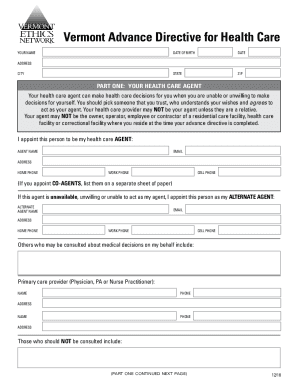
An advance health care directive lets your physician, family, and friends know your health care preferences, including the types of special treatment you want or dont want at the end of life, your desire for diagnostic testing, surgical procedures, cardiopulmonary resuscitation and organ donation.
An advance directive is a set of instructions that outlines your health care wishes. It, too, is used when severe medical situations occur and youre not able to communicate your wishes. Unlike the living will, however, an advance directive isnt limited to terminal illness.
What are advance directives? Advance directives are legal documents that provide instructions for medical care and only go into effect if you cannot communicate your own wishes. The two most common advance directives for health care are the living will and the durable power of attorney for health care.
Advance directives are legal documents that provide instructions for medical care and only go into effect if you cannot communicate your own wishes. The two most common advance directives for health care are the living will and the durable power of attorney for health care.
Almost all states permit advance directives for healthcare, which can be used to direct at least some forms of psychiatric treatment.
Types of Advance Directive There are two basic types: the living will and the durable power of attorney for healthcare.
Types of advance directives Living will. A living will is a document that lets you outline your end-of-life care preferences. Medical power of attorney (POA) Advance healthcare directive. Psychiatric advance directives.
An advance directive is considerably broader than a DNR order. In an advance directive, you state what you want to happen to you if you become incapacitated and are unable to make an informed decision about your health care. You may specify that: You dont want life-sustaining treatment, but you do want food or water.