

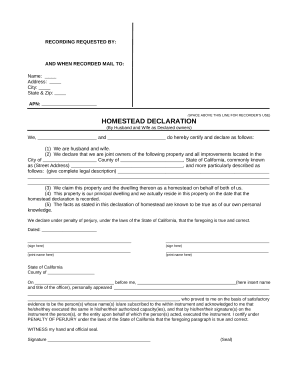
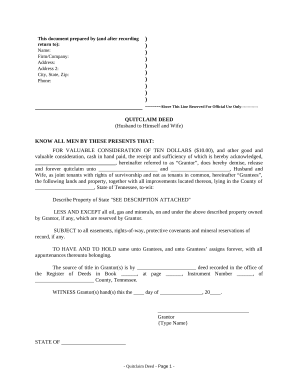
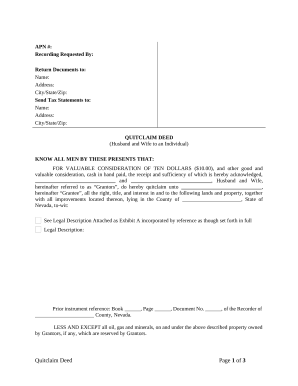
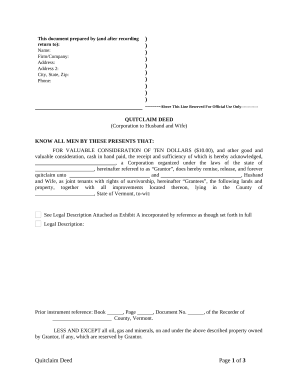
Get and handle Marriage Property Legal Forms online

Speed up your form managing with our Marriage Property Legal Forms library with ready-made form templates that suit your needs. Access the form template, edit it, fill it, and share it with your contributors without breaking a sweat. Start working more efficiently with the documents.

The best way to manage our Marriage Property Legal Forms:

  1. Open our Marriage Property Legal Forms and search for the form you require.
  2. Preview your form to ensure it’s what you want, and click Get Form to begin working on it.
  3. Change, include new text, or highlight important information with DocHub features.
  4. Complete your form and preserve the modifications.
  5. Download or share your document with other people.

Discover all the opportunities for your online document management with the Marriage Property Legal Forms. Get a totally free DocHub account right now!


Video Guide on Marriage Property Legal Forms management

video background

Commonly Asked Questions about Marriage Property Legal Forms

Generally speaking, each partner keeps the property they brought into the relationship, and some of the things they acquired during the relationship (like gifts, inheritances, insurable payouts or court awards). In most cases, they get to keep the value of that property as of the date it was received.
Family property, or marital assets, are property acquired during the marriage, specifically, after the date of marriage and before the date of separation. Any asset acquired during this period, regardless of which spouse acquired it, so long as it still exists at the date of separation, is considered family property.
Once a home is designated a matrimonial home, both spouses are equally entitled to possession of it upon separation. Once the spouses separate, neither of them can legally exclude the other from the matrimonial home, no matter who owned the home prior to marriage.
If your state recognizes a common law marriage and you fulfill the requirements, then you will have the same rights as if you were legally married to that person. If you are in such a situation and your common-law spouse dies, you may be able to claim inheritance depending on the laws in your state.
When unmarried partners break up, the division of property works differently than it does for married couples. If youre not married, then you generally keep what you came into the relationship with and anything that you earned or bought on your own during your time together.
Legal Rules that Govern Property Rights of Unmarried Couples Each unmarried partner is presumed to own his or her own property and debts unless youve deliberately combined your assets--for example, by opening a joint account or putting both names on a deed to your home.
Unlike married couples, common-law couples dont need a court decision to make their separation official. You can settle all the issues that arise when you break up without going to court. But sometimes its a good idea to have a lawyer or notary help you.
In Ontario the fact that a person is married doesnt change any of the basic property rights. So if you owned a property before marriage, or had some property put into your name during the marriage, its yours when the marriage breaks up and you separate.
