

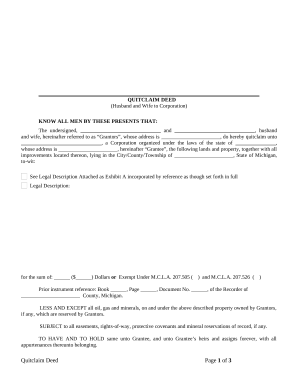
Get and handle Legal Deeds online

Boost your form administration with our Legal Deeds collection with ready-made templates that meet your needs. Get the document template, modify it, fill it, and share it with your contributors without breaking a sweat. Start working more effectively together with your forms.

The best way to use our Legal Deeds:

  1. Open our Legal Deeds and look for the form you want.
  2. Preview your form to ensure it’s what you want, and click on Get Form to begin working on it.
  3. Alter, add new text, or point out important information with DocHub tools.
  4. Prepare your form and preserve the modifications.
  5. Download or share your document template with other people.

Discover all of the possibilities for your online document administration with our Legal Deeds. Get a free free DocHub profile right now!


Video Guide on Legal Deeds management

video background

Commonly Asked Questions about Legal Deeds

In India, some of the important types of deeds are: Sale Deed. Mortgage Deed. Lease Deed. Gift Deed. General Warranty Deed. Special Warranty Deed. Adoption Deed. Quitclaim Deed. 15 Types of Legal Deeds in India - WritingLaw writinglaw.com types-of-deeds writinglaw.com types-of-deeds
What are the items required for a valid deed? A grantor, a grantee, consideration, granting clause, property, description, signatures of grantors, delivery and acceptance.
A deed is an official written document declaring a persons legal ownership of a property, while a title is a legal concept that refers to ownership rights. Heres a way to remember the difference: You can own a physical copy of a book, but you cant hold the books title in your hand.
DEED. A written document by which the ownership of land is transferred from one person to another.
For a deed to be valid, it must contain several essential elements, including the operative words of conveyance, description of the property, signatures, delivery, proper formatting and execution, absence of defects and encumbrances, legal capacity of parties, proper recording, and voluntary execution.
A deed is a signed legal document that transfers ownership of an asset to a new owner. Deeds are most commonly used to transfer ownership of property or vehicles between two parties. The purpose of a deed is to transfer a title, the legal ownership of a property or asset, from one person or company to another. Deed: Legal Definition, Types, Requirements, vs. Title - Investopedia investopedia.com terms deed investopedia.com terms deed
DEEDS IN GENERAL It must be in writing; 2. The parties must be properly described; 3. The parties must be competent to convey and capable of receiving the grant of the property; 4. The property conveyed must be described so as to distinguish it from other parcels of real property.; 5.
You might want to keep them safe or pass them to your family lawyer for them to store them in secure document storage for which, they may make a small charge. Alternatively, you can keep them safe at home. You can search the Land Registry to see if your title deeds are registered and to find out your title number. What are Title Deeds? - Mortgage Required mortgagerequired.com blog what-are-title-deeds mortgagerequired.com blog what-are-title-deeds
Essential Elements for Deeds: Properly executed deeds must: (1) be in writing; (2) name the grantor and a grantee; (3) be signed by the grantor or the grantors agent; (4) be delivered to the grantee; and (5) be accepted by the grantee.
All of the components of a valid deed are outlined below. written instrument. competent grantor. identity of the grantee. words of conveyance. adequate description of the land. recital of consideration. signature of the grantor. witnesses.
