Create your Legal Deed from scratch

Start Building Now
Title decoration

Here's how it works

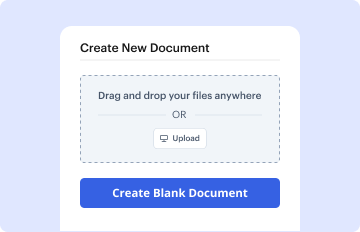
01. Start with a blank Legal Deed
Open the blank document in the editor, set the document view, and add extra pages if applicable.
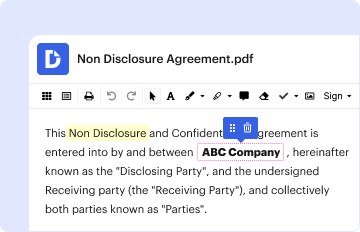
02. Add and configure fillable fields
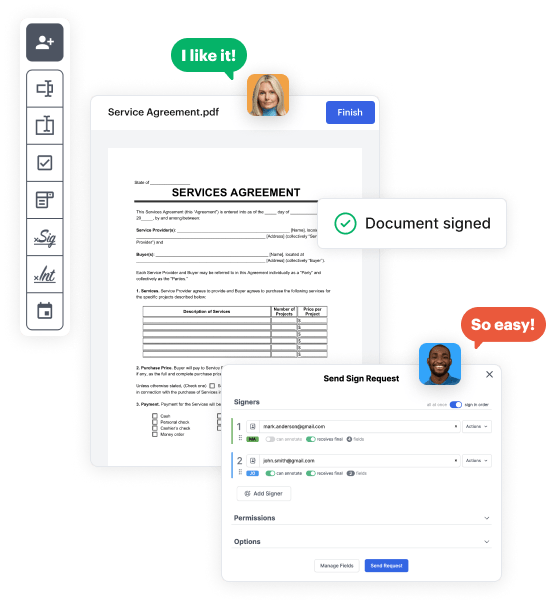
Use the top toolbar to insert fields like text and signature boxes, radio buttons, checkboxes, and more. Assign users to fields.
03. Distribute your form
Share your Legal Deed in seconds via email or a link. You can also download it, export it, or print it out.

A simple tutorial on how to create a professional-looking Legal Deed
Form edit decoration

Step 1: Sign in to DocHub to begin creating your Legal Deed.

First, sign in to your DocHub account. If you don't have one, you can simply sign up for free.

Step 2: Head to the dashboard.

Once you’re in, access your dashboard. This is your primary hub for all document-based tasks.

Step 3: Initiate new document creation.

In your dashboard, select New Document in the upper left corner. Pick Create Blank Document to build the Legal Deed from the ground up.

Step 4: Insert template fillable areas.

Place numerous fields like text boxes, photos, signature fields, and other interactive areas to your template and designate these fields to intended users as necessary.

Step 5: Personalize your form.

Customize your template by incorporating walkthroughs or any other vital information utilizing the text tool.

Step 6: Double-check and modify the form.

Meticulously go over your created Legal Deed for any typos or necessary adjustments. Utilize DocHub's editing tools to enhance your form.

Step 7: Send out or download the form.

After finalizing, save your file. You may select to save it within DocHub, transfer it to various storage options, or send it via a link or email.


be ready to get more

Build your Legal Deed in minutes

Start creating now

Got questions?

We have answers to the most popular questions from our customers. If you can't find an answer to your question, please contact us.
Contact us
Recording a Deed Must present a photocopy of a government issued photo identification for each grantor(s) and grantee(s) listed on the deed. Prepared by statement (name and address of the natural person preparing the Deed) Grantor(s) (Sellers-Party Giving Title) names legibly printed in the body of the deed.
Requirements of a Virginia land deed Minimally, a deed must include: The identity of the parties to the conveyance. The consideration paid for the conveyance. Language granting the parcel to the grantee.
A deed must identify the current owner, new owner, and any other parties to the deed. The parties must be identified by name, mailing address, and telephone number. The identifying information must be on the first page below the 3-inch top margin. Property description or indexing information.
In Virginia, only attorneys or property owners can legally prepare a deed. To be legally recognized, a deed in Virginia has to satisfy several key state-specific requirements: It should be an original or a first-generation printout as per Va. Code Ann.
In Ohio, only an attorney can draft a deed for others. All title companies must use an attorney to draft deeds. Many clients ask why they need to engage a lawyer to draft a deed if they can download a form off the Internet.
be ready to get more

Build your Legal Deed in minutes

Start creating now

Related Q&A to Legal Deed

Legal Requirements in Virginia Writing and Signing: The deed must be written and signed by the donor. Witnesses and Notarization: While not always required, notarization adds legal validity. Recording: Recording the deed with the local countys land records office is advisable.
Several easy-to-follow steps are required to create a Virginia deed: Locate the most recent deed to the property. Create the new deed. Sign and docHub the new deed. Record the deed in the land records of the clerks office of the circuit court in the jurisdiction where the property is located.
All deeds must be prepared by the owner of the property or by an attorney licensed to practice in Virginia. The requirements are listed below in the code section. Click here to read about e-Recording.

Additional resources on building your forms