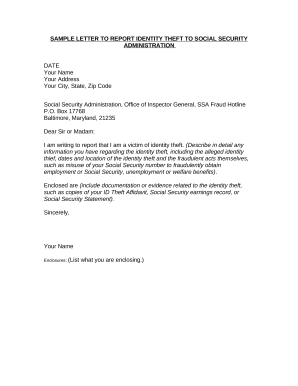
Manage Identity Theft Letters easily online

Document administration can overpower you when you can’t locate all the forms you require. Fortunately, with DocHub's extensive form collection, you can get all you need and easily deal with it without changing between software. Get our Identity Theft Letters and start working with them.

The best way to manage our Identity Theft Letters using these simple steps:

  1. Browse Identity Theft Letters and select the form you require.
  2. Review the template and click Get Form.
  3. Wait for it to upload in our online editor.
  4. Edit your form: include new information and pictures, and fillable fields or blackout some parts if required.
  5. Prepare your form, conserve adjustments, and prepare it for sending.
  6. When ready, download your form or share it with other contributors.

Try out DocHub and browse our Identity Theft Letters category with ease. Get a free account today!


Video Guide on Identity Theft Letters management

video background

Commonly Asked Questions about Identity Theft Letters

More In Help. The IRS proactively identifies and stops the processing of potential identity theft returns. You may receive a notice or letter asking you to verify your identity and tax return information with the IRS. This helps prevent an identity thief from getting your refund.
The IRS sends a 5071C letter when it receives a tax return with your name and tax identification number, but believes the return to be fraudulent. A Letter 5071C will ask you to complete an online identity verification process to confirm your identity.
More In News Social Security numbers and birth dates for those who were named on the tax return. An Individual Taxpayer Identification Number letter if the you have one. Your filing status. The prior-year tax return. A copy of the tax return in question. Any IRS letters or notices you received.
Then the IRS will send the taxpayer a letter notifying them of potential ID theft. The suspicious tax return wont be processed until the taxpayer responds to the letter.
The IRS sends a 5071C letter when it receives a tax return with your name and tax identification number, but believes the return to be fraudulent.
Why you received IRS Letter 5071C. The IRS fraud detection system flagged your tax return as a potential identity theft case. The IRS sends this notice to request that you provide documentation to prove your identity.
I am a victim of identity theft, and I did not make [this/these] charge(s). I request that you remove the fraudulent charge(s) and any related finance charge and other charges from my account, send me an updated and accurate statement, and close the account (if applicable).