Transform your template managing with Estate Distribution Legal Forms

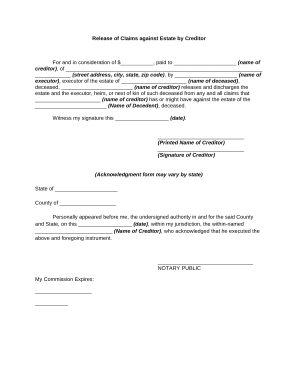
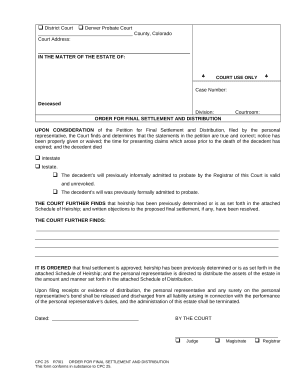
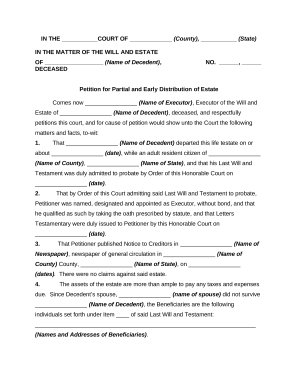
Your workflows always benefit when you are able to discover all of the forms and documents you require at your fingertips. DocHub delivers a a huge library of forms to ease your day-to-day pains. Get a hold of Estate Distribution Legal Forms category and quickly find your document.

Begin working with Estate Distribution Legal Forms in several clicks:

  1. Browse Estate Distribution Legal Forms and find the document you need.
  2. Click on Get Form to open it in our editor.
  3. Begin editing your form: add more fillable fields, highlight sentences, or blackout sensitive information.
  4. The application saves your adjustments automatically, and after you are all set, you can download or distribute your form with other contributors.

Enjoy fast and easy record administration with DocHub. Check out our Estate Distribution Legal Forms category and look for your form right now!


Commonly Asked Questions about Estate Distribution Legal Forms

Divvying up your estate in an equal way between your children often makes sense, especially when their histories and circumstances are similar. Equal distribution can also avoid family conflict over fairness or favoritism.
A last will and testament is a legal document that specifies how you want your assets to be distributed after your death. It also allows you to name an executor, who is the person responsible for carrying out your wishes and settling your estate.
The executor of a decedents estate uses Form 706 to figure the estate tax imposed by Chapter 11 of the Internal Revenue Code. Form 706 is also used to compute the generation-skipping transfer (GST) tax imposed by Chapter 13 on direct skips. About Form 706, United States Estate (and Generation-Skipping Transfer irs.gov forms-pubs about-form-706 irs.gov forms-pubs about-form-706
This area of law is called probate. The probate division of the superior court handles these issues.
Generally speaking, Executors are not to distribute any parts of an Estate within 6 months of the date of death or date of Probate unless all identified beneficiaries agree to an earlier distribution. Time limits to make a claim against a Will/Estate - Rainey Collins raineycollins.co.nz article-15-11-22 raineycollins.co.nz article-15-11-22
The main ways to control the disposition of your estates assets include writing a will, selecting beneficiary designations, and creating a trust. How to ensure your assets will be distributed ing to your wishes troweprice.com take-care-of-your-heirs troweprice.com take-care-of-your-heirs
The distribution of an estate is the transfer of the net assets of an estate to the beneficiaries (that is, the people the deceased person named to receive their estate/assets in their Will, or those people entitled to receive the assets where there is no Will). Distribution of Estate To Beneficiaries Advice - Estate First Lawyers estatefirst.com.au estate-administration distribu estatefirst.com.au estate-administration distribu