






Definition & Meaning
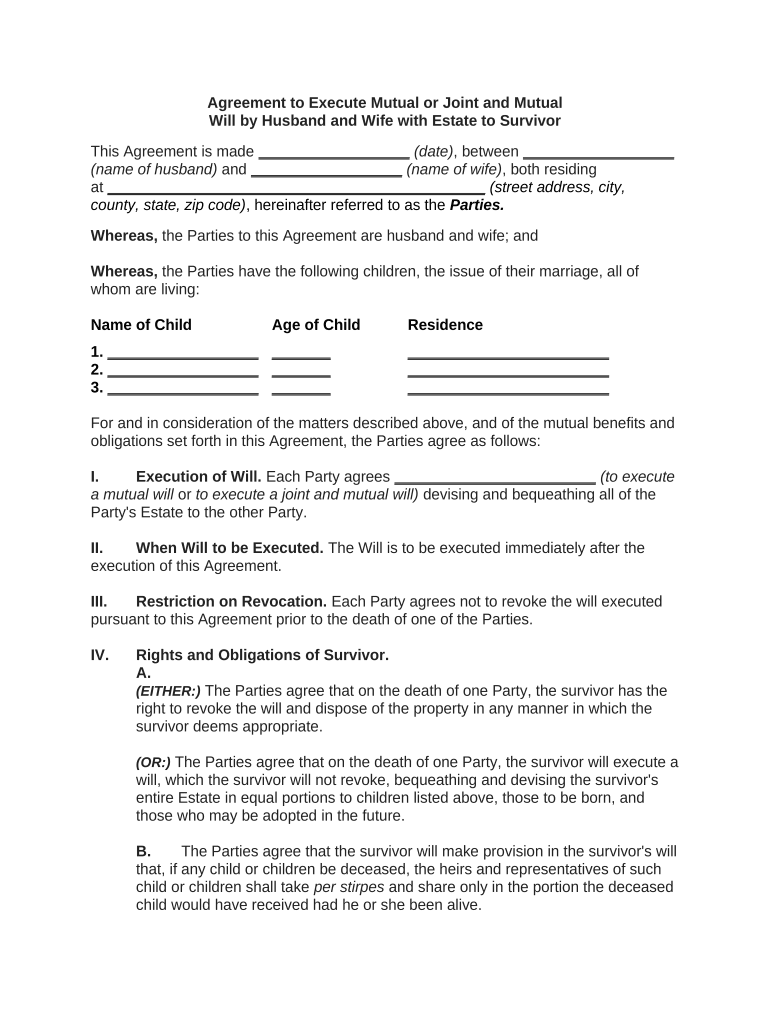
The Agreement to Execute Mutual or Joint and Mutual Will by Husband and Wife with Estate to Survivor is a legally binding document outlining the wishes of a married couple regarding the distribution of their estates upon their deaths. A mutual will typically involves both parties agreeing to allocate their assets to each other, ensuring that upon the death of one spouse, the surviving spouse inherits the entirety of the estate. The will often includes provisions that prevent the survivor from revoking the mutual will or altering the distribution of assets beyond what is stipulated in the agreement.
- Jurisdiction: This agreement is recognized in many states across the U.S., but specifics can vary; thus, consulting with legal counsel is advisable.
- Legal Implications: The document is enforceable in court, meaning it holds legal weight when it comes to the distribution of assets as outlined.
- Revocation Restrictions: Typically, a mutual will often includes language that restricts either party from changing the terms of the will independently once one spouse has passed.
Understanding the definition is crucial, as it informs couples about their rights and obligations under such an agreement.
Key Elements of the Agreement
The key elements of an Agreement to Execute Mutual or Joint and Mutual Will by Husband and Wife are fundamental to its structure and enforceability. Each of these elements contributes to the clarity and legality of the will:
-
Identifying Information:
- Full names and addresses of both spouses.
- Date of execution of the agreement.
-
Statement of Intent:
- Clear declaration that both parties are creating a mutual or joint will and acknowledge its binding nature.
-
Distribution of Estate:
- Detailed description of assets and how they will be treated after the death of one spouse.
- Provisions for distributing the remaining estate to beneficiaries, typically children or other designated heirs.
-
Revocation Clause:
- Specific conditions under which the mutual will can be revoked, or an explanation as to why it cannot be revoked unilaterally.
-
Signatures:
- Proper signatures of both parties along with witnesses, if required by state law.
These elements ensure that both parties understand their intentions clearly and that the document upholds their wishes in a legal context.
How to Use the Agreement to Execute Mutual or Joint and Mutual Will
Using the Agreement to Execute Mutual or Joint and Mutual Will involves several important steps to ensure that it serves its intended purpose effectively. This process is designed to facilitate clear understanding and execute the wishes of both spouses regarding their estate.
-
Consult an Attorney:
- Before proceeding, it’s wise to consult with a legal professional who specializes in estate planning. This can help clarify the agreement's contents and ensure adherence to state laws.
-
Draft the Agreement:
- Using a template or drafting the document from scratch, both parties should explicitly outline their assets, beneficiaries, and the detailed terms that bind them.
-
Discuss and Revise:
- Both spouses should have open discussions about the contents of the will, making necessary adjustments until they are both comfortable with the final version.
-
Execute the Document:
- Sign the agreement in the presence of a notary public or witnesses as required. This step is vital for the document's validity.
-
Store the Will Safely:
- Once executed, it should be stored in a safe location, such as a safe deposit box, with copies held by trusted family members or the attorney.
-
Review Periodically:
- Periodically review and clarify the terms of the mutual will, especially after major life events such as the birth of children, marriages, or significant financial changes.
Using the agreement properly maximizes its effectiveness and ensures peace of mind for both spouses, knowing that their wishes are clearly defined and legally recognized.
Important Terms Related to the Agreement
Understanding important terms associated with the Agreement to Execute Mutual or Joint and Mutual Will enhances clarity for couples as they navigate estate planning. Familiarizing oneself with these terms is crucial to grasping the nuances of the agreement.
-
Joint Will: A single document executed by two people that outlines what will happen to their assets upon death; it is often seen as irreversible once one party passes away.
-
Mutual Will: A specific type of joint will where both parties agree not to change the terms or revoke the document after one party dies, ensuring the survivor cannot unilaterally alter the distributions.
-
Testator: The individual who creates a will, which in the context of a mutual will consists of both spouses acting together.
-
Beneficiary: Any individual or entity entitled to receive assets or benefits from the estate as specified in the will.
-
Executor: The individual designated to carry out the terms of the will, ensuring that all requests are met accordingly.
Understanding these terms helps in grasping the implications and legal ramifications of the will, allowing for informed decision-making.
Steps to Complete the Agreement
Completing the Agreement to Execute Mutual or Joint and Mutual Will requires careful attention to detail. Follow these steps to ensure a thorough process:
-
Gather Necessary Information:
- Compile information on all assets, including real estate, bank accounts, investments, and personal property.
-
Consult with Professionals:
- Engage with an estate planning attorney for guidance on drafting a compliant and comprehensive document.
-
Draft the Agreement:
- Write the document, ensuring clarity in each clause while stating both parties' wishes.
-
Review the Document:
- Have both spouses review the agreement to prevent misunderstandings or disagreements later.
-
Sign and Notarize:
- Sign the document in front of a notary public or required witnesses, making it legally enforceable.
-
Distribute Copies:
- Provide copies of the executed agreement to relevant parties, such as family members or the appointed executor.
By following these steps, couples can ensure that their mutual will is completed accurately and reflects their wishes, offering legal protection and clarity concerning their estate.